

Species Classification
Order: Cypriniformes
Family: Cyprinidae
Subfamily: Smiliogastrinae
Genus & Species: Pethia conchonius
Common Names: Rosy Barb, Red Barb
Species Data Sheet
Temperature: 64–75°F (18–24°C)
pH Range: 6.0–8.0
General Hardness (GH): 5–20 dGH
Total Length: 14 cm (5.5 inches)
Average Length: 7–10 cm (2.75–4 in)
Care Level: Beginner
Lifespan: 4–7 Years
Min Tank Size: 40 gallons
Temperament: Peaceful
Swimming Level: Middle water column
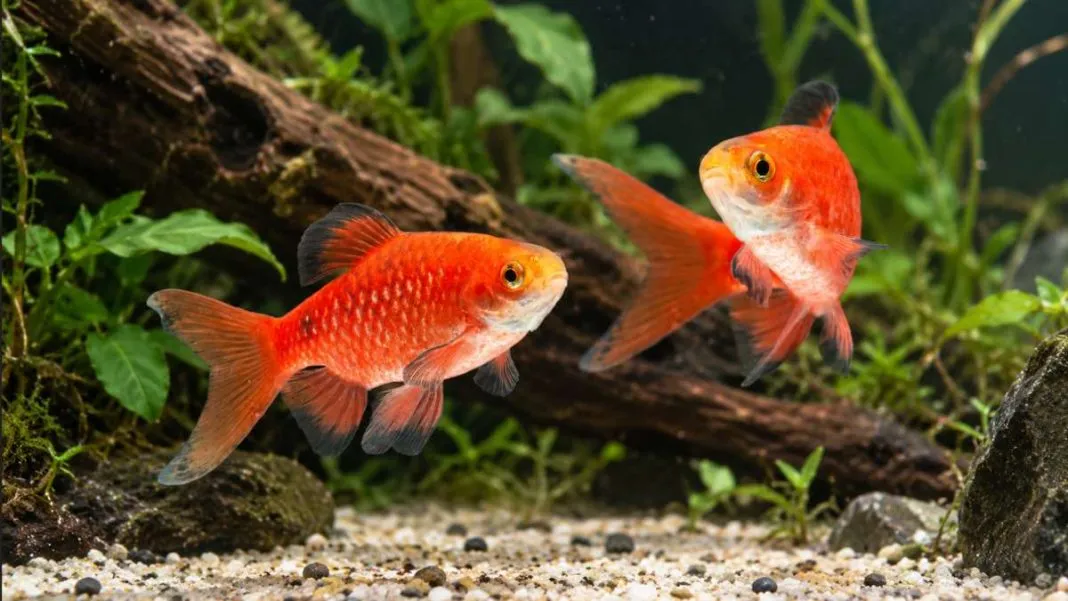
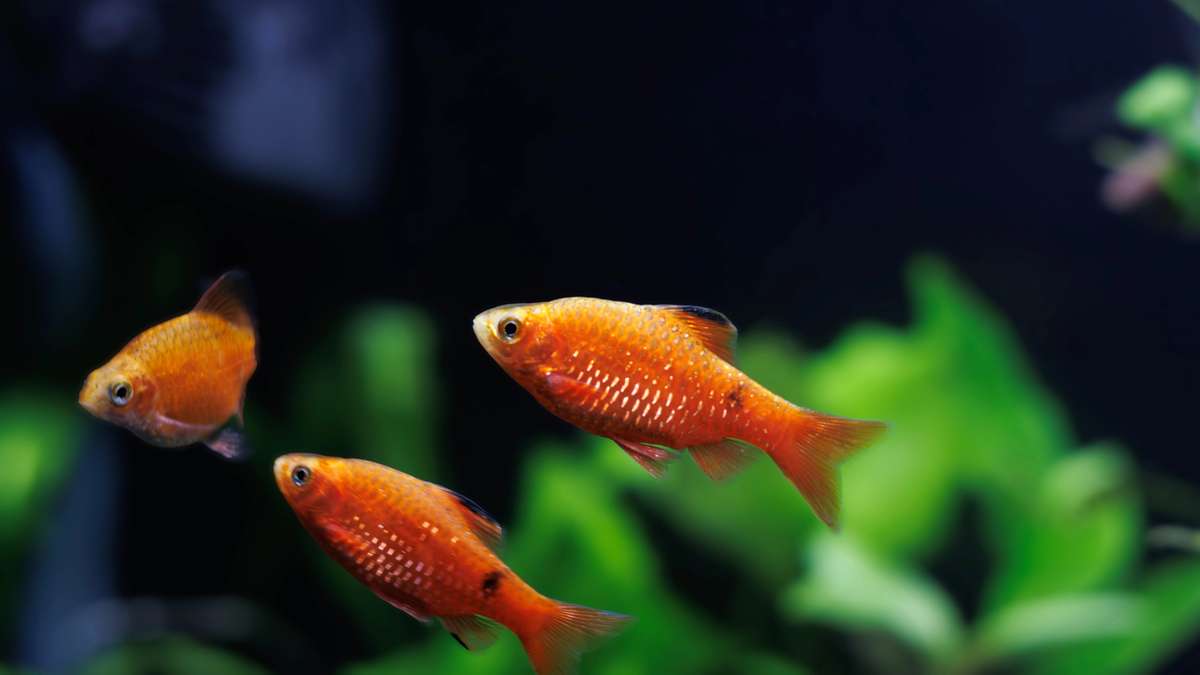
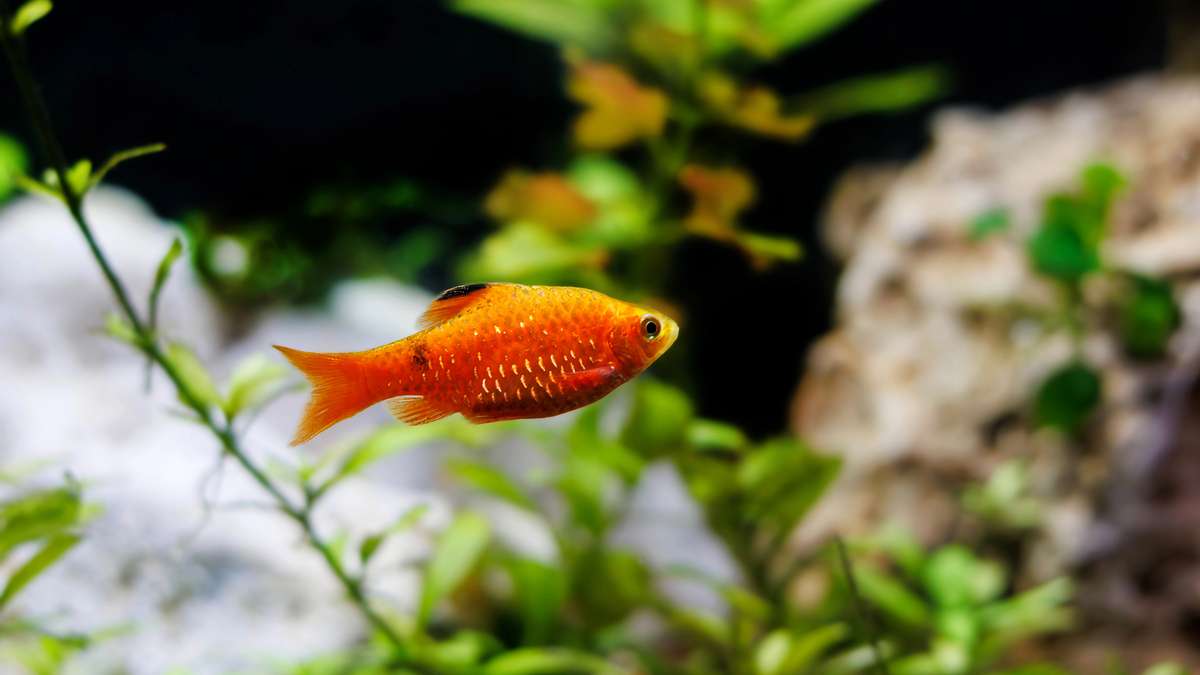
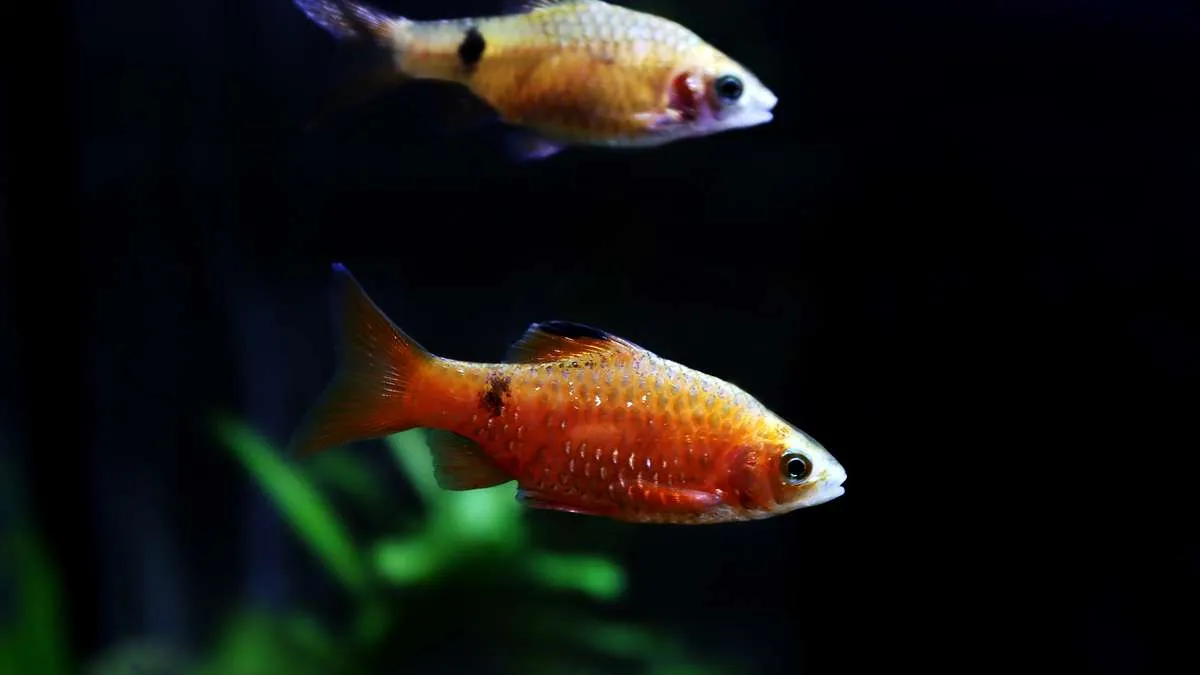
Rosy barbs (Pethia conchonius) are hardy, active shoaling fish native to South Asia. Mature males can develop a deep red coloration, while females and non-breeding males are generally more silver, gold or olive in appearance. Their tolerance of a broad range of water chemistry makes them suitable for newer aquarists, but their shoal size, swimming space and relatively cool temperature preference must still be planned carefully.
Selective breeding of rosy barbs has produced long-finned, veil-tail, super-red, neon and golden forms. “Shining Barb” is also used within the aquarium hobby for selectively bred rosy barbs, but it should not be treated as the primary common name of every P. conchonius.
Origin & Habitat

Rosy barbs are native to South Asia. Their recognized range includes Afghanistan, Pakistan, India, Nepal and Bangladesh, with additional reports from Myanmar. The species was originally described from ponds in northeastern Bengal and the Kosi and Ami river systems in India. Most rosy barbs available in the aquarium trade today are commercially bred rather than wild-caught.
Rosy barbs occur in flowing hill streams and river tributaries as well as lakes, ponds, swamps, ditches and seasonally flooded waters. Conditions can vary considerably in water flow, clarity, substrate and aquatic vegetation. Introduced populations have been recorded outside their native range, including Australia, Puerto Rico, Singapore, Mexico and Colombia. A rosy barb was also captured in an urban pond in London, England, in 2021.
Research highlight: The London record illustrates why aquarium fish should never be released outdoors. A recent assessment found that cold winters currently limit the species’ ability to establish self-sustaining populations in the United Kingdom, but a warming climate could make the country more suitable for subtropical aquarium fish.
Rosy Barb Care
Rosy barbs are hardy barbs that tolerate a wide range of varying conditions when maintained in a mature aquarium with a stable temperature, adequate swimming space and a properly sized shoal.
“Hardy” should not be interpreted as being able to tolerate consistent neglect, an uncycled aquarium or persistent water-quality issues. Ammonia and nitrite should remain at 0 ppm, while nitrate and dissolved waste should be controlled through appropriate stocking, regular water changes and substrate maintenance.
Tank Size
A 40+ gallon aquarium is a practical minimum for a group of six to ten rosy barbs. Tank length and footprint are more important than height. Provide at least 36 inches (90 cm) of swimming space, with a longer aquarium preferred for a larger shoal or community aquarium.
Although smaller aquariums are sometimes recommended, they provide less room for a shoal of rosy barbs, open swimming space and compatible tank mates. Rosy barbs are highly active fish that commonly reach 10 cm (4 inches) and can grow larger.
A secure, tight-fitting lid with no open gaps is recommended, as rosy barbs may jump when startled, chased or introduced into a new aquarium.
Water Parameters
Rosy barbs can tolerate a relatively wide range of aquarium conditions. Recommended water parameters include:
- Temperature: 64–75°F (18–24°C)
- pH Range: 6.0–8.0
- General Hardness (GH): 5–20 dGH
An 18–22°C (64–72°F) temperature range is a suitable long-term target for rosy barbs, which prefer cooler conditions, while 23–24°C (73–75°F) remains appropriate when compatible tank mates require slightly warmer water. Avoid maintaining rosy barbs continuously above their recommended temperature range simply because they can tolerate brief periods of warmer water.
Maintaining stable conditions is more important than trying to achieve an exact value for each water parameter. Avoid sudden changes in temperature or water chemistry. Use an established biological filter, test the water and observe the fish for several days after introducing new fish or performing aquarium maintenance. Match the temperature of replacement water before completing a large water change.
Aquarium Setup
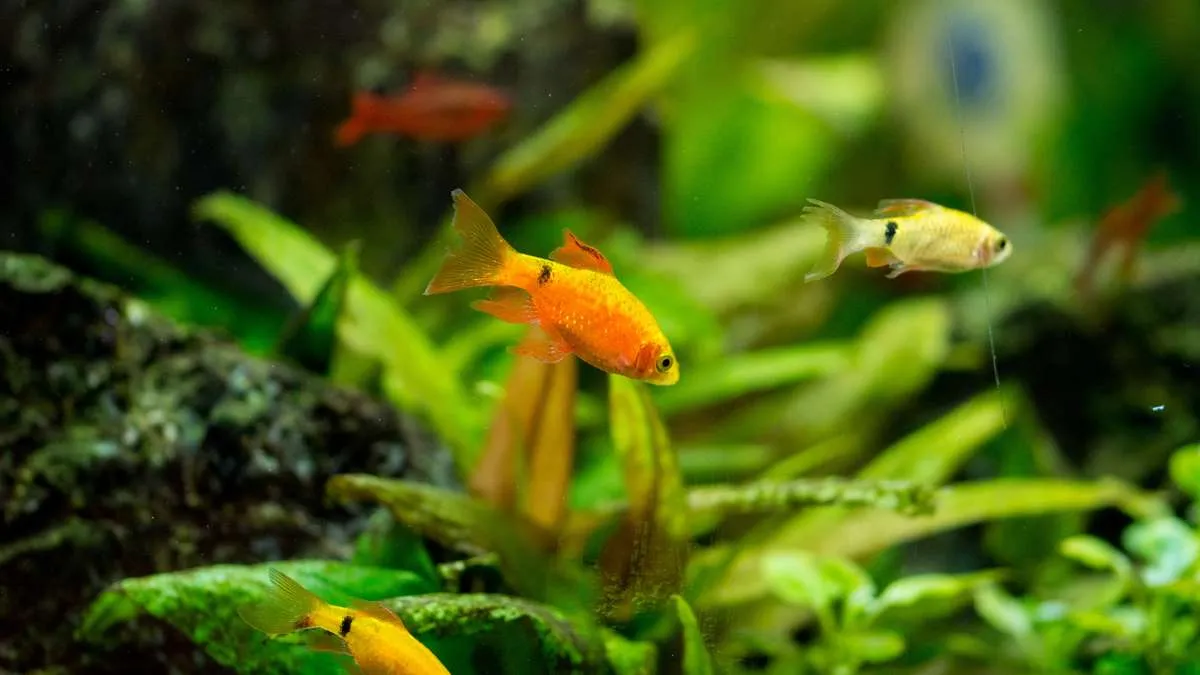
Provide an open swimming area in the center of the aquarium, with plants, driftwood or smooth rockwork positioned around the sides and rear. A dark substrate, floating plants and a darker background can help bring out their coloration while providing shaded areas without creating a murky environment.
Rosy barbs can be kept in planted aquariums, but they may graze on soft leaves and new shoots. Thick-leaved anubias are among the better choices, while fast-growing plants may recover more easily from occasional grazing. Java fern shoots, many cryptocoryne species, fine-leaved plants, mosses and floating plants can all be targeted. A densely planted aquarium may withstand limited grazing, but slow-growing species may not recover fast enough to replace damaged growth.
Outdoor Ponds
Rosy barbs are a popular choice for outdoor ponds and can be kept seasonally where local regulations permit and water temperatures remain within their recommended range. Provide shade, aeration and protection from predators, and move them indoors before temperatures fall below that range. Small outdoor tubs and containers can experience greater temperature swings than larger ponds, particularly in direct sunlight or during cool nights, so monitor the water temperature closely.
Never release unwanted rosy barbs, eggs, plants or pond water into natural waterways. Recover all fish before dismantling a seasonal pond. If rehoming is necessary, contact an independent aquarium store, friends who keep fish, a local aquarium club or a rescue center that accepts fish.
Diet & Feeding
Rosy barbs are omnivorous and naturally consume algae, worms, insects, small crustaceans, other invertebrates and plant material. Adults tend to consume more algae and other plant-based foods, while juveniles show a stronger preference for zooplankton and other protein-rich foods.
Rosy barbs are among the most effective shoaling fish that can help control green hair and thread algae. However, they will not resolve a significant algae outbreak and generally leave hard green spot algae and established black beard algae untouched.
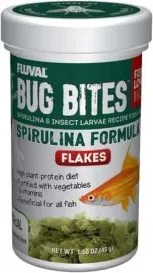
Their grazing may also extend to new plant shoots, fine-leaved plants, mosses and floating plants such as duckweed, particularly when they are hungry or underfed. Regularly providing spirulina or other algae-containing flakes alongside occasional blanched vegetables can increase the plant-based portion of their diet and may reduce damage to aquatic plants, although it will not prevent occasional nibbling.
Ensure that rosy barbs eat a nutritionally complete tropical flake or appropriately sized pellet as their primary source of food. For adults, their staple should contain a higher proportion of algae or other plant-based ingredients alongside moderate amounts of protein.
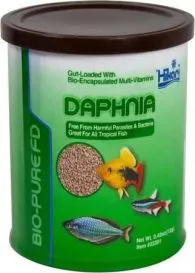
Spirulina flakes, other algae foods and blanched vegetables can be rotated into their diet regularly, while protein-rich foods such as daphnia, copepods or brine shrimp (Artemia) can be offered approximately once per week for additional variety. Live foods should supplement rather than replace a nutritionally complete staple.
Suitable plant-based foods for regular feeding:
- Spirulina or algae-containing flakes
- Blanched spinach
- Thinly sliced of blanched zucchini
Suitable protein-rich foods for occasional feeding:
- Daphnia
- Copepods, including cyclops and calanus
- Brine shrimp (Artemia)
- Moina
- Mysis shrimp
- Krill
- Bloodworms
- Mosquito larvae from a safe, controlled culture
- Small insects and insect larvae
Feed healthy adults once or twice per day, offering only what they can consume within two to three minutes. Remove uneaten food so that dietary variety does not come at the expense of water quality.
Research highlight: A study found that phytoplankton, particularly diatoms, formed 85.56% of the examined diet of adult rosy barbs. This highlights the importance of algae as a natural food source and the need to provide aquarium-kept adults with a varied omnivorous diet containing plenty of algae and other plant-based ingredients.
Primary Staple Food
Protein-Rich Supplement
Protein-Rich Supplement

Rosy Barb Tank Mates
Rosy barbs are generally peaceful, highly active fish that often become competitive during feeding time. Chasing each other is normal behavior, particularly when males compete or pursue females during courtship. Fin nipping may occur when they are kept in groups that are too small, kept in an undersized aquarium or kept with slow-moving, long-finned tank mates.
Keep a shoal of at least six rosy barbs, with eight to ten or more preferred when aquarium size permits. A properly sized group encourages more natural social behavior and reduces the persistent attention directed at any one female. An exact male-to-female ratio is unnecessary, although a balanced group or one containing slightly more females is preferable. Provide sufficient swimming space, cover and visual barriers, and closely monitor newly introduced fish.
Community fish kept with rosy barbs should be active enough to compete during feeding time, robust enough to tolerate occasional chasing and lack long, trailing fins that may attract nipping. Increase the aquarium size substantially when housing full shoals or schools of multiple active species.
The most important factors when choosing tank mates for rosy barbs are compatible temperature and water chemistry requirements, along with appropriate size and activity levels. Suitable options can be found among barbs, danios, tetras and corydoras. Certain livebearers and rainbowfish can also be compatible when their temperature requirements overlap.
Compatible Tank Mates
TETRAS
✅ Black skirt tetra
✅ Buenos Aires tetra
✅ Colombian tetra
✅ Red-eye tetra
✅ Glass bloodfin tetra
✅ Bloodfin tetra
BOTTOM-DWELLERS
✅ Panda cory
✅ Bronze cory
✅ Peppered cory
✅ Panda garra
✅ Bristlenose pleco
✅ Bulldog pleco
Note: Individual temperament can vary; species that coexist peacefully in one aquarium may not do so in another. Monitor newly introduced fish for excessive fin-nipping, fin damage, persistent aggression, or signs of stress, and separate incompatible fish when necessary.
Male vs Female Differences
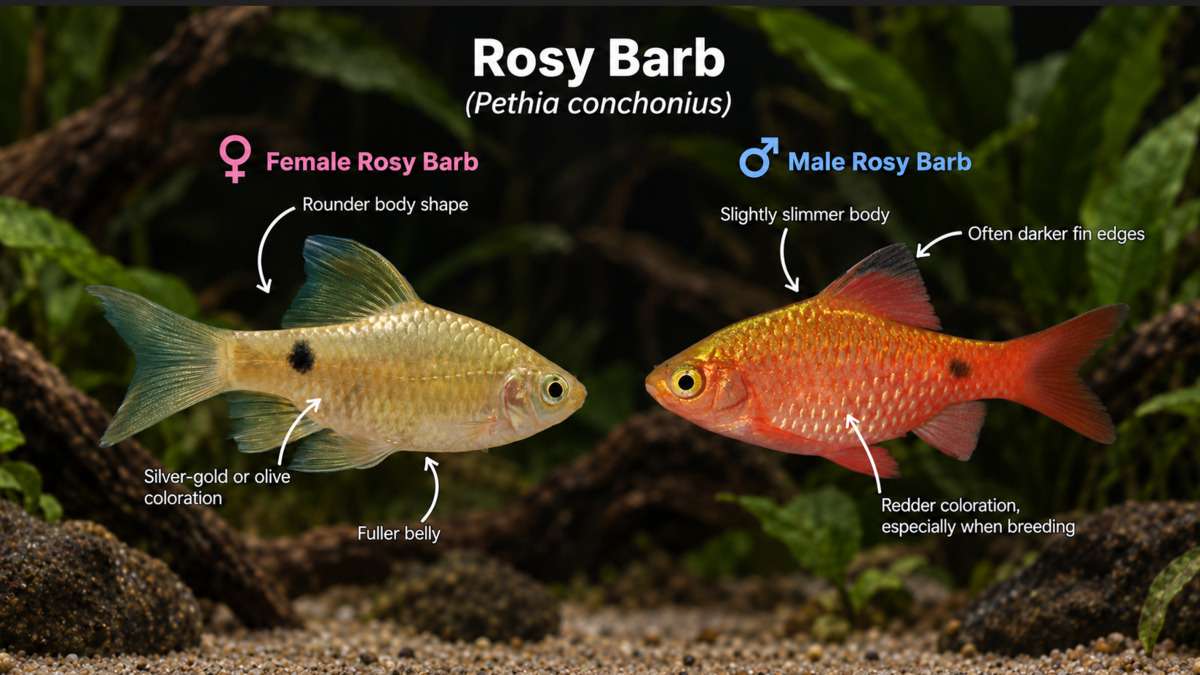
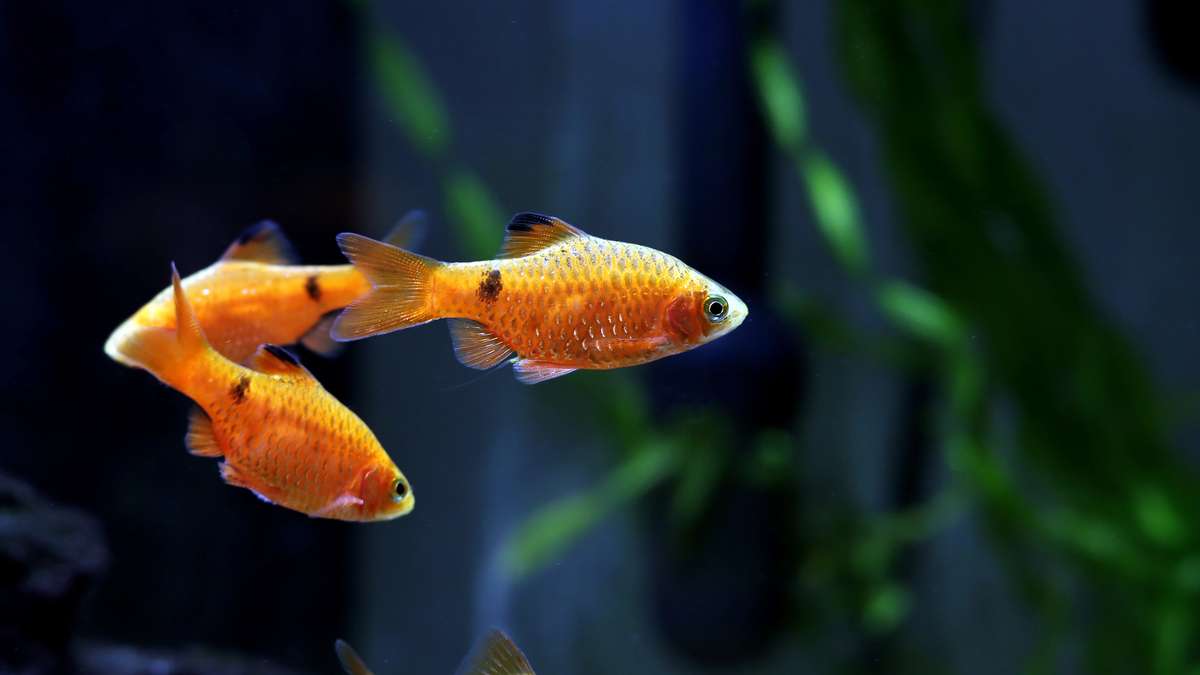
Adult rosy barbs develop noticeable differences between males and females, particularly when they are mature and in breeding condition. Males are typically smaller and slimmer, and mature individuals develop deep-red coloration. Dark red and black markings are often visible on the dorsal, pelvic and anal fins. During breeding condition, males may also develop small breeding tubercles, which appear as tiny white bumps on the head and snout.
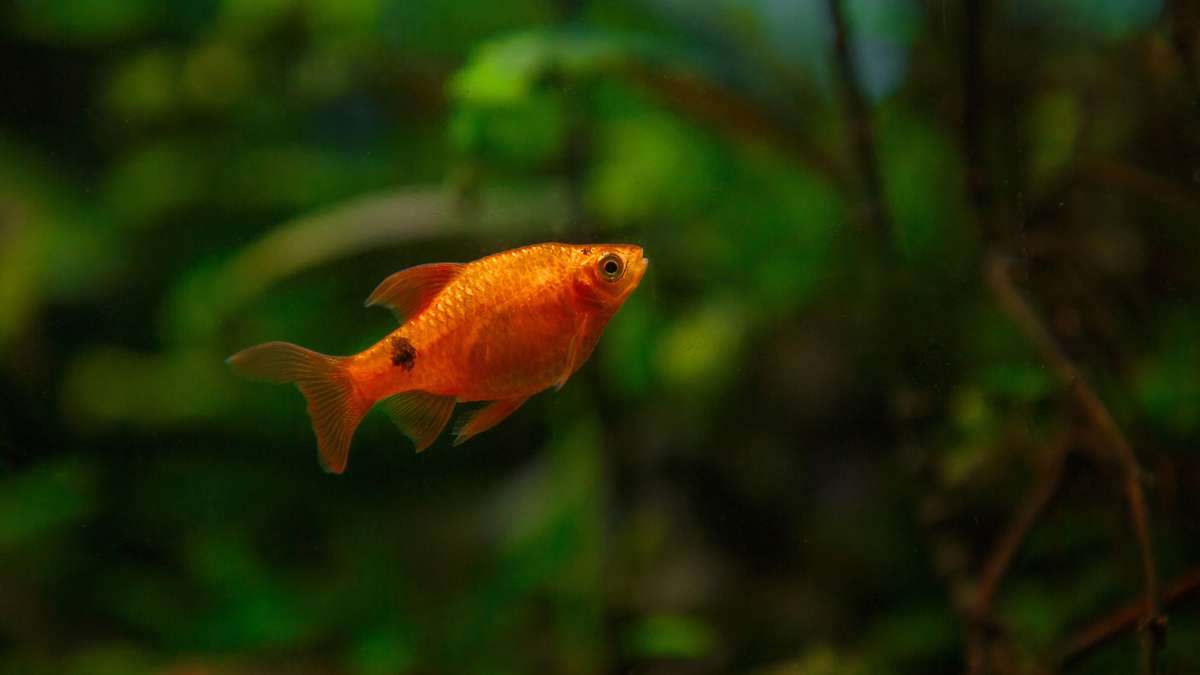
Females are usually larger and deeper-bodied, especially when carrying eggs. They are more commonly silver, gold or olive, with little or no red coloration and transparent or more lightly colored fins. Color varies among ornamental strains, so body shape, maturity and reproductive condition should be considered together rather than relying on color alone.
Juveniles can be difficult to sex. A rounded abdomen alone is not sufficient evidence that a rosy barb is female, as overfeeding, constipation, fluid retention or disease can also cause swelling.
Rosy Barb Breeding Guide
Rosy barbs are egg-scattering free spawners that provide no parental care. Wild populations typically reproduce seasonally, while captive rosy barbs can spawn repeatedly when they are mature, healthy and maintained under suitable conditions.
Breeding rosy barbs is fairly straightforward, and well-conditioned adults often spawn in a mature community aquarium. However, most eggs and fry will be eaten, so a separate breeding aquarium is recommended if you want to raise more than a few surviving fry.
Conditioning Rosy Barbs for Breeding
Condition mature rosy barbs for two to three weeks at approximately 20°C (68°F), providing a varied diet of high-quality flake food supplemented with daphnia, brine shrimp, bloodworms or other suitable live or frozen foods. Offer two or three small meals per day while maintaining excellent water quality.
The adults can be conditioned together. Separating the sexes is optional but can provide greater control over the timing of spawning. A well-conditioned female will develop a noticeably fuller abdomen, while males often intensify in color and begin actively courting the females.
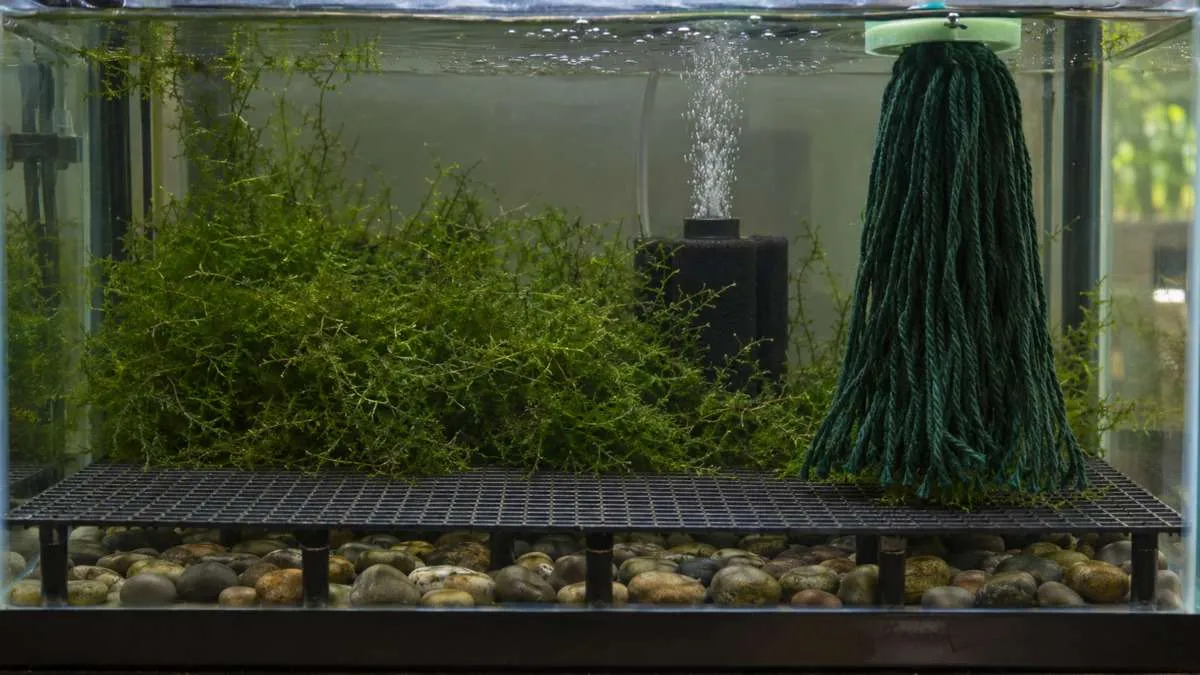
Prepare a biologically established 10–20-gallon breeding aquarium with gentle aeration or an air-powered sponge filter. Keep the lighting dim and protect the eggs using the following:
- Dense java moss, other fine-leaved plants or spawning mops
- A layer of glass marbles or similarly sized rounded stones
- Egg-safe mesh raised above the aquarium floor
The gaps in the mesh barrier should be large enough to allow the eggs to fall through and out of the adults’ reach, but small enough to prevent the adults from becoming tangled or injured.
Spawning & Egg Care
Prepare the breeding aquarium in advance using mature, dechlorinated water. Recommended breeding parameters include:
- Temperature: 23°C (73°F)
- pH Range: 6.0–8.0
- General hardness (GH): 5–10 dGH
Initially match the breeding aquarium to the adults’ temperature of approximately 20°C (68°F). Slightly acidic to neutral water is commonly used for breeding, but it is not necessary, as rosy barbs can spawn across a wide pH range.
Stable water parameters and proper acclimation are more important than achieving an exact pH value. If the pH or hardness differs noticeably between the two aquariums, acclimate the adults gradually before transferring them.
Introduce one gravid female with two males in the evening, or use a small spawning group with a 2:1 male-to-female ratio in a larger breeding aquarium. After introducing the adults, gradually increase the water temperature to 23°C (73°F), allowing at least three hours for the temperature change.
Spawning commonly begins during the early morning. Observe the aquarium for eggs and remove the adults promptly after spawning to prevent them from eating the eggs.
Maintain gentle aeration and stable water quality throughout the incubation period. Fertilized eggs are generally translucent, while opaque white eggs are usually infertile or no longer viable. Carefully remove affected eggs if they begin to develop fungal growth.
Hatching takes approximately 24–48 hours, depending on the water temperature. Do not increase the temperature merely to shorten incubation, as warmer water holds less dissolved oxygen and a sudden temperature change may adversely affect the developing embryos.
Research highlight: A controlled study found that rosy barbs maintained at 20°C (68°F) before being moved to 23°C (73°F) for spawning achieved the best reproductive results. Using at least two males for each female increased the percentage of females that spawned and improved embryo survival. When the same adults were bred repeatedly, a recovery period of 20–40 days between spawnings produced more viable offspring than a 60-day interval.
Raising Rosy Barb Fry
Newly hatched larvae absorb their yolk reserves and do not require food immediately. Once they become free-swimming, which may occur around four days after hatching depending on conditions, offer suitably small foods such as infusoria, rotifers or microworms.
Newly hatched brine shrimp (Artemia nauplii), moina and small daphnia can be introduced as the fry grow large enough to consume them. Rosy barb fry may begin accepting powdered commercial food approximately two to three weeks after hatching.
Offer small portions three to five times per day while maintaining excellent water quality. Cover the filter intake with a sponge to prevent fry from being drawn into it. Use a narrow siphon or airline tubing to remove waste and perform small water changes once or twice per week using replacement water with matching temperature and chemistry. Check water quality frequently, as heavily stocked fry aquariums may need more frequent maintenance.
Species Overview

The species now recognized as Pethia conchonius was first described by Francis Buchanan-Hamilton in 1822 as Cyprinus conchonius. It was later transferred to the genera Barbus and then Puntius, resulting in the former scientific names Barbus conchonius and Puntius conchonius. A major taxonomic revision of South Asian Puntius published in 2012 placed the rosy barb within the genus Pethia. These older names remain useful when searching historical aquarium and scientific literature, but Pethia conchonius is the currently accepted classification.
Rosy barbs can reach 14 cm (5.5 inches) in total length, although wild and aquarium-raised adults more commonly measure 7–10 cm (2.75–4 inches). Adult size, fin length and coloration can vary among geographic populations and selectively bred strains.
Rosy Barb vs Cherry Barb
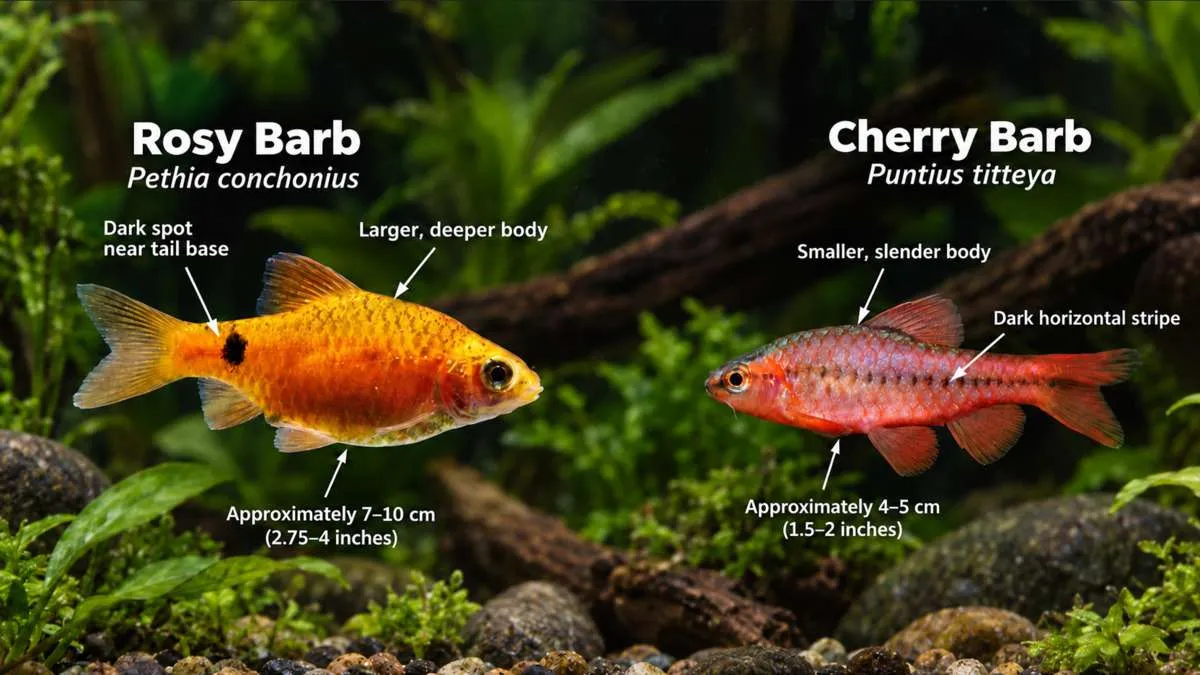
Rosy barbs are considerably larger and more active, commonly reaching 7–10 cm (2.75–4 inches), while adult cherry barbs usually remain around 4–5 cm (1.5–2 inches). Rosy barbs have a dark marking near the base of the tail, with mature males developing a reddish body. Cherry barbs are more slender and have a dark horizontal stripe extending along the sides, while mature males develop a deeper cherry-red coloration.
Photo Gallery
FAQs
What Diseases Are Rosy Barbs Susceptible To?
Rosy barbs are susceptible to common freshwater fish diseases such as ich, fin rot and other bacterial or parasitic infections, particularly following exposure to infected fish, unstable temperatures or poor water quality. They may also develop dropsy, which is a group of symptoms, including severe swelling and raised, pinecone-like scales, rather than a specific disease.
Test the water for ammonia, nitrite, nitrate and pH whenever a rosy barb appears ill, and confirm that the temperature remains stable. Ammonia and nitrite should remain at 0 ppm, while nitrate should be controlled through appropriate stocking and regular water changes.
Isolate affected fish in a suitable quarantine aquarium when possible. Because similar symptoms can have different underlying causes, avoid adding medication or aquarium salt until you have identified the most likely cause.
Can Rosy Barbs Live With Angelfish?
Rosy barbs and angelfish are not ideal tank mates. Their temperature requirements overlap only near the warmer end of the rosy barb’s preferred range, while the angelfish’s long fins may attract nipping from active, inquisitive rosy barbs. Rosy barbs can also outcompete slower angelfish during feeding.
Although the combination may occasionally work in a spacious aquarium with a large rosy barb shoal, it remains less dependable than choosing active, short-finned tank mates with more closely aligned temperature requirements.
Do Rosy Barbs Eat Plants?
Rosy barbs may nibble algae, new plant shoots and soft or fine-leaved aquarium plants. The amount of damage varies between individual fish and can become more noticeable when plant matter is absent from their regular diet.
Thick-leaved anubias may withstand grazing better than softer plants, while fast-growing plants can replace damaged growth. Spirulina flakes, algae-containing foods and occasional softened vegetables can help provide plant matter, although feeding vegetables does not guarantee that rosy barbs will leave every aquarium plant untouched.
Can Rosy Barbs Live With Goldfish?
Rosy barbs and goldfish can tolerate some of the same moderate temperatures, but they are not ideal tank mates. Rosy barbs are faster swimmers and feeders and may nip the fins of slow-moving fancy goldfish. Common and comet goldfish are more active but eventually require substantially larger aquariums and produce considerable amounts of waste.
For these reasons, rosy barbs are best kept with similarly sized subtropical community fish, while goldfish should be housed in an aquarium or pond designed around their particular space, filtration and feeding requirements.
Do Rosy Barbs Eat Algae?
Rosy barbs readily eat green hair and thread algae and can help control new growth within an aquarium. However, they will not resolve a significant algae outbreak and generally leave hard green spot algae and established black beard algae untouched. Their grazing may also extend to new plant shoots, mosses and other soft aquatic vegetation. Continue providing a nutritionally complete diet containing algae and other plant-based ingredients rather than relying on naturally growing algae as their primary food.
About Our Species Profiles
ForAquarium species guides combine scientific literature and established taxonomic references with years of aquarium-keeping experience. Information is periodically reviewed and updated as new research becomes available.
Published Literature
Rohan Pethiyagoda, Madhava Meegaskumbura, and Kalana Maduwage. A synopsis of the South Asian fishes referred to Puntius (Pisces: Cyprinidae) (2012)
Sandipan Gupta. An Overview on Food, Feeding Habit and Reproductive Biology of Puntius conchonius (Ham-Buch, 1822); a Freshwater Cyprinid of Indian Subcontinent (2015)
Katarzyna Targońska and Dariusz Kucharczyk. Reproduction of the model fish: Rosy barb (Puntius conchonius), under controlled conditions (2012)
Haimanti Bhattacharya, Shicui Zhang, and Y. J. Wang. Embryonic development of the rosy barb Puntius conchonius Hamilton 1822 (Cyprinidae) (2005)
Ahmet Sepil, Burcu Ergoz Azizoglu, Zehra Alkan Çekiç, and Ahmet Regaib Oguz. Embryogenesis and early larval development in rosy barb (Pethia conchonius, Hamilton 1822) (2025)
Peter J. Barry, Phil I. Davison, Luke Pearson, and Gordon H. Copp. A wild-caught rosy barb Pethia conchonius in a British urban pond underscores the need to prevent aquarium releases (2025)
Upasana Sahoo, Saroj Swain, Mukesh Bairwa, Harshavardhan Joshi, and Chakradhar Patra. A comparative study of growth and survival in juveniles of “Shining Barb” (Pethia conchonius) fed with artificial feed, plankton and the combination of both (2017)
Fereshteh Nejatizadegan, Fatemeh Paykan Heyrati, Salar Dorafshan, and Vahid Morshedi. Effects of different levels of dietary taurine amino acid on rosy barb (Pethia conchonius) pigmentation (2020)
Shane W. Ramee, Taylor N. Lipscomb, and Matthew A. DiMaggio. Evaluation of the effect of larval stocking density, salinity, and temperature on stress response and sex differentiation in the dwarf gourami and rosy barb (2020)
Mangesh M. Bhosale, U. A. Suryawanshi, S. R. Somashekar, and Manjulesh Pai. Induced breeding and embryonic development of rosy barb, Puntius conchonius (Hamilton, 1822), using synthetic hormones under captive condition (2020)
Ramón De Lara Andrade, Germán Castro-Mejía, María del Carmen Monroy-Dosta, Jorge Castro-Mejía, J. A. Ocampo-Cervantes, and F. Dávila-Sánchez. Growth and survival of Puntius conchonius (Hamilton, 1822) cultured in a Biofloc system (2017)
Alejandro Trujillo-González, Richard C. Edmunds, Joy A. Becker, and Kate S. Hutson. Parasite detection in the ornamental fish trade using environmental DNA (2019)
Mark Maddern. Pethia conchonius (2022)
Rainer Froese and Daniel Pauly, editors. Pethia conchonius, Rosy Barb (2026)
Francis Hamilton. An Account of the Fishes Found in the River Ganges and Its Branches (1822)


It’s a pity you don’t have a donate button! I’d definitely donate!
I suppose for now i’ll settle for book-marking. I look forward to new updates
I really like your blog.. very nice colors & theme.
Did you make this website yourself or did you hire someone to do it for you?
Plz respond as I’m looking to construct my own blog and would like
to find out where u got this from. thanks
Keep this going please, great job!