
Species Classification
Order: Characiformes
Family: Acestrorhamphidae
Subfamily: Megalamphodinae
Genus & Species: Paracheirodon axelrodi
Common Names: Cardinal Tetra, Red Neon Tetra
Species Data Sheet
Temperature: 75–81°F (24–27°C)
pH Range: 4.5–6.5
General Hardness (GH): 1–6 dGH
Min Tank Size: 20 Gallons
Care Level: Intermediate
Max Size: 5 cm (2 inches)
Avg Size: 3–4 cm (1.2–1.6 inches)
Swimming Level: Mid-Level
Lifespan: 3–5 Years
Temperament: Peaceful
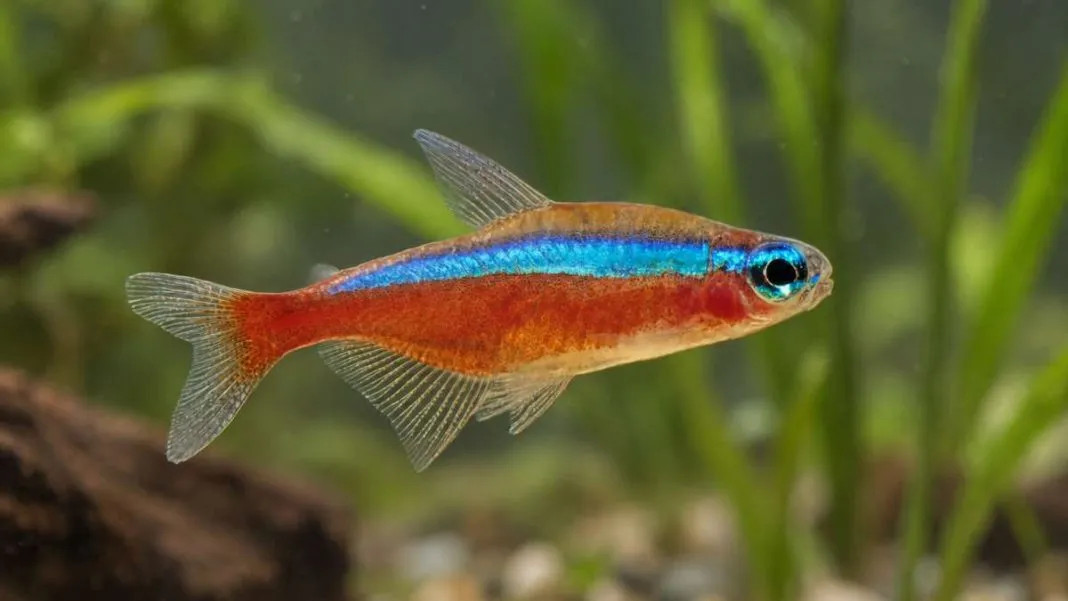
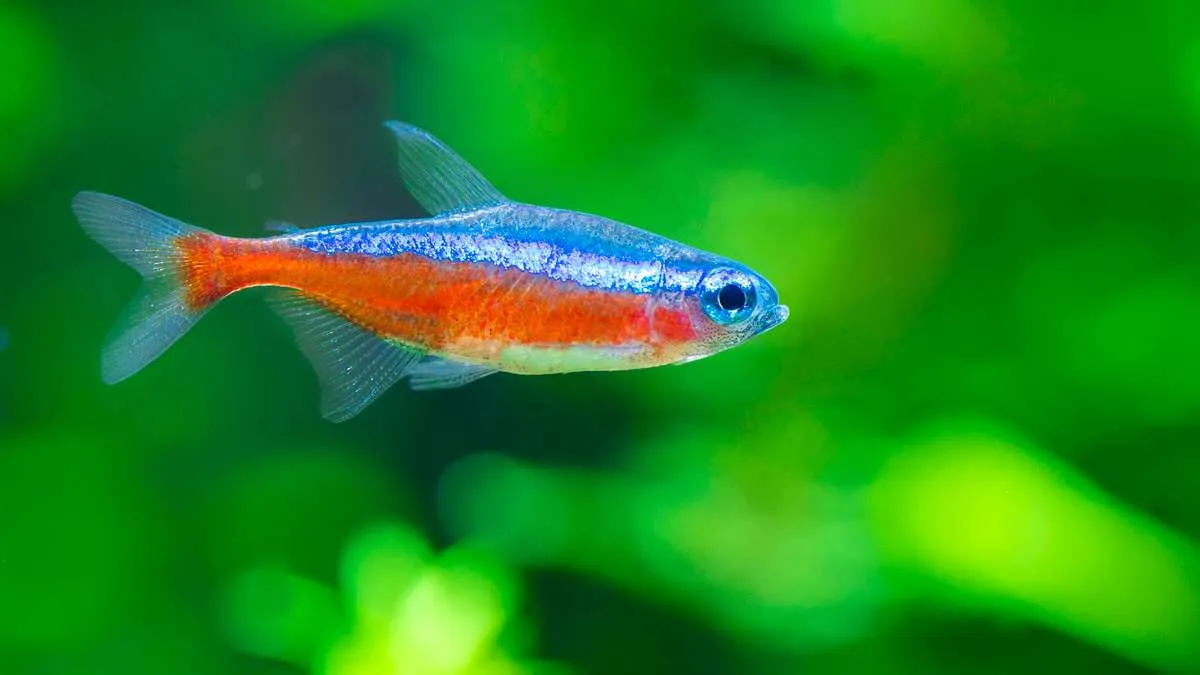
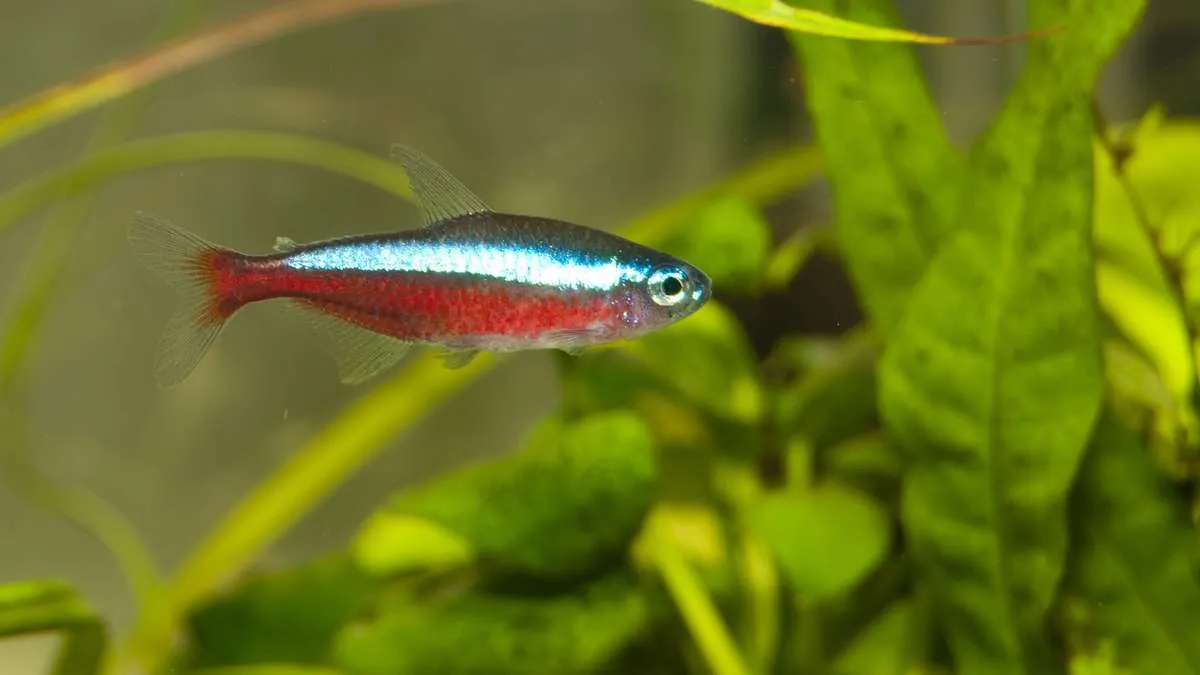
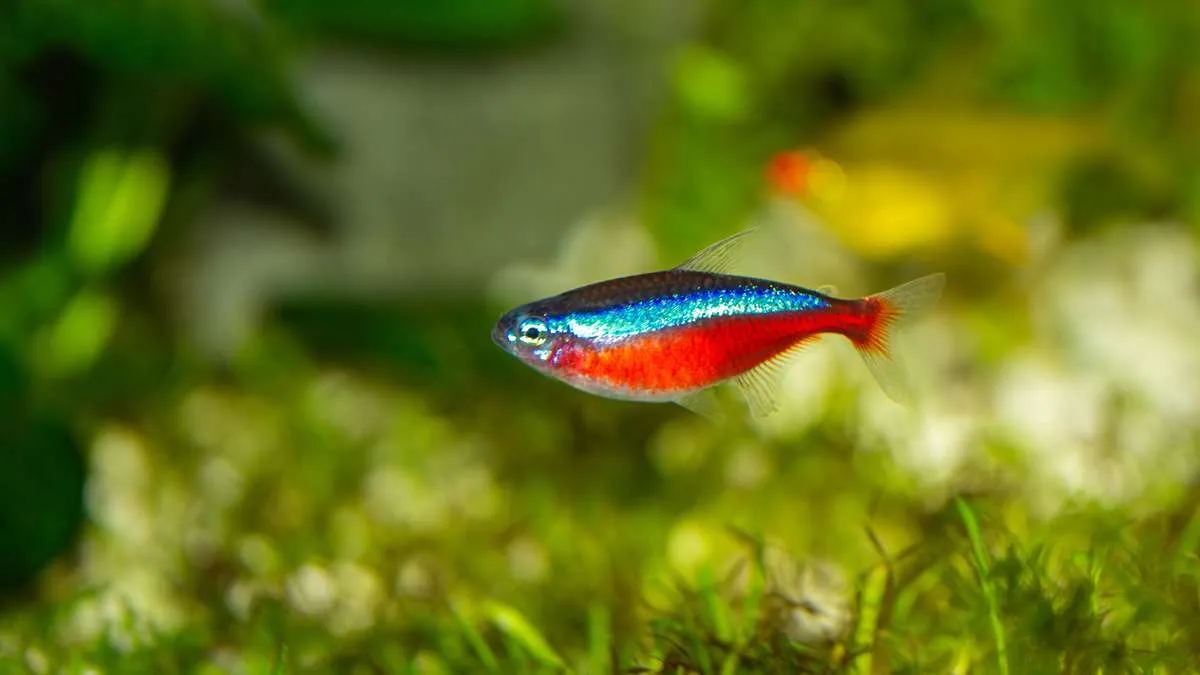
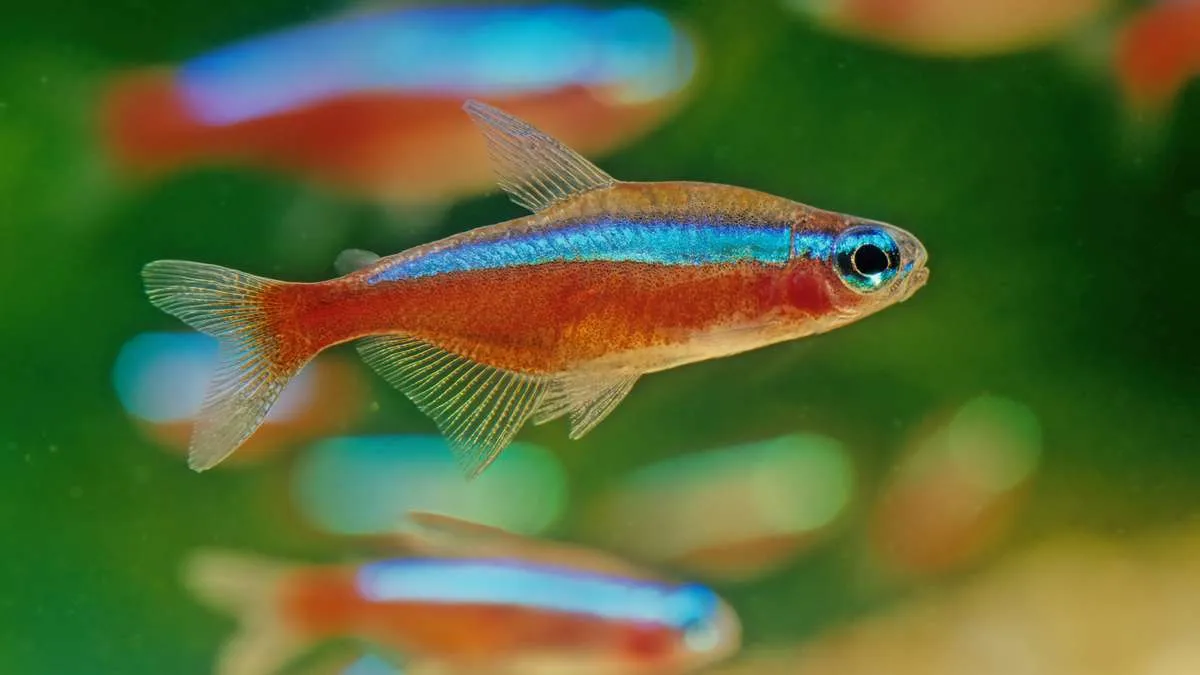
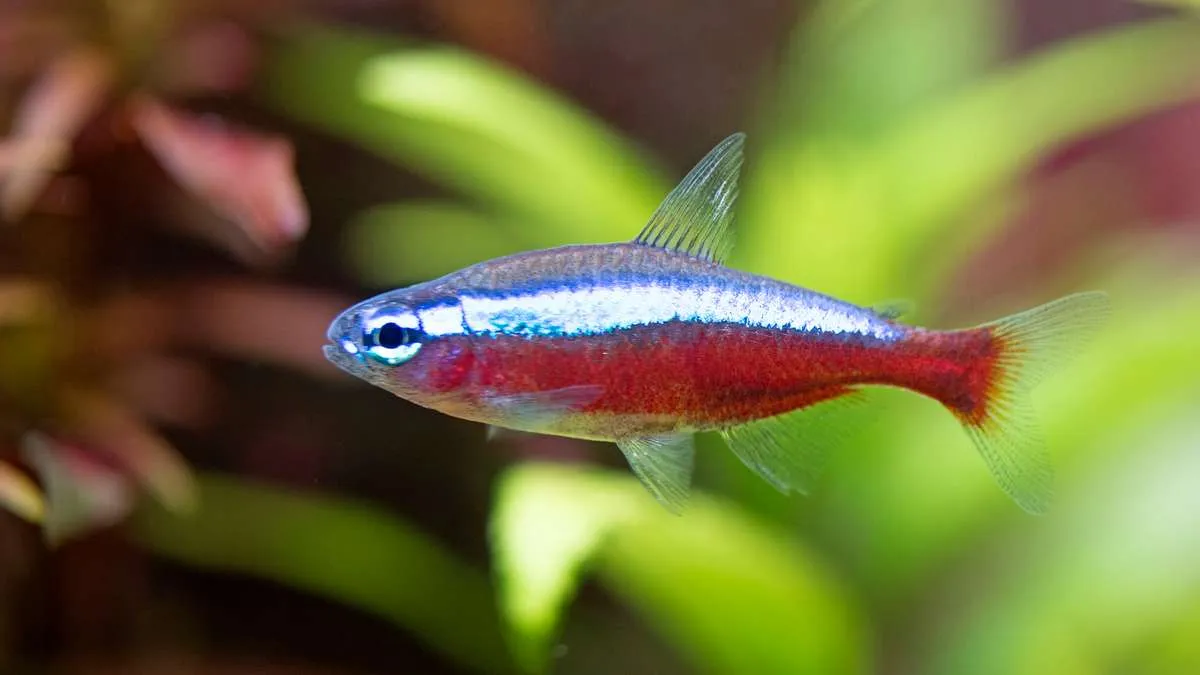
Cardinal tetras (Paracheirodon axelrodi) are small South American schooling fish recognized by an iridescent blue stripe above a bright red band that extends along the entire lower body. This continuous red band distinguishes them from the closely related neon tetra, whose red coloration is limited to the rear half of the body.
Their shimmering blue stripe is produced by iridophores containing microscopic guanine crystals that reflect light. As cardinal tetras swim, changes in the viewing angle can make the stripe appear blue, turquoise, or green.
Origin & Natural Habitat

Cardinal tetras are native to the Negro and upper Orinoco river systems in Brazil, Colombia, and Venezuela. They inhabit smaller waterways and surrounding areas that flood during the rainy season. Genetic studies have identified differences among populations across their range, while also revealing evidence of past connections between the two river systems.
Their natural habitats vary between locations. Rio Negro habitats commonly include shaded forest streams, submerged roots, fallen branches, and accumulated leaf litter. In parts of the Orinoco basin, cardinal tetras occupy clearer streams and palm swamps containing more aquatic vegetation. During the rainy season, rising water allows the fish to move into flooded areas along the banks, where submerged plants and roots provide shelter.
Cardinal Tetra Care
Cardinal tetras are peaceful community fish, but their specific water requirements and sensitivity to changes in water parameters make them better suited to aquarists with some experience. They should only be introduced into a mature aquarium with established biological filtration, suitable water parameters, and plenty of shelter among plants, driftwood, and other decor.
Quarantine new arrivals before adding them to an existing community, and ask the supplier about their current water conditions to help avoid sudden changes during acclimation, as well as which foods they readily accept.
Cardinal tetras prefer subdued lighting that resembles their naturally shaded habitats. Under very bright lighting, they may spend more time near the bottom of the aquarium, beneath plants or hiding within shaded areas. Use a dimmable aquarium light and provide floating or overhanging plants, adjusting the intensity according to their behavior.
Research highlight: During an experiment, cardinal tetras kept at light levels of 0–250 lux displayed more vibrant dark and iridescent blue stripes. At 250–500 lux, their melanosomes remained relatively dispersed, helping maintain strong coloration, although melanophore density began to decline at 500 lux. Under intense lighting of 1,200–2,700 lux, the melanosomes became more aggregated, causing the dark and iridescent blue areas to appear noticeably paler. In contrast, the red stripe became more intense as light levels increased.
Tank Size
A 20-gallon aquarium is recommended as the minimum size for cardinal tetras. Choose a long aquarium measuring at least 30 inches (75 cm), with open swimming space through the middle of the tank. A long aquarium provides more open swimming space for schooling fish than a tall, narrow, or cube-shaped tank of similar volume.
Allow enough space for plants, driftwood, and other decor without overcrowding the center of the tank. Their small size should not be used to justify keeping only two or three fish in a small aquarium. A larger aquarium is preferable when adding another schooling species, providing enough room for both schools to swim freely.
Water Parameters
Cardinal tetras are adapted to soft, acidic water and should be kept within the following recommended water parameters:
- Temperature: 75–81°F (24–27°C)
- pH Range: 4.5–6.5
- General Hardness (GH): 1–6 dGH
These recommended conditions reflect the warm, mineral-poor waters they inhabit. In blackwater habitats, decomposing vegetation releases organic acids that help maintain a low pH because the water has very little buffering capacity. Cardinal tetras are adapted to these conditions, with specialized osmoregulation that allows them to absorb sodium even in strongly acidic ion-poor water.
For a soft-water community aquarium, a pH of 6.0–6.5 will give you more options for tank mates with overlapping requirements. Lower values, such as pH 4.5–5.5, are better suited to carefully managed blackwater setups, where low buffering capacity requires closer monitoring. There is no need to keep cardinal tetras at the lowest end of this range unless you are creating a setup specifically for species that require more acidic conditions.
If your tap water is too hard, dilute it with reverse-osmosis or distilled water. Once suitable water parameters have been established, maintaining stable conditions is better for their long-term health than repeatedly making adjustments that cause fluctuations.
Aquarium Setup
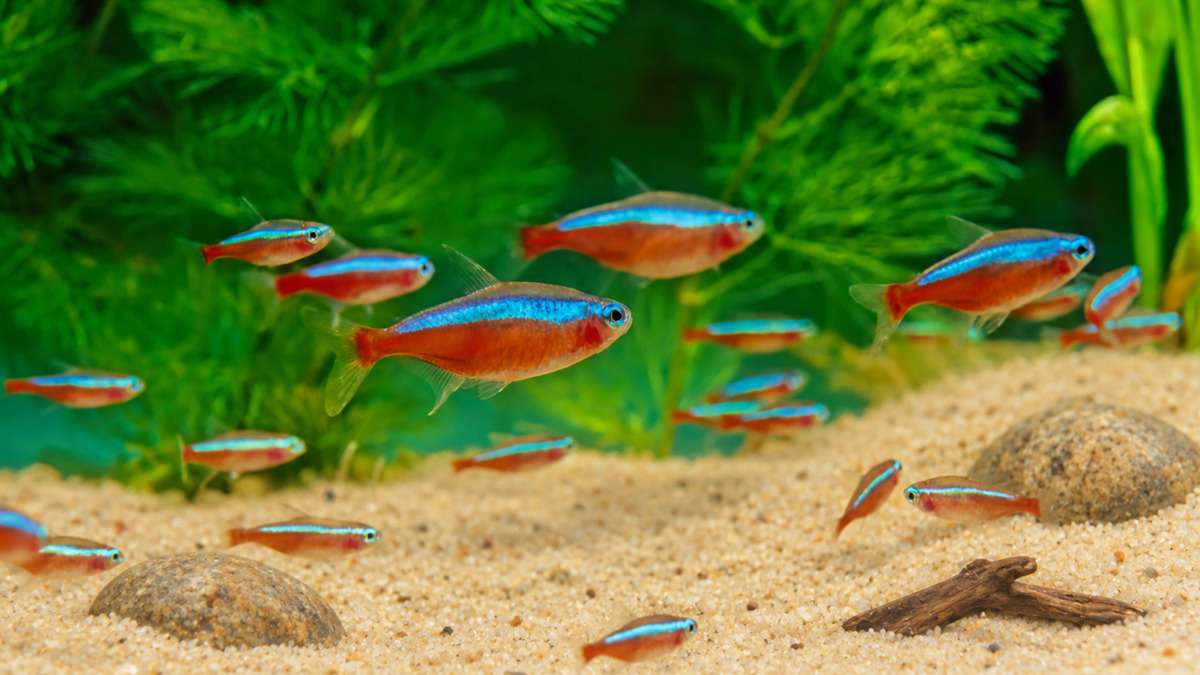
A darker background creates greater contrast with their bright blue and red coloration, making the fish much more noticeable throughout the aquarium.
An aquascape with fine sand, driftwood, and areas with overhanging plants or other decor will resemble their natural habitat. Arrange driftwood, plants, and decor around the back and sides of the tank, while maintaining a low, minimal aquascaping profile in the center to maximize open swimming space for the group.
Aquarium-safe dried leaves can recreate the leaf litter found in many cardinal tetra habitats. Add them gradually, monitor their condition, and remove or replace them once they soften, break apart, or begin accumulating excessive debris. Beech and magnolia leaves often produce lighter staining, while catappa, also known as Indian almond leaves, usually creates a stronger amber tint. The result varies with the leaf species, size, preparation, and quantity used.
Diet & Feeding
Cardinal tetras are micropredators that feed primarily on tiny invertebrates in their natural habitat. They forage among submerged leaves, roots, and aquatic vegetation for small crustaceans and insect larvae, particularly chironomid larvae. Algae and plant matter make up only a minor portion of their diet, as cardinal tetras are not primarily plant or algae grazers.
In an aquarium, provide a nutritionally complete micro-pellet or finely crushed tropical flake as their staple food, ensuring that all food offered is small enough for them to eat easily.
Live or frozen foods should be offered regularly to provide dietary variety and foods that more closely resemble their natural prey. Suitable options include:
- Newly hatched brine shrimp (Artemia)
- Cyclops and other small copepods
- Small daphnia
- Moina
- Small bloodworms
- Small mosquito larvae
- Other appropriately sized insect larvae
Fully thaw frozen foods before feeding and break larger pieces into manageable portions. If a cardinal tetra repeatedly attempts to eat food but spits it back out, the food may be too large or difficult to swallow.
Feed healthy adults one or two small meals per day, offering only as much as they can consume within a few minutes. Distribute slow-sinking foods evenly across the aquarium so the fish can feed naturally within the middle of the water column and every individual has an opportunity to eat without competing in a single area. Remove any excess food to maintain water quality.
Observe newly introduced cardinal tetras closely during feeding. Some fish, particularly wild-caught individuals, may initially accept only small live or frozen foods rather than commercial dry foods. In that case, gradually introduce micro-pellets or flake food over time while ensuring that every fish continues to eat.
Research highlight: Ilse Walker examined the digestive contents of 80 cardinal tetras collected from 14 sites across the middle Rio Negro region. The study identified a predominantly predatory diet consisting of small invertebrates. A subsequent examination of the digestive tract supported this feeding pattern.
Budget Staple Food

Premium Staple Food
Supplemental Protein

Cardinal Tetra Tank Mates
Cardinal tetras are peaceful schooling fish and should be kept in a group of at least eight to ten. The presence or introduction of other tetra species does not reduce this requirement, even when they occasionally swim together.
Select tank mates according to their temperament, adult size, feeding behavior, and water requirements. Small, peaceful fish that thrive in similarly soft, acidic conditions are generally the most suitable. Avoid larger predatory fish that may consume smaller fish, persistent fin nippers, and highly active species that may continually outcompete them for food.
Compatible Tank Mates
Small tetras, pencilfish, and hatchetfish are among the most suitable tank mates. Pencilfish and hatchetfish generally occupy the upper portions of the aquarium, while cardinal tetras remain primarily within the middle of the water column. Keep the aquarium securely covered when housing hatchetfish because they are highly capable jumpers.
Corydoras and other peaceful catfish primarily occupy the lower portion of the aquarium, reducing interactions with cardinal tetras and the likelihood of either group disturbing the other. However, water requirements vary greatly among corydoras species, so they should be selected individually based on compatibility.
Freshwater angelfish are not always suitable tank mates for cardinal tetras. Although their water requirements can overlap, mature angelfish may consume small tetras. Very active danios, aggressive barbs, and large or territorial gouramis should also be avoided because they may intimidate, harass, or outcompete cardinal tetras for food.
Bettas are similarly unpredictable because their temperament varies considerably among individuals. Some may live peacefully with cardinal tetras, while others may chase or attack them. Closely monitor the combination and be prepared to separate the fish if aggression develops.
TETRAS
✅ Rummy-nose tetra
✅ Green neon tetra
✅ Ember tetra
✅ Glowlight tetra
✅ Black neon tetra
✅ Lemon tetra
PENCILFISH & HATCHETFISH
✅ Diptail pencilfish
✅ Dwarf pencilfish
✅ Beckford’s pencilfish
✅ One-lined pencilfish
✅ Marbled hatchetfish
OTHER COMMUNITY FISH
✅ Dwarf sucking catfish
✅ Bristlenose pleco
✅ Kuhli loach
✅ Lambchop rasbora
✅ Honey gourami
CORYDORAS
✅ Sterbai cory
✅ Adolfo’s cory
✅ False Adolfo’s cory
✅ Three-lined cory
✅ Pygmy cory
✅ Salt-and-pepper cory
Note: Individual temperament can vary; species that coexist peacefully in one aquarium may not do so in another. Monitor newly introduced fish for excessive fin-nipping, fin damage, persistent aggression, or signs of stress, and separate incompatible fish when necessary.
Male vs Female Differences
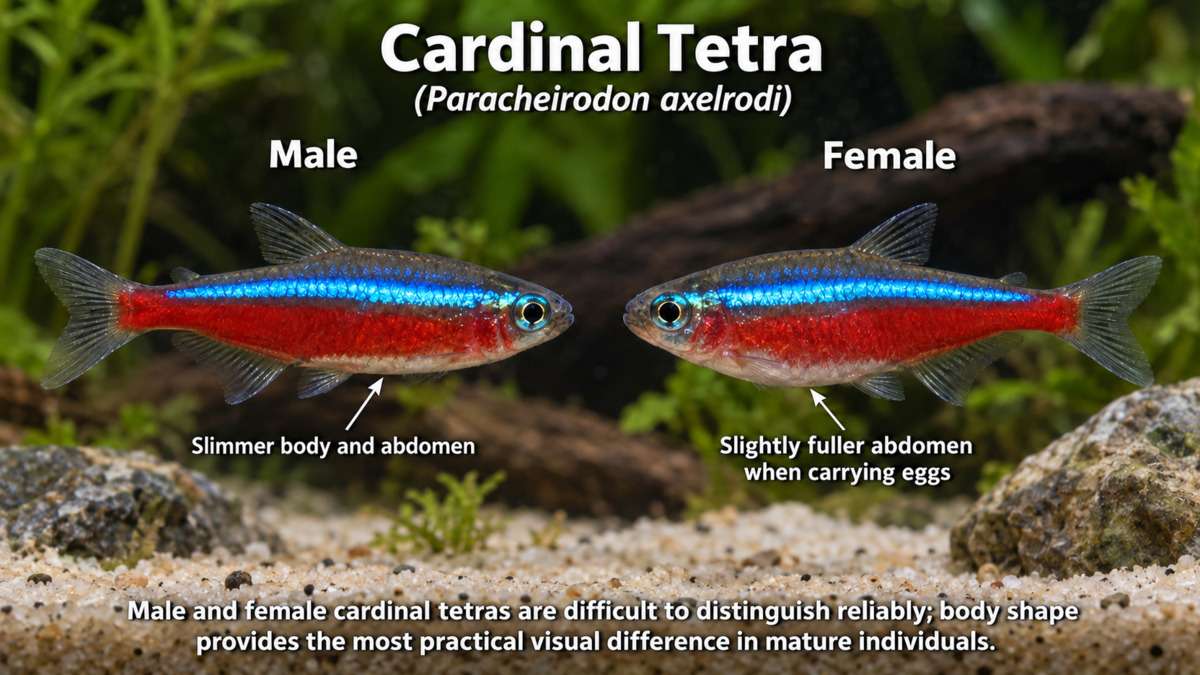
Mature females generally appear rounder through the abdomen and may grow slightly larger than males, particularly when carrying eggs. Males usually retain a slimmer, more streamlined appearance. Comparing healthy, well-conditioned adults of a similar age and size is the most practical way to distinguish the sexes, although the differences can still be subtle.
Both sexes share the same characteristic blue and red stripes, so coloration is not a dependable way to distinguish them. The blue stripe may appear more curved across the fuller abdomen of a female, but this is an effect of body shape rather than a separate sexually dimorphic characteristic. Juveniles show little or no visible sexual dimorphism and are extremely difficult to sex accurately.
Cardinal Tetra Breeding Guide
Cardinal tetras are egg-scattering fish that provide no parental care. Their small, mildly adhesive eggs settle among plants or attach to other surfaces, and adults will likely consume any eggs they can reach. A separate breeding aquarium is necessary when attempting to raise a reasonable number of fry rather than leaving the possibility of only one or two survivors.
Breeding cardinal tetras is considerably more challenging than maintaining them. Successful reproduction requires very soft, acidic water, minimal lighting, stable water chemistry, and microscopic foods for the newly free-swimming fry.
Before conditioning or attempting to breed cardinal tetras, cultures of infusoria or rotifers will need to be prepared. Maintain enough microscopic live food to begin feeding the fry once they become free-swimming, along with a backup culture in case the primary culture fails.
Conditioning Cardinal Tetras for Breeding
Select healthy, sexually mature adults that are actively feeding and maintaining a stable body weight. Males and females can be separated for one or two weeks during conditioning to prevent premature spawning and improve the likelihood of a coordinated breeding attempt. However, healthy, well-conditioned fish can also spawn without prior separation.
Provide two or three small meals per day containing live or frozen foods such as:
- Daphnia or moina
- Cyclops
- Newly hatched brine shrimp
- Small insect larvae
- Finely chopped bloodworms
Avoid overfeeding and continue regular maintenance to prevent food and waste from accumulating. Properly conditioned females should develop noticeably fuller abdomens without appearing swollen or unhealthy.
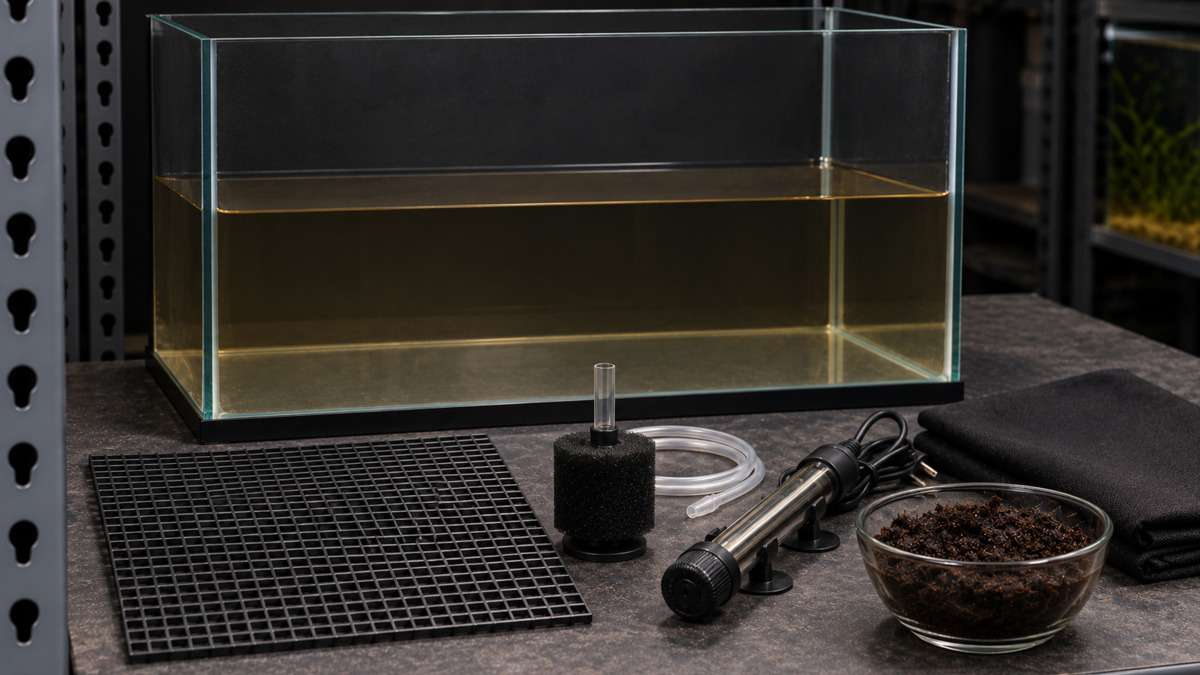
Prepare a separate 5 or 10-gallon breeding aquarium for one male and one female. Using a single pair makes it easier to confirm that spawning has occurred and limits the number of adults capable of consuming the eggs.
Clean the empty aquarium and equipment with warm water and an aquarium-only sponge, rinse thoroughly, and allow everything to dry. Do not use soap or household cleaning products. Whenever possible, use dedicated breeding equipment that has not recently housed diseased fish.
If the aquarium previously housed diseased fish, apply a solution of one part plain, unscented household bleach to 19 parts water. Scrub the aquarium and nonporous equipment with a clean sponge and keep everything wet for 10 minutes. Rinse thoroughly, clean again with fresh water and a separate aquarium-only sponge, and rinse several more times. Refill the aquarium with fresh water and add enough aquarium dechlorinator to treat the full volume, allowing it to neutralize any residual chlorine from the bleach. Drain and rinse the aquarium one final time, then allow it to dry completely.
Place the aquarium in a dimly lit area, cover the back and sides with a dark background, and drape a lightweight blanket or tarp over the front. Allow a small amount of indirect light from above while the adults settle, but keep the aquarium dark overnight. After spawning, remove the adults and block direct light during egg incubation and early larval development. Keep the aquarium dark without sealing the top or restricting gas exchange.
Rinse the peat moss thoroughly, then simmer it gently for approximately 10 minutes to reduce contaminating organisms and help it become waterlogged. Allow it to cool while submerged, drain the excess water, and spread an even 2 cm layer across the bare aquarium bottom.
Install a rigid plastic mesh barrier approximately 1–2 cm above the peat, fitting it closely around the edges so the adults cannot swim underneath. The mesh is optional but highly recommended because eggs can fall beyond the adults’ reach. Without mesh, hold the peat beneath small pieces of waterlogged, aquarium-safe driftwood to help conceal the eggs.
Fill the aquarium with approximately 6 inches (15 cm) of prepared breeding water in advance to match these parameters:
- Temperature: 79–81°F (26–27°C)
- pH Range: 5.5–6.5
- General Hardness (GH): 0–3 dGH
- Carbonate Hardness (KH): 0–1 dKH
- Conductivity: Below 100 µS/cm — optional advanced measurement
Extremely low mineral content is more important than reaching the lowest possible pH. A pH near 6.5 can still produce successful spawns when the water remains within the recommended GH, KH, and conductivity ranges.
If your source water is too hard, mix dechlorinated tap water with reverse-osmosis or distilled water until the recommended values are reached. Test the mixture and confirm that its chemistry is stable before filling the aquarium.
Use the following table to dilute tap water with reverse-osmosis or distilled water to achieve approximately 2 dGH:
| Tap Water GH | Tap Water | RO/Distilled Water | Mixing Ratio (Tap : RO) |
|---|---|---|---|
| 4 dGH | 50% | 50% | 1:1 |
| 5 dGH | 40% | 60% | 2:3 |
| 6 dGH | 33.3% | 66.7% | 1:2 |
| 7 dGH | 28.6% | 71.4% | 2:5 |
| 8 dGH | 25% | 75% | 1:3 |
| 9 dGH | 22.2% | 77.8% | 2:7 |
| 10 dGH | 20% | 80% | 1:4 |
| 11 dGH | 18.2% | 81.8% | 2:9 |
| 12 dGH | 16.7% | 83.3% | 1:5 |
Note: The percentages shown in this table are intended to produce approximately 2 dGH and assume that the reverse-osmosis or distilled water measures 0 dGH. Test the completed mixture before use because the hardness of your tap water may fluctuate.
Install an established air-powered sponge filter at its lowest setting. Water movement should remain minimal while eggs and newly hatched fry are present.
Spawning & Egg Care
Introduce one well-conditioned pair during the late afternoon or evening and cover the aquarium to block ambient light. Spawning generally occurs overnight or early in the morning, although a newly introduced pair may require more than one night.
During courtship, the male follows the female closely. When ready to spawn, they briefly swim side by side as the female releases a batch of eggs and the male fertilizes them externally.
Inspect the aquarium briefly each morning under dim light. A noticeably slimmer female or the presence of small eggs indicates that spawning has occurred. Fertilized eggs are generally transparent, whereas unfertilized eggs often become white or opaque. Remove the adults promptly because they provide no parental care and will likely consume accessible eggs.
If spawning has not occurred after two or three nights, return the pair to the conditioning aquarium. Continue conditioning and attempt spawning later with a different pair.
Mature females carry approximately 150–560 developing eggs, with larger females generally carrying more. Cardinal tetras are batch spawners, so not all eggs are released during one event. The number deposited and fertilized varies with the female’s size, maturity, conditioning, and the water chemistry.
Fertilized eggs are initially transparent, while unfertilized eggs typically become white or opaque and may develop fungal growth. Remove affected eggs carefully with a pipette when accessible without disturbing healthy eggs.
Eggs typically hatch within 19–36 hours after fertilization, depending primarily on temperature. Newly hatched larvae remain largely inactive while absorbing their yolk reserves and do not require food immediately.
Research highlight: In a laboratory study, cardinal tetra larvae hatched 19–20 hours after fertilization at 26°C (79°F). The newly hatched larvae measured approximately 2.9 mm and lacked visible pigmentation. These results provide a useful developmental reference, although hatching may take longer under varying aquarium conditions.
Raising Cardinal Tetra Fry
Keep the aquarium dark while the larvae absorb their yolk sacs. Begin feeding approximately four to six days after spawning, depending on temperature, but only when the fry are swimming continuously rather than making brief movements along the bottom.
Begin with microscopic live foods such as:
- Cultured infusoria
- Rotifers
- Other similarly sized live microorganisms
Feed very small portions several times per day, providing enough suspended food for the fry to find without making the water cloudy. Commercial liquid and powdered fry foods can accumulate quickly and should not be their only initial source of food.
Days 5–10: Continue feeding infusoria or rotifers several times per day. Keep the established sponge filter operating at its lowest setting. If a filter was not installed before spawning, introduce a mature sponge filter carefully after the fry become free-swimming, while avoiding a strong current.
Days 10–21: Continue microscopic foods while introducing vinegar eels, followed by small amounts of newly hatched brine shrimp. Retain smaller foods for slower-growing fry until most can consume brine shrimp. Microworms and appropriately sized moina can also provide variety. Fry that consume brine shrimp develop visibly orange abdomens, providing an easy way to confirm that they have eaten.
Begin daily water changes of 5–10% using prepared water that closely matches the aquarium’s temperature, pH, hardness, and conductivity. Add slightly more water than was removed until the aquarium reaches its normal operating level near the end of the third week.
During this period, begin exposing the fry to indirect light by partially uncovering the front of the aquarium. Gradually uncover more of the front and top until both are fully exposed by the beginning of the fourth week. Keep the back and sides covered with a dark background and maintain subdued lighting.
Week 4 onward: Continue feeding newly hatched brine shrimp while gradually introducing microworms, small daphnia or moina, finely powdered flake food, and appropriately sized commercial micropellets.
Move the juveniles into a larger grow-out aquarium once they are feeding reliably and have reached approximately 10 mm, particularly when they require additional swimming space. Closely match the water chemistry between the aquariums and acclimate them slowly, as sudden changes can cause substantial losses.
Research highlight: During a laboratory study of their early development, cardinal tetra fry began developing red pigmentation and a visible metallic blue stripe at approximately 12 days old. By day 22, the juveniles averaged 11 mm in total length, had developed all their fins, and resembled miniature adults.
Species Overview
Leonard P. Schultz described the cardinal tetra in 1956 as Cheirodon axelrodi. Its accepted name is now Paracheirodon axelrodi. Current classification places it in the family Acestrorhamphidae, subfamily Megalamphodinae; older scientific and aquarium publications generally list Characidae.
Cardinal tetras have long supported ornamental fish collectors, known locally as piabeiros, throughout the Rio Negro region. In Barcelos, Brazil, this connection is celebrated through the Festival of the Ornamental Fish, which recognizes the collectors and the fishery’s importance to local culture.
Responsible collection can provide communities with an economic incentive to conserve the surrounding forests and waterways. Project Piaba supports this relationship by working with local collectors and the aquarium trade to promote sustainable harvesting and protect the natural habitats on which the fishery depends.
Wild-caught cardinal tetras historically supplied most of the aquarium trade, with fish collected from the Rio Negro and Orinoco river systems. Commercial breeding has since expanded, particularly in the Czech Republic and parts of Southeast Asia, and captive production now supplies numbers comparable to wild collection.
Cardinal Tetra vs Neon Tetra
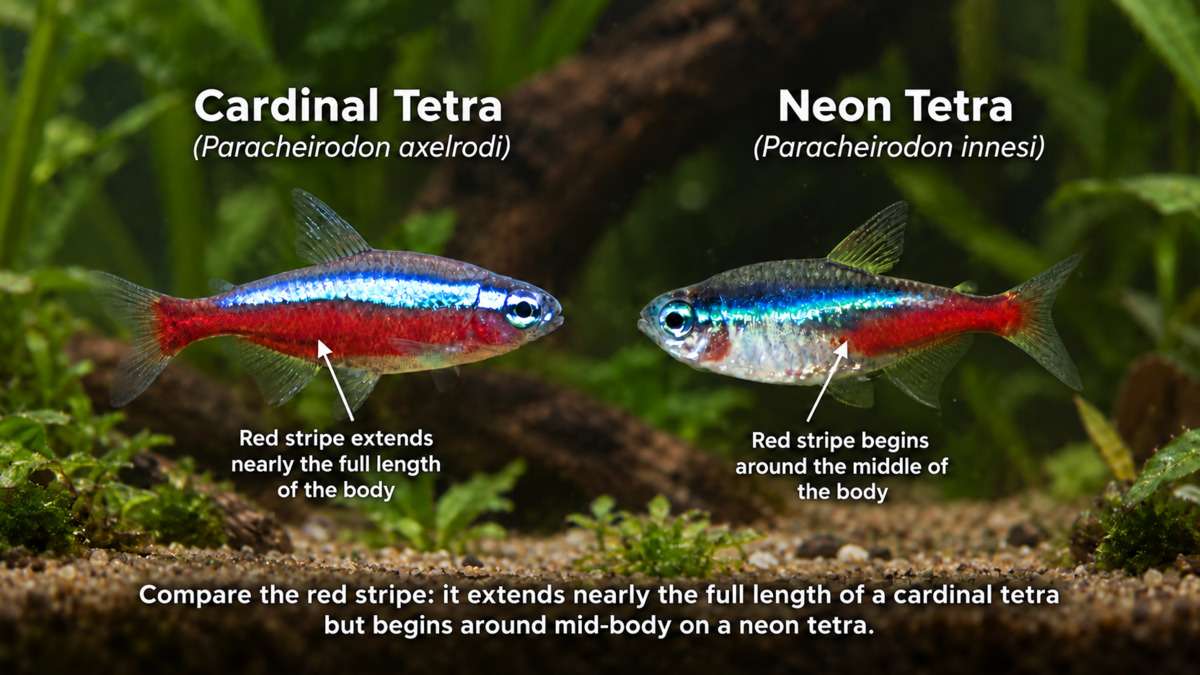
The easiest way to distinguish a cardinal tetra (Paracheirodon axelrodi) from a neon tetra (Paracheirodon innesi) is to compare their red stripes. A cardinal tetra’s red coloration extends from behind the head to the base of the tail, covering most of the lower body. On a neon tetra, the red stripe begins around the middle of the body and continues toward the tail, leaving the front half of the abdomen silver.
Cardinal tetras are generally slightly larger than neon tetras. Cardinals usually measure approximately 3–4 cm (1.2–1.6 inches), while neon tetras commonly remain around 3–3.5 cm (1.2–1.4 inches). The species also originate from different parts of South America. Cardinal tetras occur primarily in the Negro and upper Orinoco river systems, whereas neon tetras originate from tributaries of the upper Amazon basin.
Both are peaceful schooling fish with similar requirements, but cardinal tetras generally prefer warmer water than neon tetras. Their temperature ranges overlap near 75–77°F (24–25°C), allowing them to live together under suitable conditions. However, they remain separate species and each should be kept in an adequately sized school of its own kind.
Photo Gallery
FAQs
Do cardinal tetras need a heater?
Cardinal tetras require warm water between 75 and 81°F (24 and 27°C). A heater is recommended in most homes to maintain a steady temperature throughout the day and night. It may be unnecessary when the aquarium naturally remains within this range without significant fluctuations, but the temperature should still be monitored.
Can cardinal tetras live with neon tetras?
Cardinal and neon tetras can live together when the aquarium provides water parameters suitable for both species. Keep the temperature near the overlapping portion of their preferred ranges, at approximately 75–77°F (24–25°C). Each species should still be kept in its own adequately sized school because the presence of neon tetras does not replace the cardinal tetra’s social group.
Can cardinal tetras get neon tetra disease?
Cardinal tetras can contract neon tetra disease despite the condition being named after neon tetras. Possible symptoms include fading coloration, isolation from the school, difficulty swimming, abnormal body curvature, and progressive weight loss. These signs can also result from other illnesses, so affected fish should be quarantined and the cause investigated before selecting a treatment. There is no reliably effective treatment for neon tetra disease, which is caused by the microsporidian Pleistophora hyphessobryconis.
Can cardinal tetras live with bettas?
Cardinal tetras can sometimes live with peaceful bettas when the aquarium is sufficiently large, planted, and maintained within water parameters suitable for both species. However, betta temperament varies considerably among individuals, and some may chase or attack brightly colored tank mates. Closely monitor their initial interactions and prepare a separate aquarium if aggression develops.
Can cardinal tetras live with angelfish?
Freshwater angelfish are not reliably compatible with cardinal tetras. Their water requirements can overlap, but mature angelfish are opportunistic predators capable of consuming small fish. Even angelfish raised alongside cardinal tetras may begin hunting them as they mature, so the two species are best kept separately.
About Our Species Profiles
ForAquarium species guides combine scientific literature and established taxonomic references with years of aquarium-keeping experience. Information is periodically reviewed and updated as new research becomes available.
Published Literature
Stanley H. Weitzman and William L. Fink. Relationships of the neon tetras, a group of South American freshwater fishes (Teleostei, Characidae), with comments on the phylogeny of New World characiforms (1983)
R. J. Gonzalez and R. W. Wilson. Patterns of ion regulation in acidophilic fish native to the ion-poor, acidic Rio Negro (2001)
Ilse Walker. The food spectrum of the cardinal-tetra (Paracheirodon axelrodi, Characidae) in its natural habitat (2004)
Hélio Daniel Beltrão dos Anjos and Chris Rocha dos Anjos. Reproductive biology and embryonic and larval development of the “cardinal tetra”, Paracheirodon axelrodi Schultz, 1956 (Characiformes: Characidae), in laboratory (2006)
Regiane Monteiro Linhares, Celina Maria Müller Ferreira Pinagé, and Wallice Paxiúba Duncan. Excessive luminosity fades the skin color of cardinal tetra (2018)
Laura Rincón, Felipe Redondo, Wendy Kobrinsky, Matías Pandolfi, and Andrea G. Pozzi. Morphological study of the digestive tract of the cardinal tetra, Paracheirodon axelrodi (Characiformes: Characidae) (2023)
Diana Sanchez-Bernal, José Gregorio Martínez, Izeni Pires Farias, Tomas Hrbek, and Susana Caballero. Phylogeography and population genetic structure of the cardinal tetra (Paracheirodon axelrodi) in the Orinoco basin and Negro River (Amazon basin): evaluating connectivity and historical patterns of diversification (2023)
Sarah Ragonha de Oliveira, Rondon Tatsuta Yamane Baptista de Souza, Érica da Silva Santiago Nunes, Cristiane Suely Melo de Carvalho, Glauber Cruz de Menezes, Jaydione Luíz Marcon, Rodrigo Roubach, Eduardo Akifumi Ono, and Elizabeth Gusmão Affonso. Tolerance to temperature, pH, ammonia and nitrite in cardinal tetra, Paracheirodon axelrodi, an Amazonian ornamental fish (2008)
Richard P. Brinn, Jaydione Luiz Marcon, Marcos Tavares-Dias, and Ira M. Brinn. Fluorescence Detection of the Ornamental Fish Cardinal Tetra (Paracheirodon axelrodi) (2009)
S. Benzaken Zehev, Vera Almeida, Asher Benzaken, and Raimundo Ribeiro. Ornamental Fishery in Rio Negro (Amazon Region), Brazil: Combining Social, Economic and Fishery Analyses (2015)
Vitor Pimenta Abrahão, Murilo Pastana, and Manoela Marinho. On a remarkable sexual dimorphic trait in the Characiformes related to the olfactory organ and description of a new miniature species of Tyttobrycon Géry (Characiformes: Characidae) (2019)
Daniel da Silva Ladislau, Maiko Willas Soares Ribeiro, Philip Dalbert da Silva Castro, Jackson Pantoja-Lima, Paulo Henrique Rocha Aride, and Adriano Teixeira de Oliveira. Ichthyological ethnoknowledge of the “piabeiros” from the Amazon region, Brazil (2021)
Jindřich Novák, André Lincoln Barroso Magalhães, Jean Ricardo Simões Vitule, Danilo G. R. Castanho, Daniel Frynta, Michael F. Tlusty, Denisa Nováková, Kaveh Kardan, Dieter Hohl, Syafri G. Akmal, Karel Zahrádka, Matthew Millington, Gen Hua Yue, Adam Petrusek, and Jiří Patoka. From Amazonia to the World: Biology, Cultivation, and Conservation of Cardinal Tetra (Paracheirodon axelrodi) (2026)
Nádia Cristina Ferreira Oliveira, Wallice Paxiúba Duncan, Eliana Feldberg, José Fernando Marques Barcellos, and Adalberto Luis Val. Acute toxicity of ammonia and nitrite to cardinal tetra, Paracheirodon axelrodi (2008)
Jindřich Novák et al. From Amazonia to the World: Biology, Cultivation, and Conservation of Cardinal Tetra (Paracheirodon axelrodi) (2026)