
Species Classification
Order: Cichliformes
Family: Cichlidae
Subfamily: Pseudocrenilabrinae
Genus & Species: Cyphotilapia frontosa
Common Names: Frontosa Cichlid, Front Cichlid, Humphead Cichlid, Frontosa
Species Data Sheet
Temperature: 75–79°F (24–26°C)
pH Range: 7.8–9.0
General Hardness (GH): 10–20 dGH
Min Tank Size: 125+ Gallons
Care Level: Advanced
Max Size: 33 cm (13 inches)
Height: 10–12 cm (4–4.7 inches)
Swimming Level: Bottom to Mid-Level
Lifespan: 15–20+ years
Temperament: Peaceful to Semi-Aggressive
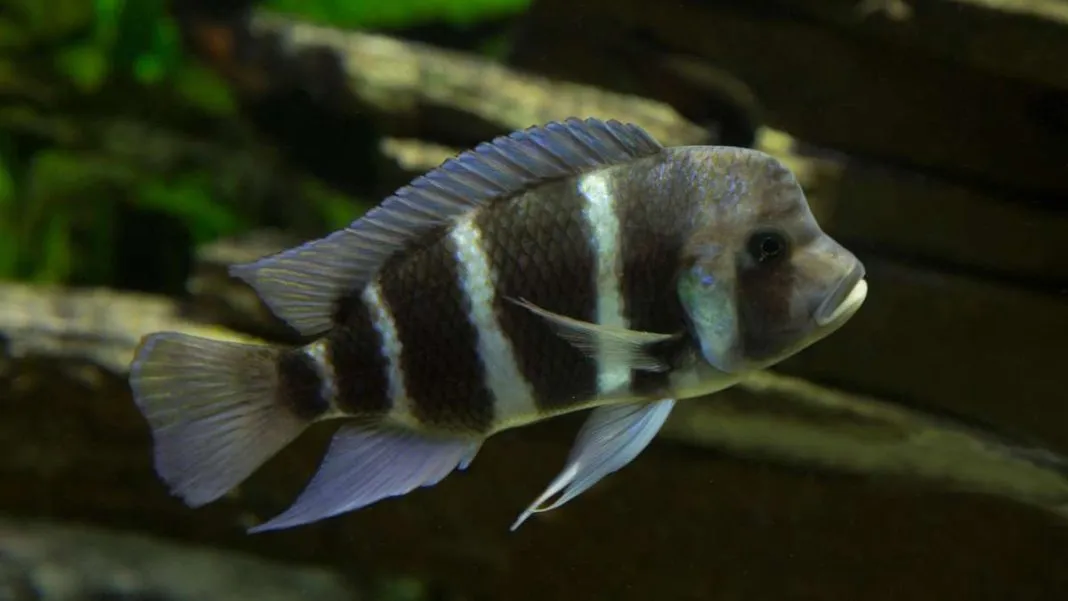
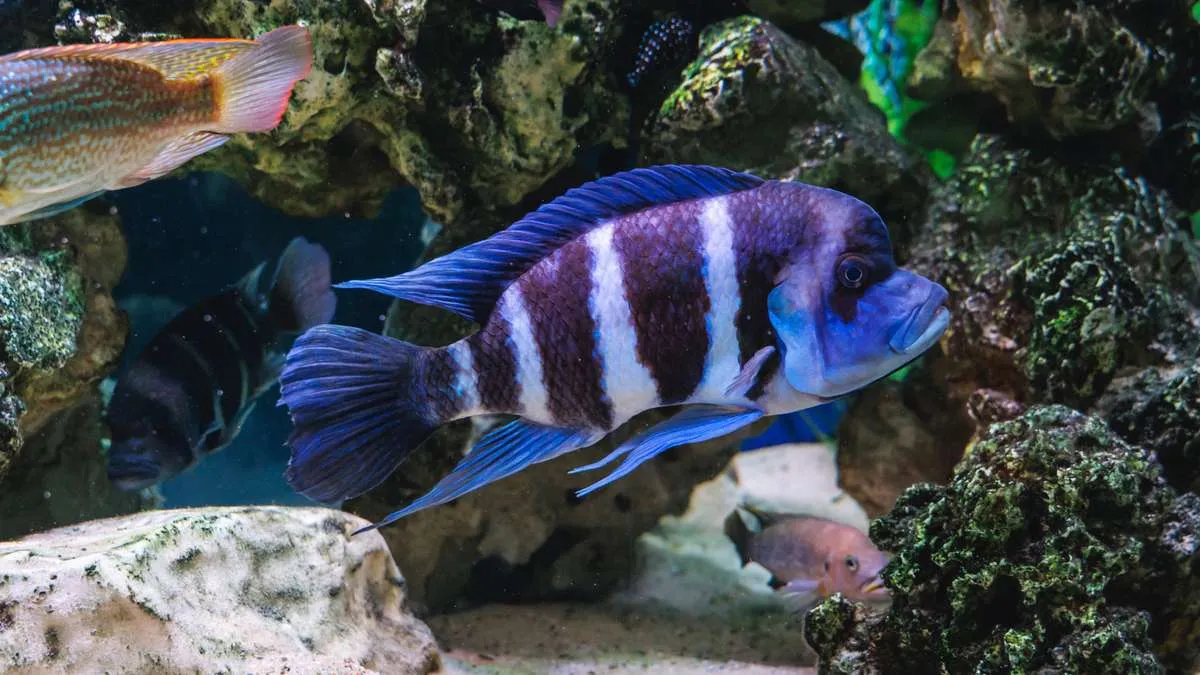
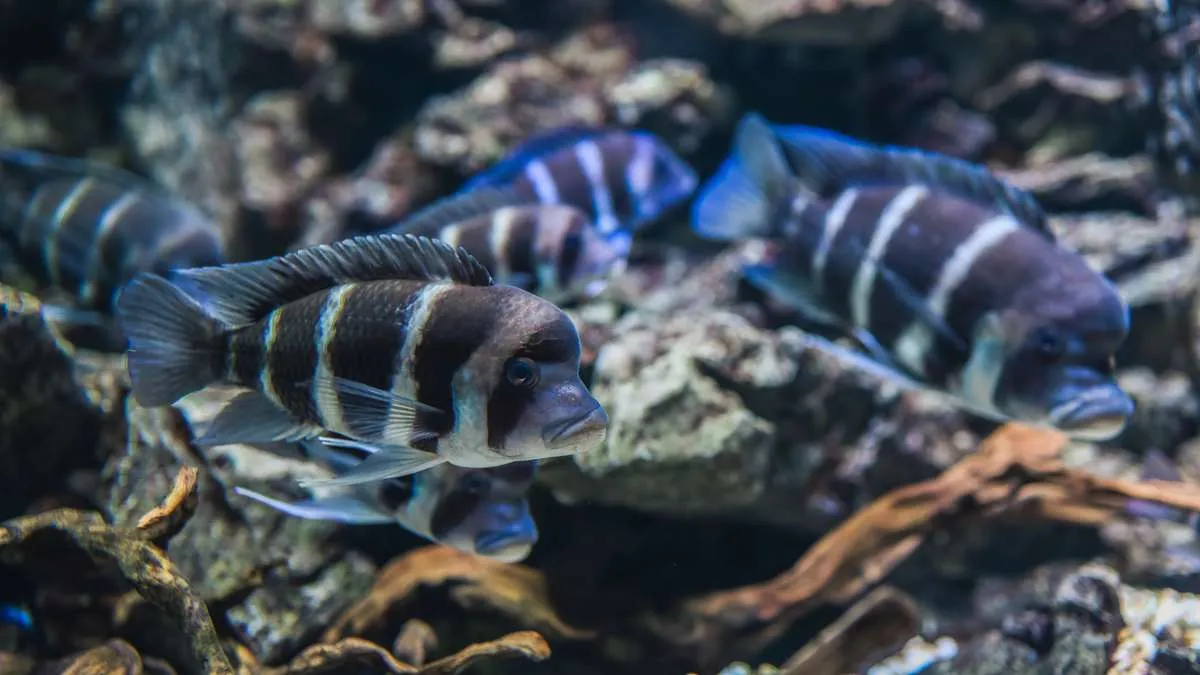
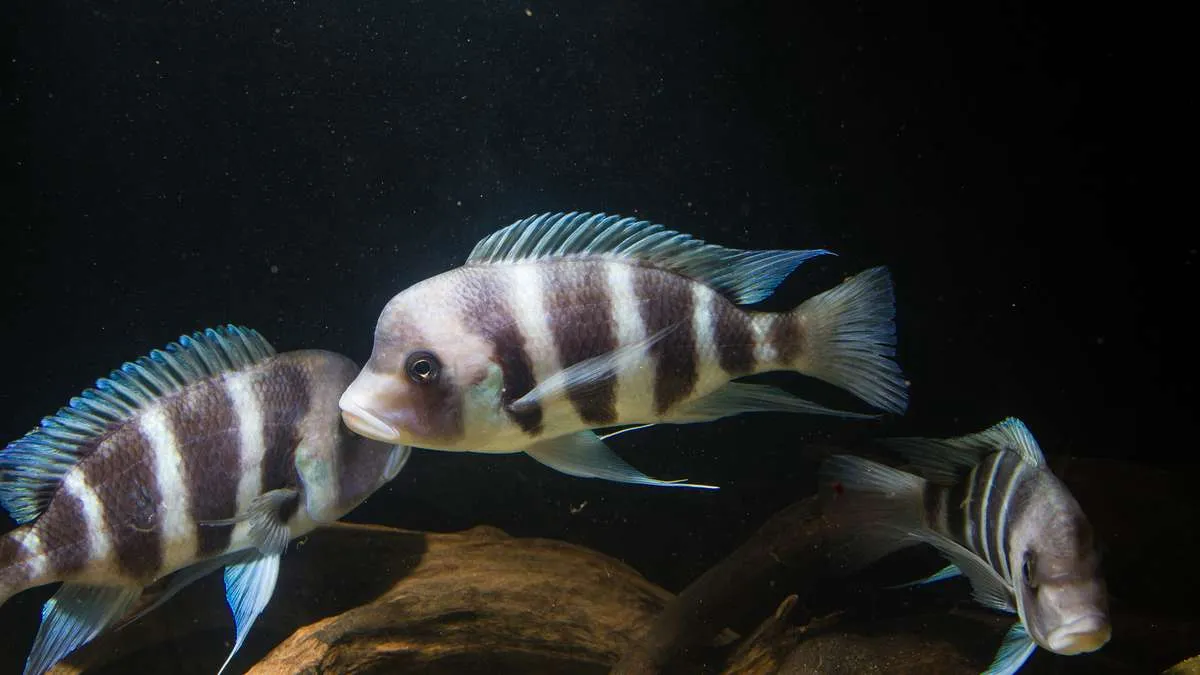
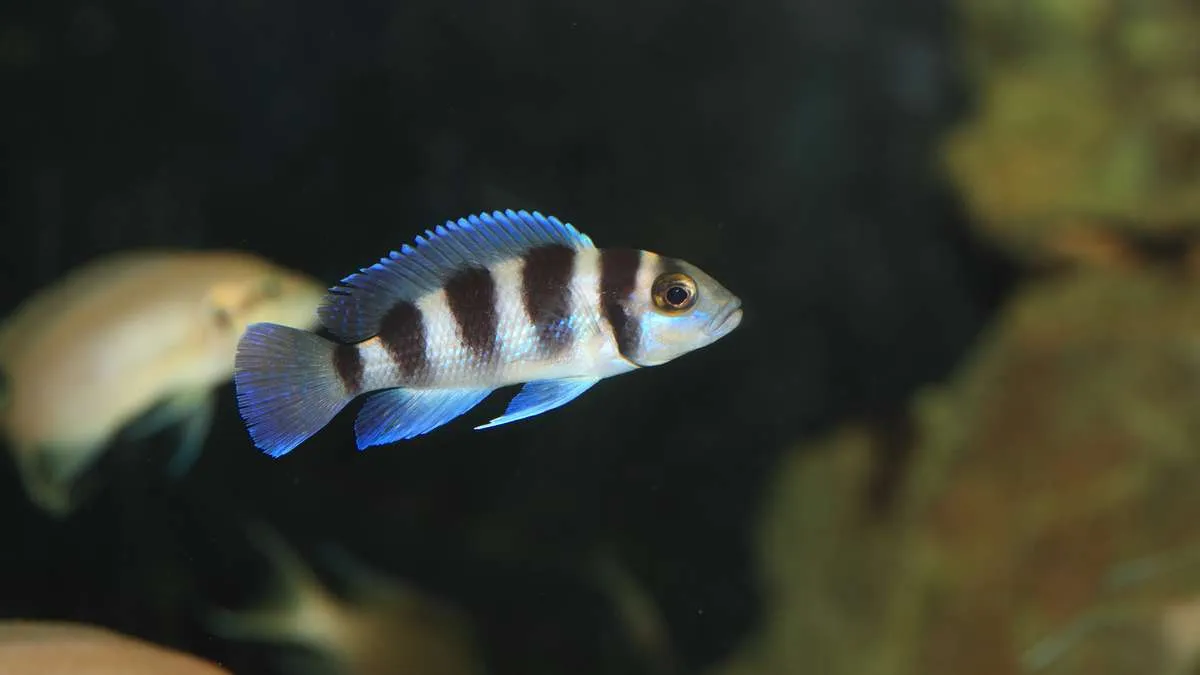
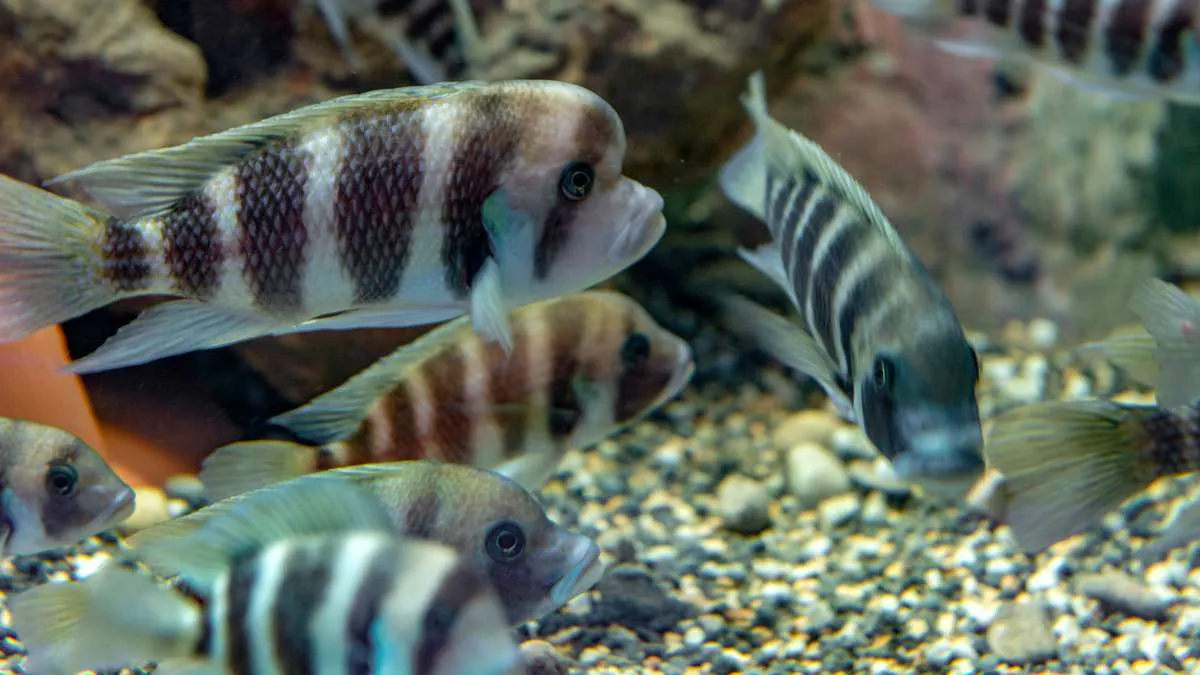
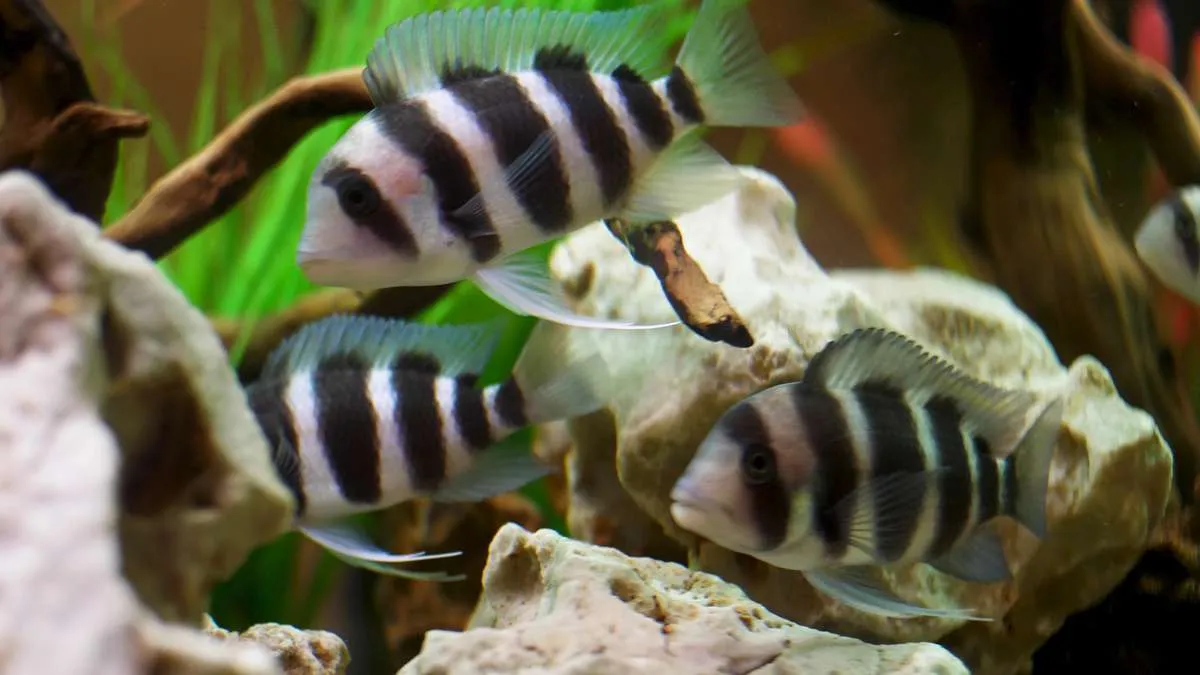
Frontosa cichlids are large, slow-moving African cichlids distinguished by their dark vertical bands, pale white to silvery coloration, subtle blue tones, and prominent nuchal hump. They are endemic to Lake Tanganyika and naturally occur in deeper rocky habitats than many African cichlids commonly kept in aquariums.
Although frontosas are relatively calm for their size, they require a very large aquarium, stable alkaline water, and carefully selected, compatible tank mates. They also grow slowly and can live for many years, so aquarists should be prepared to meet their care requirements throughout their long lifespan.
Origin & Natural Habitat
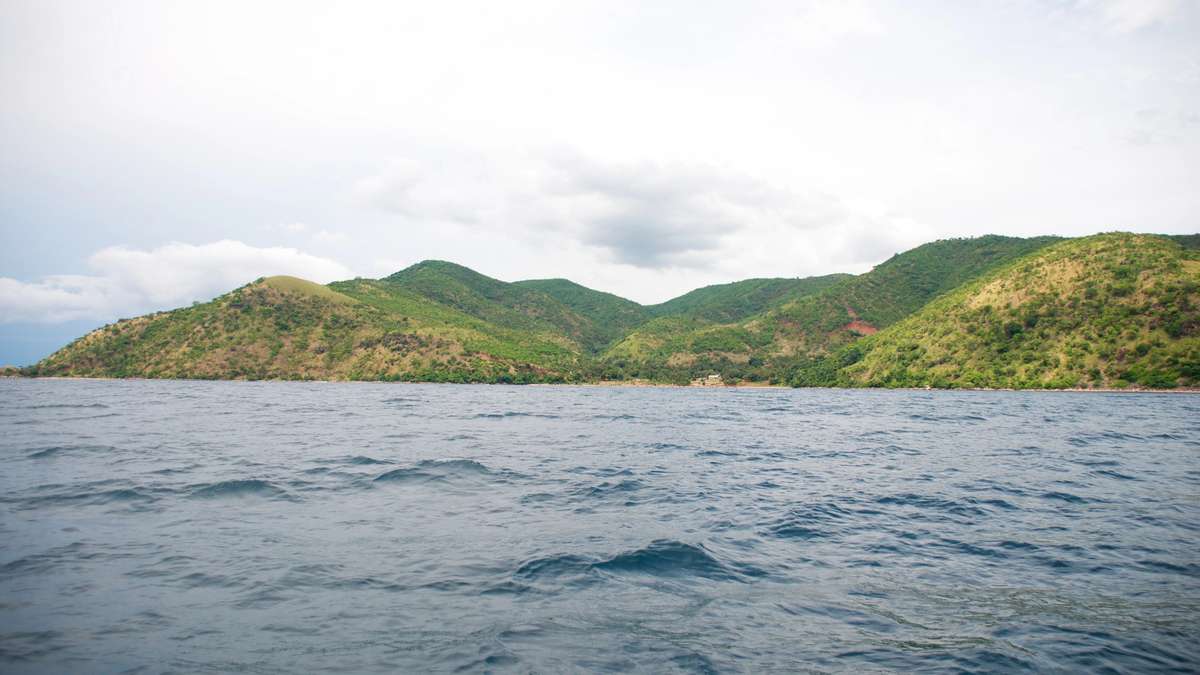
Frontosa cichlids are endemic to Lake Tanganyika in East Africa, where they naturally occur throughout the northern half of the lake. The closely related Cyphotilapia gibberosa occupies much of the southern half, although their distributions are not separated by a clear boundary. Genetic research suggests that the two species overlap and may breed with one another in the central portion of the lake.
Frontosas are most commonly found in rocky areas along the shoreline at depths of approximately 30–50 meters (98–164 feet), although they can occur in both shallower and deeper water. Older fish generally inhabit greater depths, where they typically form large, loose shoals around rocky slopes, ledges, and areas of open substrate.
Their natural habitat receives less light than the shallow rocky areas occupied by many other Lake Tanganyika cichlids, and their large eyes are well suited to these relatively dark conditions. Frontosas typically swim slowly near the lakebed and shelter among large rocks, ledges, and crevices.
Research highlight: A 2024 genetic study supported the classification of northern C. frontosa and southern C. gibberosa as separate species. It also found evidence of a potential hybrid zone and gene flow between them in the central portion of Lake Tanganyika. The researchers identified up to three genetically distinct C. frontosa populations along the lake’s eastern shoreline.
Frontosa Cichlid Care
Frontosa cichlids require more specialized care than their generally calm disposition may suggest. Their large adult size, social behavior, sensitivity to poor water quality, and need for a long, wide aquarium make them best suited to experienced aquarists.
They should be maintained in stable, alkaline water with a well-established biological filtration system and low concentrations of dissolved organic waste. Lake Tanganyika has comparatively stable water chemistry, so sudden changes in temperature, pH, or hardness should be avoided.
Tank Size
An aquarium housing a group of adult frontosas should hold at least 125 gallons and measure approximately 6 feet (183 cm) or more in length, with a width approaching 2 feet (60 cm). A larger tank of 200 cm or more in length is preferred, particularly when keeping multiple males or additional tank mates.
Aquarium length, floor area, and open swimming space are more important than excessive height. Frontosas spend much of their time swimming slowly through the lower and middle portions of the water column and need enough room to avoid more dominant group members.
Smaller aquariums may temporarily accommodate juveniles, but frontosas should not be purchased with the expectation that an aquarium of 75 or 90 gallons will provide a suitable environment for an adult group.
Water Parameters
Recommended aquarium parameters include:
- Temperature: 75–79°F (24–26°C)
- pH Range: 7.8–9.0
- General Hardness (GH): 10–20 dGH
Stable water chemistry is generally more important than maintaining one exact value within these ranges. However, frontosas should not be maintained in acidic or exceptionally soft water.
Large fish produce substantial amounts of waste, making an appropriately sized filter essential. Use a large biological filtration system that provides moderate water movement without creating a powerful current throughout the entire aquarium. Weekly partial water changes should be routinely performed to help control nitrate and organic waste while replenishing minerals.
If your source water is naturally soft or acidic, alkalinity and hardness can be maintained with limestone, aragonite, crushed coral, or a carefully measured Lake Tanganyika buffer. Seiryu stone may increase hardness and pH, but its effect can vary and should be monitored through testing.
Aquascaping with wood should be approached with caution because not all types of wood are alike, and some driftwood and decomposing organic matter release tannins that may gradually reduce pH and carbonate hardness. However, if you want to include wood, Manzanita wood and spider wood are good alternatives because they release minimal tannins and have little effect on water chemistry.
Aquarium Setup
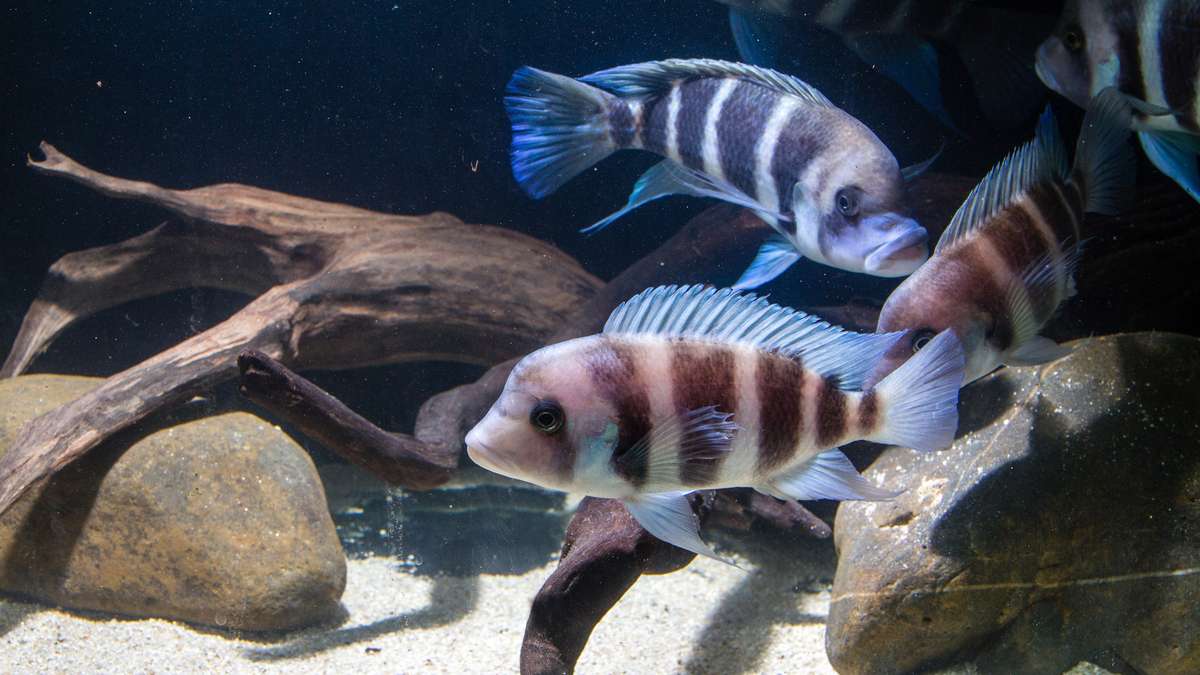
An aquarium housing frontosa cichlids should combine open swimming areas with stable rock aquascapes that create caves, shaded retreats, and visual barriers. Large, smooth rocks can be arranged along the back and sides of the aquarium while leaving the front and center open for swimming and feeding.
Rockwork must be secured to the bottom of the aquarium rather than placed loosely on top of the substrate. Frontosas may dig around rocks and other decorations, potentially causing them to collapse. Because of their digging behavior, sand or fine-grained gravel is better suited as the substrate.
Bright lighting is unnecessary and may cause stress among the group. Moderate to low lighting more closely resembles their deep-water habitat and may help the fish feel more secure. Aquarium lighting should follow a consistent day–night cycle.
Live aquatic plants are optional and are not a prominent feature of their natural habitat. Hardy, low-light species such as anubias and Java fern can be attached to the rockwork, provided their water and lighting requirements are compatible with those of frontosa cichlids.
Diet & Feeding
Frontosa cichlids are predators that consume fish, mollusks, crustaceans, and other invertebrates in Lake Tanganyika. Small, schooling sardine cichlids of the genus Cyprichromis make up much of the adult diet, while juveniles consume a greater proportion of crustaceans and other invertebrates.
Rather than actively chasing their prey, frontosas slowly drift close to resting fish at night before using their large, powerful jaws to rapidly inhale and swallow them whole.
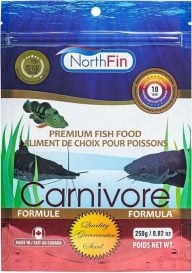
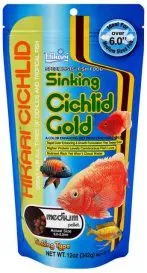
In an aquarium, use a high-quality sinking or slow-sinking pellet formulated for carnivorous cichlids as their staple food. Avoid floating pellets because these naturally deep-water fish may swallow air while feeding at the surface, sometimes resulting in temporary buoyancy problems commonly described as “float.” Sinking foods allow them to feed more naturally within the lower water column of the aquarium.
Supplemental foods should be offered occasionally to provide dietary variety rather than relying on cichlid pellets as their only source of nutrition. Suitable live, frozen or freeze-dried options include:
- Mysis shrimp
- Krill
- Prawns
- Brine shrimp
- Mussel meat
- Cockles
- Earthworms
- Chopped white fish
- Insect larvae
Larger foods should be chopped into manageable pieces, and frozen foods should be fully thawed before feeding. Avoid mammalian and poultry meats such as beef heart, pork, and chicken. Feeder fish should also be avoided because they may introduce parasites or disease. Freeze-dried foods should be presoaked for 5–7 minutes and gently pressed against the aquarium glass to release trapped air, allowing them to sink.
Adult frontosas can be fed once daily, while juveniles benefit from two or three smaller meals. Provide only as much food as they can consume within several minutes, distributing it evenly throughout the aquarium so that every fish has an opportunity to feed.
Frontosas are susceptible to digestive problems when overfed or provided with an unsuitable diet. Persistent floating, abdominal swelling, loss of appetite, stringy feces, lethargy, or unusual breathing should not automatically be attributed to swallowed air or overeating. These symptoms may indicate digestive problems, poor water quality, parasitic or bacterial infections, or other underlying conditions and should be investigated promptly.
Research highlight: A 2026 study found that the diets of C. frontosa and C. gibberosa varied considerably between locations in Lake Tanganyika. Fish, mussels, and jellyfish were the most prominent food sources, while zooplankton, snails, and crustaceans made moderate contributions. Insects accounted for only a small portion of their diet.
Large Adult Frontosas
Smaller Frontosas
Supplemental Protein

Frontosa Tank Mates
Frontosa cichlids are relatively calm and slow-moving compared with many similarly sized African cichlids. They form social groups and establish a hierarchy that is usually led by a dominant male.
They are not harmless community fish, however. Frontosas are opportunistic predators and will consume any fish small enough to swallow, particularly after the aquarium lights have dimmed. Compatibility should be assessed according to a potential tank mate’s adult size, body shape, behavior, diet, and water requirements, not maximum length alone.
As a social species, frontosas should be kept in groups of at least six when sufficient aquarium space is available. A group containing one male and several females is usually easier to manage than one containing multiple mature males. Larger groups may support multiple males, but only when the aquarium provides enough floor space based on its length and width, not just its gallon capacity, as well as separate retreats.
Compatible Tank Mates
Potential tank mates include robust Lake Tanganyika species that are too large to swallow but calm enough not to continually chase or harass the frontosas. Juveniles should not be housed with mature frontosas until they are large enough not to be considered prey.
Although Malawi cichlids share similar alkaline water requirements, not all species are suitable tank mates for frontosas. Avoid highly aggressive species, particularly mbuna, because their constant activity and territorial behavior may stress frontosas and interfere with feeding.
Tropheus are another questionable choice because their predominantly herbivorous diet and energetic feeding behavior conflict with the dietary requirements and slower feeding habits of frontosas. Their sensitivity to high-protein foods can also make it difficult to feed both species appropriately in the same aquarium.
Loaches and common plecos are generally not ideal choices. Most loaches originate from flowing rivers, while many plecos require different water conditions and may disturb resting fish. Some large plecos may also attach themselves to slow-moving cichlids and damage their protective slime coat.
Large Tanganyikan Cichlids
✅ Zaire blue (C. gibberosa)
✅ Calvus cichlid
✅ Compressiceps cichlid
✅ Bulldog cichlid
✅ Three-striped haplotaxodon
Large Tanganyikan Synodontis
✅ Cuckoo catfish
✅ Granulated catfish
✅ Lake Tanganyika squeaker
✅ Bigmouth squeaker
✅ Synodontis melanostictus
Extra-Large Malawi Aquariums
✅ Blue dolphin cichlid
✅ Star sapphire cichlid
✅ Johnston’s hap
⚠️ Red empress
⚠️ Redfin hap
Smaller Adult-Sized Synodontis
✅ Marbled squeaker
✅ Malawi squeaker
✅ Dwarf cuckoo catfish
✅ Large-eye cuckoo catfish
✅ Synodontis irsacae
Note: Individual temperament can vary; species that coexist peacefully in one aquarium may not do so in another. Monitor newly introduced fish for excessive fin-nipping, fin damage, persistent aggression, or signs of stress, and separate incompatible fish when necessary.
Male vs Female Differences
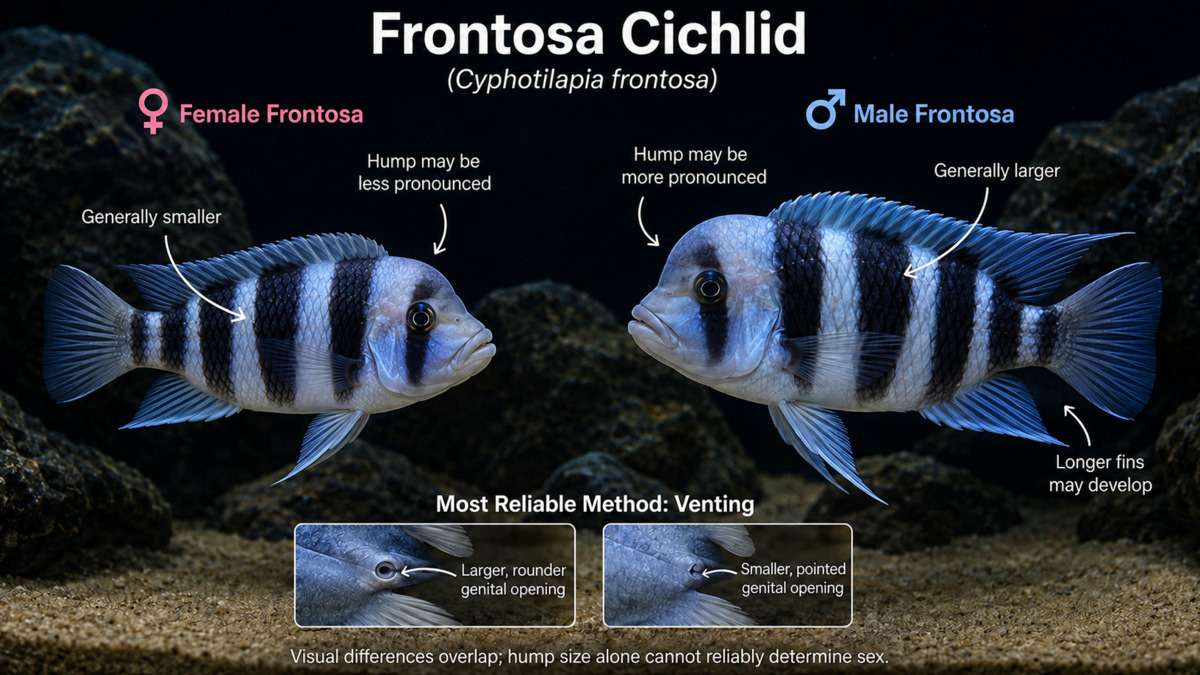
Male and female frontosa cichlids are very similar in appearance, making it extremely difficult to determine their sex when they are young.
Adult males are generally larger and may develop longer fins and a more prominent nuchal hump. Females can also develop a nuchal hump, however, and some large females can appear extremely similar to males. Hump size should not be used as the sole method of determining sex.
The most reliable method is venting a sexually mature fish by examining the genital opening between the anus and anal fin. Females have a larger, rounder genital opening, while males have a smaller, more pointed or triangular opening.
Venting requires experience and should be performed carefully to prevent injury and minimize handling. Once the fish mature, their sex may become more apparent through courtship and spawning behavior.
Frontosa Cichlid Breeding Guide
Frontosa cichlids are maternal mouthbrooders. After spawning, the female carries the fertilized eggs and developing fry in her mouth, while the male provides no direct parental care.
Breeding is relatively straightforward within a well-established adult colony, but frontosas are among the slowest-growing cichlids in the aquarium hobby and may take three to four years to reach reproductive maturity.
Conditioning Frontosas for Breeding
Frontosas require pristine water conditions for breeding. Keep the aquarium water clean, well oxygenated, and rich in minerals, with the following parameters:
- Temperature: 75–79°F (24–26°C)
- pH Range: 8.0–8.5
- General Hardness (GH): 10–20 dGH
- Carbonate Hardness (KH): 10–20 dKH
Ammonia and nitrite should remain at 0 ppm, and nitrate should be kept low through effective filtration and regular water changes. Avoid sudden changes in temperature, pH, or hardness. Stable water conditions are more important than altering the water to trigger spawning.
A breeding group should contain one mature male with at least four females. Too many mature males may increase competition and disrupt courtship, particularly in aquariums without sufficient length, width, and separate retreats.
Although 125 gallons is the minimum for an adult group, a breeding colony benefits from an aquarium of 180 gallons or more with a wide footprint. The additional space gives the group more room to establish a stable hierarchy and feel secure enough to breed.
When the fish are mature, well-fed, and comfortable in their surroundings, spawning may occur without deliberate intervention. Patience is essential because frontosas can take several years to reach breeding age.
Spawning & Mouthbrooding
Unlike many cichlids, male frontosas generally do not excavate large craters when preparing a spawning site. Instead, the male selects a cave large enough to accommodate himself and the female, then cleans the floor inside or directly in front of its entrance.
After preparing the spawning site, the male courts the female in an attempt to lead her toward it. If she is receptive, the pair may swim together in a circular, dance-like motion.
During spawning, the female deposits a relatively small number of large eggs on the prepared surface. The male fertilizes the eggs, and the female collects them in her mouth as spawning continues. Brood size varies according to the female’s age and size, but approximately 20–50 eggs or fry is common.
The female typically carries the brood for approximately four to six weeks. Unlike many mouthbrooding cichlids that stop feeding entirely, she may consume finely crushed prepared foods or small foods such as cyclops, daphnia, and newly hatched brine shrimp while brooding.
Brooding females may become reclusive and develop a noticeably expanded throat. Avoid unnecessary handling and minimize disturbances around the aquarium, as stress may cause an inexperienced female to swallow or prematurely release her brood.
A female can be left to brood in the main aquarium if it provides sufficient cover and she is not being harassed. If she must be relocated, prepare a fully cycled aquarium with closely matched temperature, pH, and hardness. Dim the lights and gently guide her into a large submerged container, keeping her underwater throughout the transfer. Avoid chasing or netting her whenever possible, as excessive stress may cause her to swallow or prematurely release the brood.
Research highlight: Frontosa larvae begin feeding on food particles inhaled by the female while they still retain substantial yolk reserves. This allows the developing fry to obtain food before leaving the protective environment of their mother’s mouth, an unusual extension of maternal care among mouthbrooding fish.
Raising Frontosa Fry
Frontosa fry are unusually large when released, often measuring approximately 20–25 mm (0.8–1 inch) in length. They can generally begin eating newly hatched brine shrimp, finely crushed pellets, and appropriately sized commercial fry foods immediately.
Suitable fry foods include:
- Newly hatched brine shrimp
- Small daphnia
- Microworms
- Finely crushed cichlid pellets
- Commercial micropellets
- Finely chopped mysis shrimp as the fry grow
Feed the fry several small meals each day while maintaining excellent water quality and stable water parameters. Use gentle filtration with a sponge-covered intake and promptly remove uneaten food to prevent waste from accumulating.
Frontosa fry grow comparatively slowly, and individual growth rates may vary. If noticeable size differences develop, monitor feeding to ensure every fry receives enough food. If larger individuals continue to monopolize food and limit the growth of smaller fry, separating the larger individuals may become necessary.
Species Overview
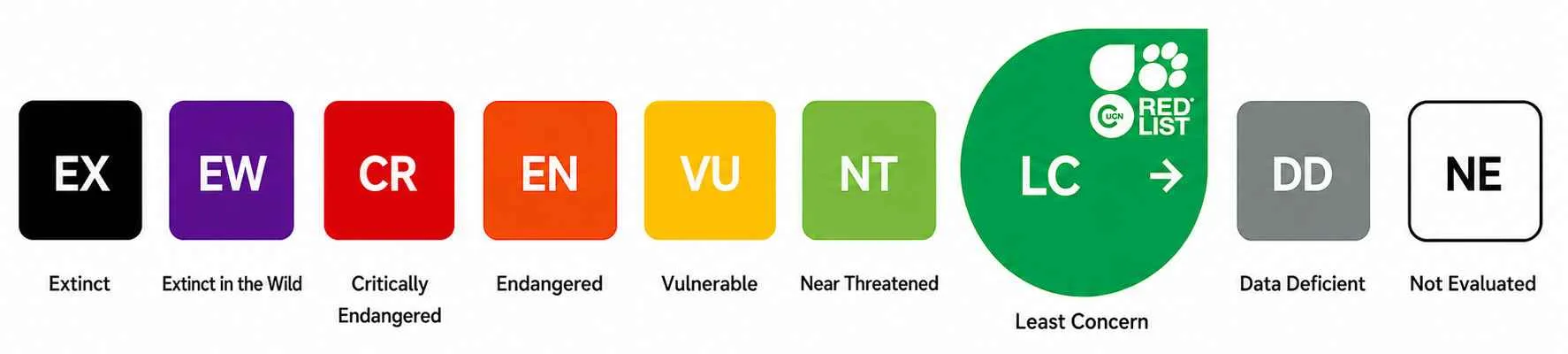
Cyphotilapia frontosa was formally described by George Albert Boulenger in 1906 as Paratilapia frontosa. The genus Cyphotilapia was subsequently established by Charles Tate Regan in 1920.
For many years, most large humpheaded cichlids from Lake Tanganyika were identified as C. frontosa. In 2003, Takahashi and Nakaya described the southern populations as a separate species, Cyphotilapia gibberosa.
The two species can be distinguished by their anatomy, scale counts, dentition, and geographic origin. C. gibberosa has three scale rows between the upper and lower lateral lines at the center of the body, compared with two in C. frontosa. Band count alone is not a dependable method of separating the species.
Within C. frontosa, six- and seven-banded forms were historically suspected of representing different species. Subsequent analysis found measurable differences between them, but sufficient overlap in their morphological traits supported retaining both as geographic forms of C. frontosa. The seven-banded form is particularly associated with the Kigoma region.
Despite their separation, both C. frontosa and C. gibberosa are still commonly sold under the name “frontosa” in the aquarium trade, causing the two species to be frequently confused. Many C. gibberosa locality forms display deeper and more extensive blue pigmentation, whereas C. frontosa may still exhibit pale-blue coloration, particularly across the face, fins, and lighter portions of the body. Color alone should not be used to identify either species, as its intensity can vary with locality, age, sex, dominance, lighting, and overall condition. Stress may also cause a fish to temporarily lose much of its coloration.
Common C. frontosa locality forms, named after the areas of Lake Tanganyika where they originate, include:
- Burundi
- Kigoma
- Karilani
- Kavala
- Cape Kabogo
- Bulu Point
The distinct locality forms of frontosa cichlids should be preserved whenever possible and should not be deliberately crossbred. Keeping each locality separate helps preserve its characteristic coloration and genetic lineage within the aquarium hobby.
Photo Gallery
FAQs
How fast do frontosa cichlids grow?
Frontosa cichlids grow relatively slowly and may take approximately three to five years to approach their full adult size. Growth is usually fastest during the juvenile stage and gradually slows as the fish matures. Genetics, diet, water quality, aquarium size, and temperature can all influence an individual frontosa’s growth rate. Avoid excessive feeding or unusually warm water in an attempt to accelerate growth, as either practice may negatively affect the fish’s long-term health.
Can frontosa live with peacock cichlids?
Frontosas can sometimes live with peacock cichlids in a sufficiently large aquarium, but the combination is generally not recommended. Peacock cichlids are usually faster and more assertive during feeding, which may intimidate slower-moving frontosas or prevent them from receiving enough food. Although their water requirements overlap, differences in temperament, activity level, and feeding behavior can make the combination difficult to manage. A carefully selected Lake Tanganyika community is generally more suitable.
Can frontosa live with Oscars?
Frontosas and Oscars should generally not be kept together. Although both species grow large, Oscars prefer softer, less alkaline water and often display more energetic or unpredictable feeding and territorial behavior. Their different water requirements, social behavior, and feeding habits increase the likelihood of chronic stress, aggression, or injury. Each species is better maintained with tank mates suited to its natural habitat and care needs.
How many frontosa cichlids should be kept together?
Frontosa cichlids are social fish that are best maintained in a group of at least six, ideally with one male and four or more females. Keeping multiple mature males requires substantially more aquarium space and may increase competition. A permanent adult group should be provided with an aquarium of at least 125 gallons and approximately 6 feet (183 cm) in length. An aquarium longer than 200 cm (6.6 feet) with a wide footprint is preferred, particularly when keeping multiple males or additional tank mates.
How can you tell if a female frontosa is holding eggs?
A mouthbrooding female frontosa commonly develops an enlarged or sagging throat as the eggs fill her buccal cavity. She may repeatedly move her mouth as though chewing, eat very little, become less active, and retreat to a sheltered area. These behaviors do not provide absolute confirmation individually, but an expanded throat combined with substantially reduced feeding strongly suggests that she is carrying eggs or developing fry. Avoid unnecessary handling or disturbance because stress may cause her to swallow or prematurely release the brood.
About Our Species Profiles
ForAquarium species guides combine scientific literature and established taxonomic references with years of aquarium-keeping experience. Information is periodically reviewed and updated as new research becomes available.
Published Literature
George D. Jackson, Christine Jackson, and Asilatu Hamisi Shechonge. Trophic Niche Differentiation and Mercury Levels in Cyphotilapia frontosa and C. gibberosa Along the East Coast of Lake Tanganyika (2026)
George D. Jackson, Timothy Standish, Ortaç Çetintaş, Oleksandr Zinenko, Asilatu H. Shechonge, and Alexey Yanchukov. Population Genetics and Gene Flow in Cyphotilapia frontosa and Cyphotilapia gibberosa Along the East Coast of Lake Tanganyika (2024)
Tetsumi Takahashi. Function of Nuchal Humps of a Cichlid Fish from Lake Tanganyika: Inferences from Morphological Data (2018)
Tetsumi Takahashi, Benjamin Ngatunga, and Jos Snoeks. Taxonomic Status of the Six-Band Morph of Cyphotilapia frontosa (Perciformes: Cichlidae) from Lake Tanganyika, Africa (2007)
Tetsumi Takahashi and Kazuhiro Nakaya. New Species of Cyphotilapia (Perciformes: Cichlidae) from Lake Tanganyika, Africa (2003)
Yasunobu Yanagisawa and Haruki Ochi. Food Intake by Mouthbrooding Females of Cyphotilapia frontosa (Cichlidae) to Feed Both Themselves and Their Young (1991)
C. Bigirimana. Cyphotilapia frontosa (2025)
Kristopher Takahama. Cyphotilapia frontosa (Humphead Cichlid) (2001)
Rainer Froese and Daniel Pauly, editors. Cyphotilapia frontosa, Humphead Cichlid (2026)
Ruth Francis-Floyd and Roy P. E. Yanong. Cryptobia iubilans in Cichlids (2014)
Gerald Bassleer. Diseases of Cichlids Part 2 (2017)