
Species Classification
Order: Alismatales
Family: Araceae
Subfamily: Aroideae
Genus & Species: Anubias Barteri
Common Names: Anubias Barteri var. Barteri, Anubias Barteri, Broadleaved Anubias, Broadleaf Anubias
GROWTH REQUIREMENTS & STATS
Temperature: 72°–82°F (22°–28°C)
pH Level: 6–7.5
Ideal GH: 2–15 dGH
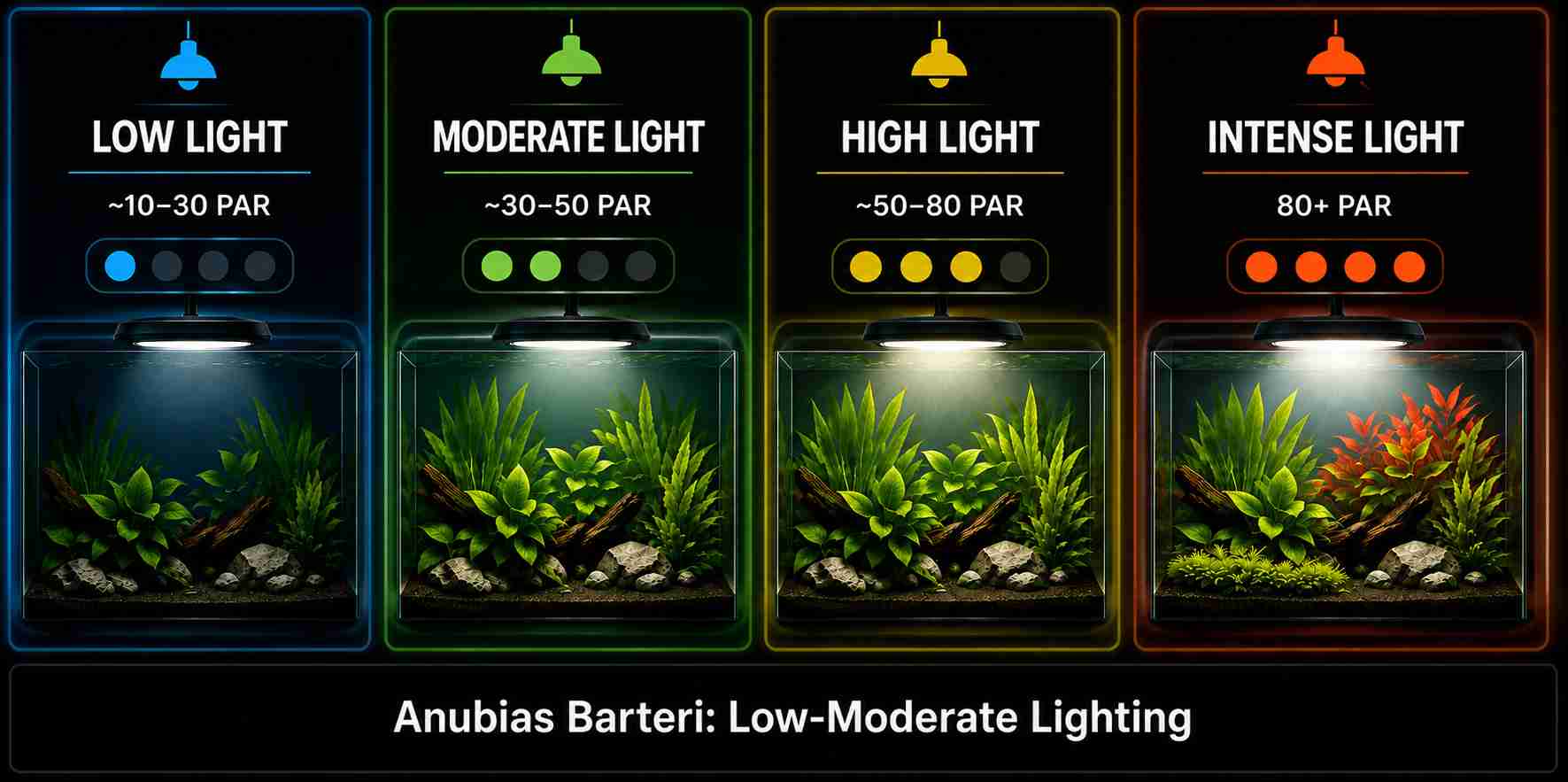
Lighting: Low–Moderate
Max Size: 25–45 cm (10–18 inches)
Growth Rate: Slow
CO₂: Not Required
Placement: Midground / Hardscape
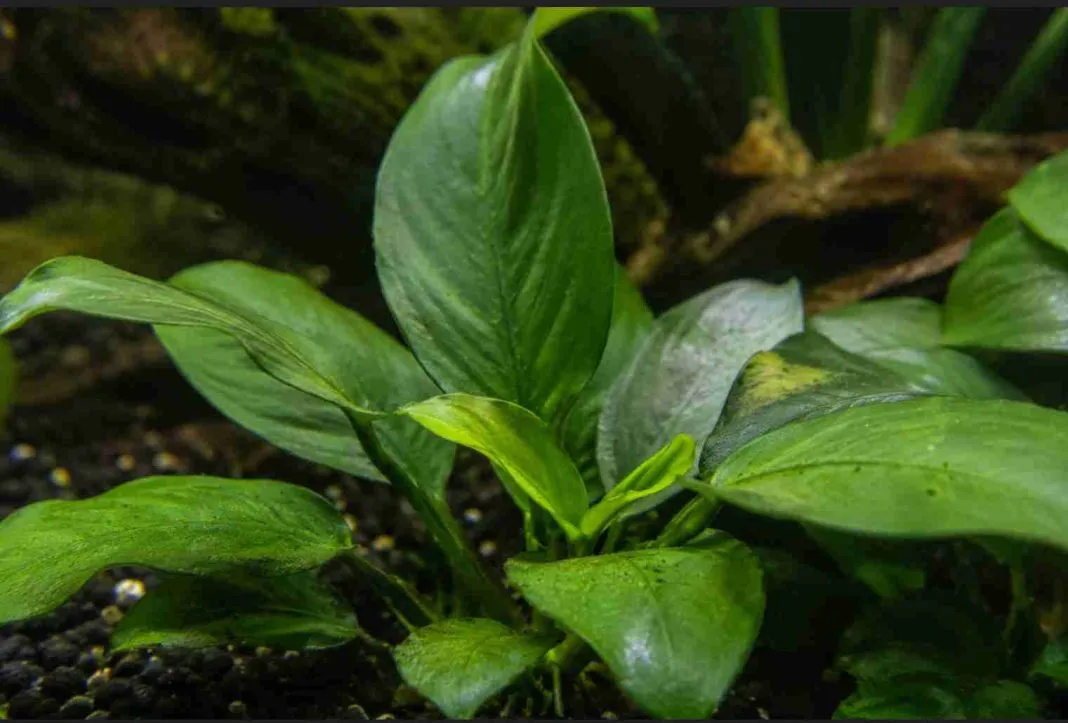
Anubias barteri var. barteri, commonly known as broadleaved Anubias, is a hardy freshwater aquarium plant. Its broad, leathery leaves, low light requirements and ability to grow without injected CO₂ make it an excellent choice for low-tech planted aquariums.
Anubias barteri care is relatively easy, making it suitable for beginners and experienced aquarists alike. With proper placement and stable water conditions, this slow-growing plant can thrive for years with minimal maintenance—although a few simple mistakes can lead to algae, damaged leaves or rhizome rot.
Origin & Natural Habitat
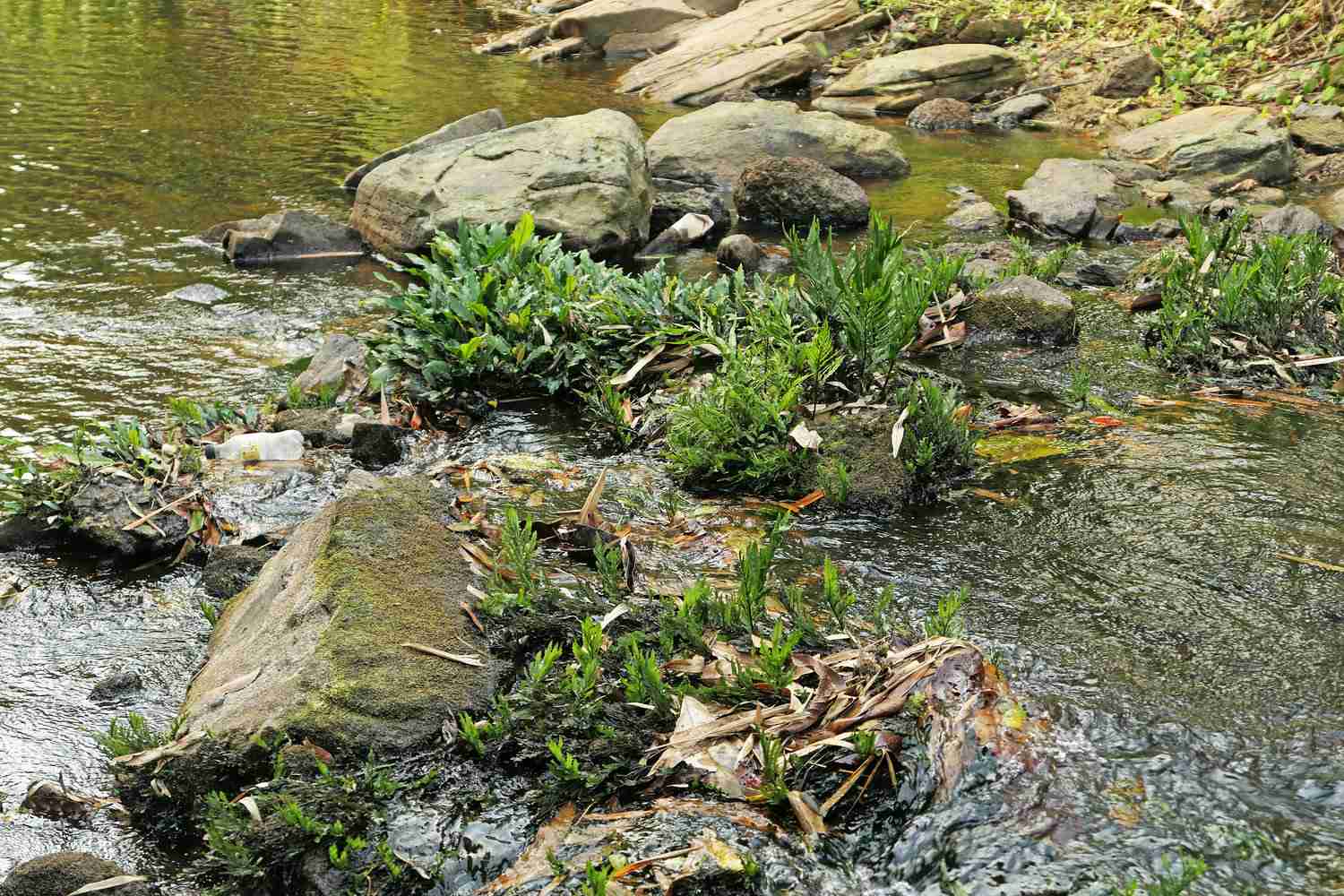
Anubias barteri var. barteri is native to southeastern Nigeria, Cameroon and Bioko, an island of Equatorial Guinea. In its natural habitat, Anubias grows along shaded tropical streams and rivers, often rooted or anchored among rocks, driftwood and stream banks.
Unlike strictly submerged aquatic plants, Anubias barteri can grow both above and below the waterline. This makes it suitable not only for freshwater aquariums, but also paludariums and other environments where the leaves may grow partially or completely above the waterline.
Anubias Barteri Care
Anubias barteri is a hardy and relatively undemanding aquarium plant that tolerates a broad range of water conditions, low lighting and aquariums without supplemental CO₂. Its slow growth and ability to attach directly to rocks and driftwood make it particularly suitable for low-tech planted aquariums.
Aquarium Placement & Planting
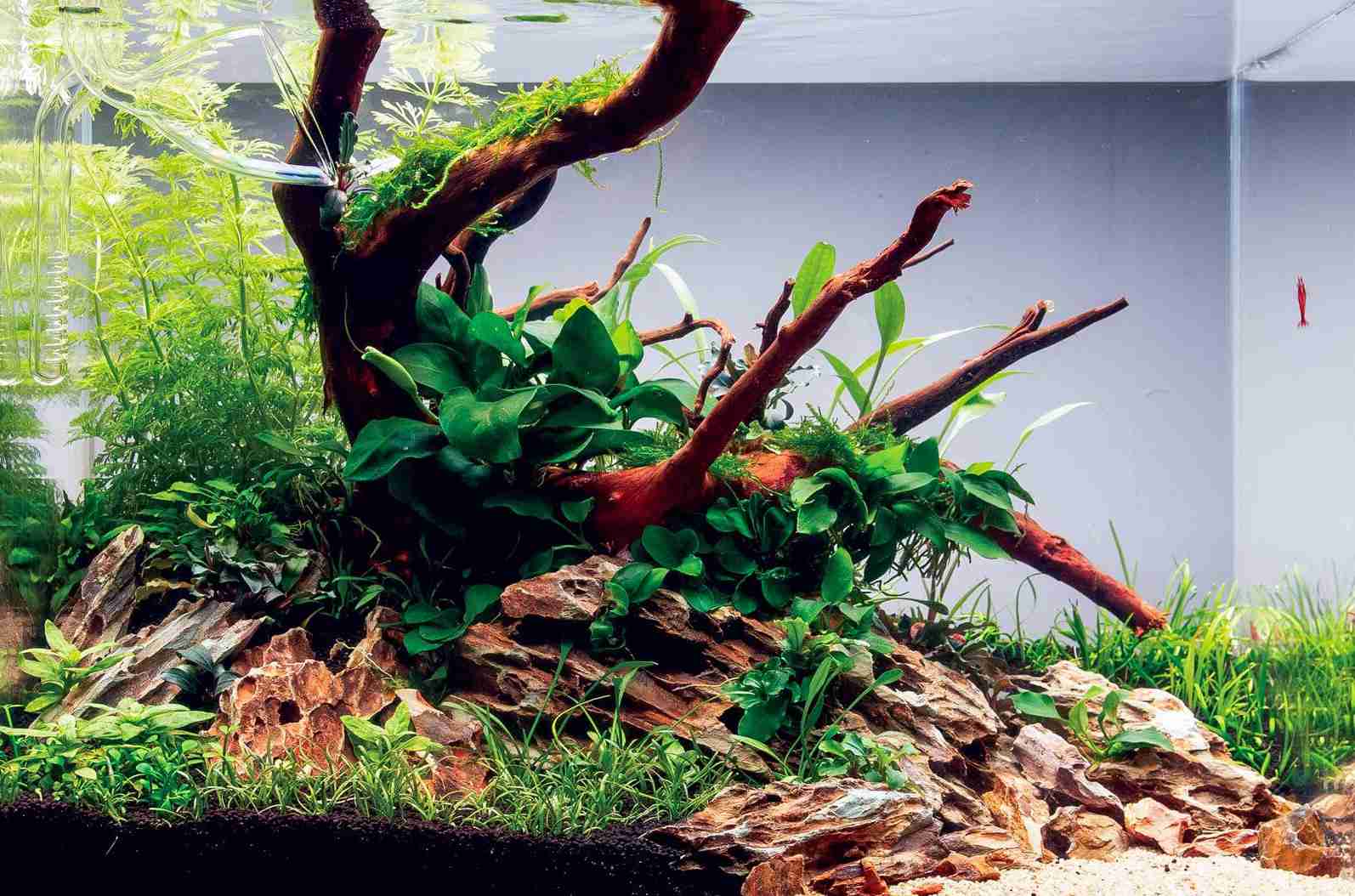
Broadleaved Anubias barteri can reach approximately 25–45 cm (10–18 inches) in height and is generally best suited to the midground or background of an aquarium. A partially shaded location can help limit algae growth on its slow-growing leaves, although stronger lighting can be used when nutrients, CO₂ and algae growth are properly managed.
The plant can be attached directly to rocks, driftwood and aquarium decor or planted with its roots in sand, gravel or planted substrate. Nutrient-rich substrate is not required, although roots that grow into substrate can access nutrients in addition to those available from the water column.
When planting Anubias barteri, do not bury the rhizome. The roots can safely grow beneath the substrate, but the thick rhizome where the leaves and roots grow from should remain exposed. Burying the rhizome can cause it to rot and potentially kill the plant.
Clear fishing line, thread or aquarium-safe super glue gel can be used to secure the rhizome to rocks or driftwood until the roots establish themselves around the hardscape. Super glue gel cures rapidly when exposed to moisture, so only a small amount is required.
Gentle-to-moderate water circulation is ideal for Anubias barteri and helps distribute dissolved nutrients throughout the aquarium. Avoid placing Anubias in the direct flow of a filter or powerhead output, particularly when algae growth is already a concern.
Research highlight: A hydroponic study of Anubias compared plants grown in Malang sand, husk charcoal, gravel and Rockwool. Plants grown in Malang sand showed the strongest overall growth of the four treatments, including greater plant height and root development, demonstrating that growing medium can influence Anubias growth.
Water Parameters & Lighting
Recommended water parameters for Anubias barteri include:
Temperature: 72–82°F (22–28°C)
pH Level: 6–8
Water Hardness: 2–15 dGH
Stable water conditions are generally more important than maintaining an exact value within these ranges. Broadleaved Anubias barteri can tolerate harder or more alkaline water than many aquatic plants, making it suitable for a wide variety of freshwater aquariums.
Aquatic plants can also contribute to normal daily pH fluctuations. During the photoperiod, photosynthesis consumes dissolved CO₂ and can increase pH, while respiration continues in darkness and releases CO₂, which can contribute to a lower nighttime pH.
Anubias barteri has low lighting requirements and can grow under very low aquarium lighting, around 10 PAR. Low-to-moderate lighting is generally preferred because excessive light can encourage algae growth on its slow-growing leaves.
Stronger lighting can increase growth when sufficient CO₂ and nutrients are available, but additional light is not necessary for maintaining a healthy plant. For most aquariums, moderate lighting provides a practical balance between healthy growth and algae control.
Growth, CO₂ & Fertilization
Anubias barteri has a naturally slow growth rate. Under typical aquarium conditions, new leaves may take several weeks to months to develop, while mature plants can eventually reach approximately 25–45 cm (10–18 inches) in height. The broad, leathery leaf blades of A. barteri var. barteri can reach approximately 7–23 cm (3–9 inches) long and 4–11 cm (1.5–4.3 inches) wide.
Research highlight: In a 12-week controlled hydroponic study, Anubias plants began with approximately six leaves. Plants grown in the best-performing medium, Malang sand, developed approximately nine leaves by the end of the study while also showing greater plant height and root development than the other growing media tested.
Injected CO₂ is not required to successfully grow Anubias barteri. Fish, microorganisms and decomposing organic matter naturally contribute carbon dioxide to aquarium water, while gas exchange occurs continuously at the water’s surface. Supplemental CO₂ can increase growth when combined with appropriate lighting and nutrient availability, but remains optional for this slow-growing species.
Because Anubias barteri grows slowly, its nutrient requirements are comparatively modest. Fish food, waste and other organic processes contribute nutrients in established aquariums, while a balanced liquid fertilizer can supplement nutrients that are deficient or unavailable in sufficient quantities.
The plant can access nutrients from the water column as well as through roots that extend into substrate. Heavy fertilization is generally unnecessary, and increasing fertilizer alone will not compensate for unsuitable lighting, carbon availability or other limiting conditions.
Tank Mates & Compatibility
Anubias barteri is compatible with a wide variety of freshwater fish, shrimp and snails. Its thick, leathery leaves are considerably more resistant to grazing than many soft-leaved aquarium plants and are often left alone by fish.
However, no aquarium plant should be considered completely fish-proof. Large or strongly herbivorous species may still damage the leaves, while large cichlids and other digging fish can dislodge plants placed loosely in substrate.
When keeping Anubias barteri with fish that frequently dig or rearrange the aquarium, attaching the rhizome securely to a large rock or piece of driftwood can prevent the plant from being repeatedly uprooted.
Suitable tank mates include tetras, rasboras, livebearers, Corydoras, Otocinclus, cherry shrimp, trumpet snails, bristlenose plecos and many other freshwater community species with compatible water requirements. Shrimp, snails and algae-grazing fish may also help remove biofilm and some types of algae from the broad leaves.
Peaceful Community Fish
✅ Cardinal Tetra
✅ Zebra Danio
✅ Platy
✅ Guppy
Bottom-Dwelling Fish
✅ Sterbai Corydoras
✅ Panda Corydoras
✅ Kuhli Loach
✅ Bristlenose Pleco
✅ Otocinclus
✅ Clown Pleco
Larger Community Fish
✅Pearl Gourami
✅ Keyhole Cichlid
✅ Bolivian Ram
✅ Rainbowfish
✅ Congo Tetra
Plant-Challenging Fish
✅ Goldfish
✅ Silver Dollar
✅ Severum
✅ Uaru
✅ African Cichlids
✅ Blood Parrot Cichlid
Propagation, Trimming & Maintenance
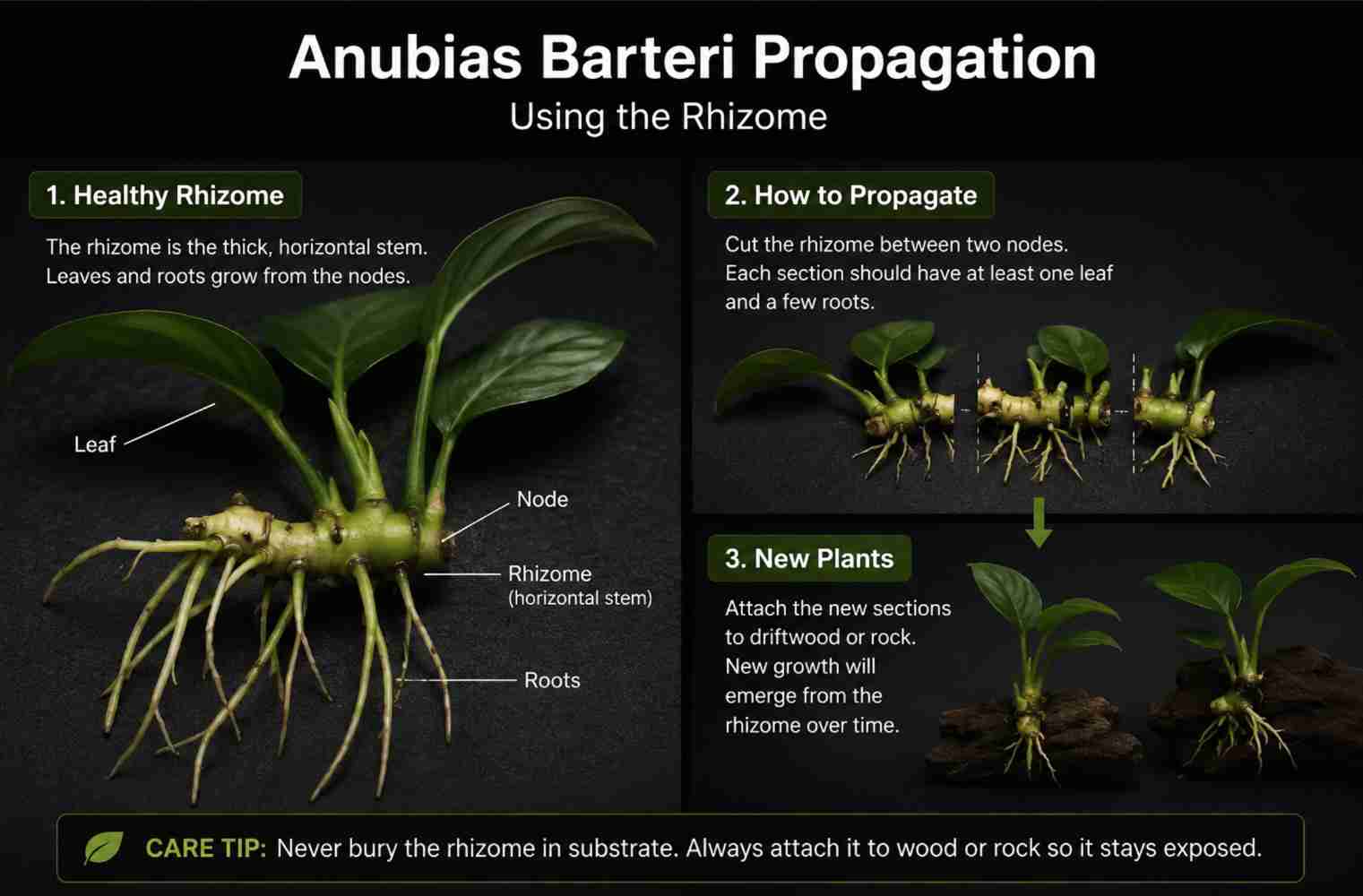
Anubias barteri propagation is most easily accomplished by dividing the rhizome. As a mature plant grows, the rhizome gradually extends and develops additional growth points capable of producing new leaves and roots.
To propagate the plant, use a clean, sharp knife or aquarium scissors to divide a healthy section of rhizome. Each section should retain healthy roots, a viable portion of rhizome and several leaves. Leaving approximately three to four healthy leaves on each division provides a practical starting point for establishing a healthy new plant.
Research highlight: Research into hydroponic Anubias propagation documented new buds developing from the rhizome, demonstrating the importance of this structure in vegetative reproduction. These buds can develop into independent plants, while mature aquarium specimens can similarly be propagated by separating growth points or dividing a sufficiently developed rhizome.
Trimming Anubias barteri should primarily involve removing old, damaged, deteriorating or heavily algae-covered leaves. Use clean, sharp scissors to cut the leaf stalk close to the rhizome without damaging the rhizome itself.
Long roots can also be trimmed when necessary, particularly when repositioning a mature plant or maintaining a specific aquascape. Avoid unnecessarily removing the entire root system; leaving healthy established roots minimizes disturbance and allows the plant to continue anchoring itself and absorbing nutrients.
Because the leaves of Anubias barteri are slow-growing and long-lived, algae can gradually accumulate on older foliage. Maintaining appropriate lighting, stable nutrients and good water quality is preferable to repeatedly treating the plant with aggressive chemical algae treatments.
Anubias Barteri Species Information
Anubias barteri belongs to the Araceae family and was first scientifically described by Austrian botanist Heinrich Wilhelm Schott in 1860. The species is native to western and west-central tropical Africa and is a perennial rhizomatous plant associated with wet tropical environments.
In 1979, botanist Wim Crusio published a major taxonomic revision of the genus Anubias. Under this classification, Anubias barteri was divided into several botanical varieties, including A. barteri var. barteri, A. barteri var. angustifolia, A. barteri var. caladiifolia, A. barteri var. glabra and A. barteri var. nana.
The broadleaved form covered in this guide, Anubias barteri var. barteri, was distinguished by its relatively large ovate-to-lanceolate leaf blades. Crusio described the leaves as approximately 7–23 cm long and 4–11 cm wide, with petioles approximately 6–23 cm long. Its documented distribution included southeastern Nigeria, Cameroon and Fernando Po, now known as Bioko.
More recent taxonomic treatments, including Plants of the World Online by the Royal Botanic Gardens, Kew, accept Anubias barteri as the species while treating A. barteri var. barteri and several traditionally recognized varieties as synonyms rather than currently accepted infraspecific taxa. The name Anubias barteri var. barteri nevertheless remains widely used within the aquarium trade to distinguish the large broadleaved form from smaller forms such as A. barteri var. nana.
Molecular research has also examined the chloroplast genomes of several Anubias taxa, including A. barteri and A. barteri var. nana. These studies provide additional genetic information for distinguishing relationships within the genus and complement the morphological characteristics historically used for identification.
Frequently Asked Questions
Why are my Anubias barteri leaves turning yellow?
Yellow leaves can result from nutrient deficiencies, aging foliage or changes in growing conditions. Older leaves naturally deteriorate over time, but yellowing that affects newer growth may indicate insufficient nutrients. Check the plant’s overall growth and aquarium conditions before increasing fertilizer.
Why are my Anubias barteri leaves dying?
Older leaves naturally deteriorate and are eventually replaced by new growth. More widespread leaf loss can result from changing water conditions, nutrient deficiencies, physical damage or deterioration of the rhizome. Recently purchased plants may also lose older leaves while adapting to fully submerged aquarium conditions.
Damaged or deteriorating leaves can be trimmed close to the rhizome as healthy new growth develops.
Can Anubias barteri grow above water?
Yes. Anubias barteri can grow either fully submerged or partially above the waterline, provided it remains in a sufficiently humid environment. This makes it suitable for aquariums and paludariums, where the roots and rhizome can remain wet while the leaves grow above the water.
How long does Anubias barteri live?
Anubias barteri is a perennial plant and does not have a short, predetermined aquarium lifespan. A healthy rhizome can continue producing new leaves and growth for many years under suitable conditions, while individual older leaves gradually deteriorate and are replaced.
How fast does Anubias barteri grow?
Anubias barteri has a naturally slow growth rate, with new leaves commonly developing over several weeks to months. Growth can increase when appropriate lighting, CO₂ and nutrients are available, although it remains relatively slow compared with many other aquarium plants.
About Our Aquatic Plant Profiles
ForAquarium aquatic plant guides combine scientific literature and established botanical references with years of aquarium-keeping experience. Information is periodically reviewed and updated as new research becomes available.
References
Wim E. Crusio. A Revision of Anubias Schott (Araceae) (1979)
Lili Sholichah, Muhamad Yamin, Rendy Ginanjar, and N. Meilisza. Anubias (Anubias sp.) Propagation Through Hydroponic Culture Technique (2020)
Royal Botanic Gardens, Kew. Anubias barteri Schott — Plants of the World Online (2026)
Royal Botanic Gardens, Kew. Anubias barteri var. barteri — Plants of the World Online (2026)
Yunheng Ji et al. Comparative Analyses of Plastomes of Four Anubias (Araceae) Taxa, Tropical Aquatic Plants Endemic to Africa (2022)
Martin M. M. et al. A Checklist of Rheophytes of Cameroon (2019)