
SPECIES CLASSIFICATION
Order: Cypriniformes
Family: Cyprinidae
Subfamily: Smiliogastrinae
Genus & Species: Puntigrus tetrazona
Common Names: Green Tiger Barb, Moss Green Tiger Barb, Green Barb
Species Data Sheet
Temperature: 77–82°F (25–28°C)
pH Range: 6.0–8.0
General Hardness (GH): 5–19 dGH
Total Length: 7 cm (2.75 in)
Average Length: 5–6 cm (2–2.4 in)
Care Level: Intermediate
Lifespan: Up to 7 years
Min Tank Size: 30 gallons
Temperament: Semi-aggressive
Swimming Level: Middle water column
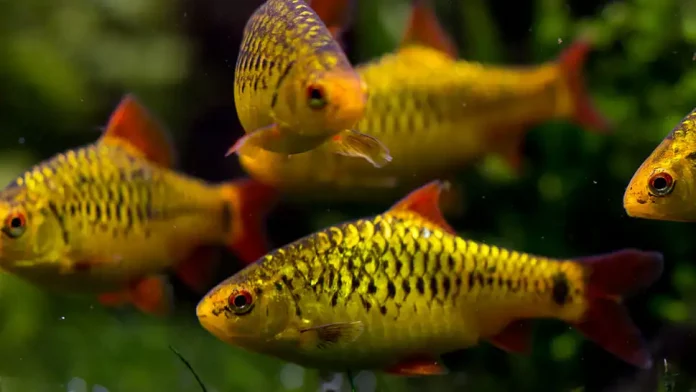
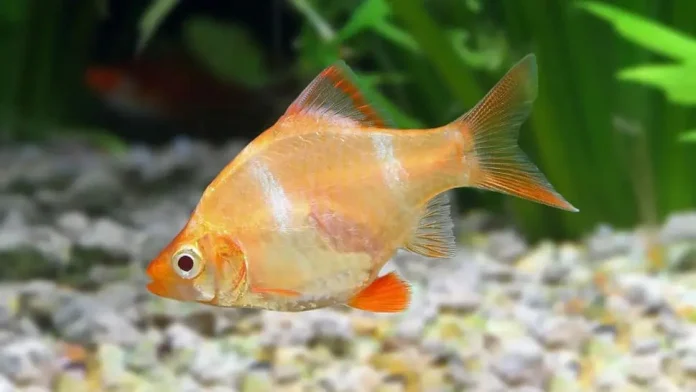
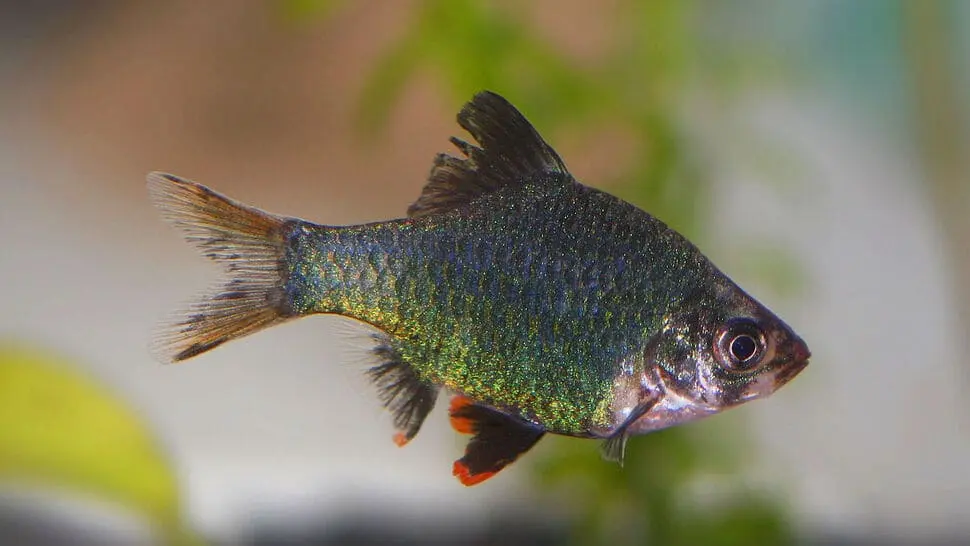
Tiger barbs are widely available throughout the aquarium hobby and have been selectively bred to produce several distinct color and fin varieties, including green, albino, gold, platinum, black marble, and red forms.
Origin & Natural Habitat
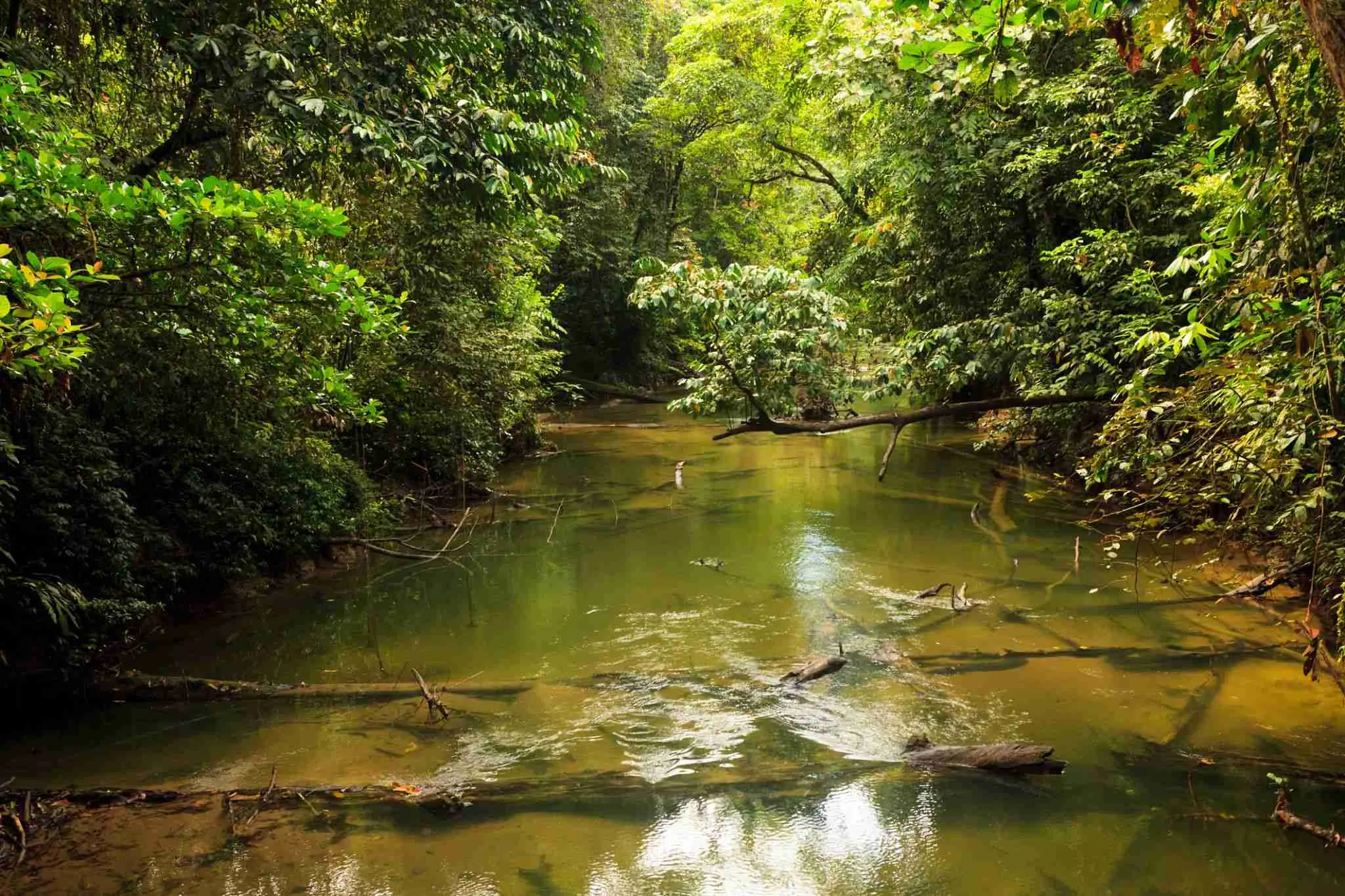
Tiger barbs are freshwater fish native to Southeast Asia, where they inhabit the inland waters of Borneo and Sumatra. Their precise natural distribution has historically been difficult to determine because of taxonomic confusion and widespread introductions associated with the aquarium trade.
These barbs are often found in shallow backwater creeks and streams with moderate flow, where water conditions can range from clear to murky.
Green Tiger Barb Care
Tiger barbs are generally easy to care for and can tolerate a relatively wide range of water conditions. When introducing tiger barbs to a community aquarium, particular consideration should be given to tank mate compatibility due to their active and sometimes semi-aggressive temperament.
Research highlight: Artificial lighting may influence growth rates in tiger barbs. One study examining four different light colors found that fish exposed to white light exhibited the highest growth rates, while those exposed to green light exhibited the lowest. Light color did not have a significant effect on survival or mortality rates.
Tank Size
A 30-gallon aquarium is recommended as the minimum size for a small shoal of tiger barbs. Smaller aquariums provide less swimming space and may contribute to increased aggression while also limiting the number of tiger barbs and compatible tank mates that can be safely housed together.
Aquarium length is generally more important than height because tiger barbs are active shoaling fish that benefit from ample swimming space. The aquarium should also provide sufficient cover and shelter while maintaining open areas for natural shoaling behavior.
Water Parameters
Tiger barbs are adaptable to a relatively broad range of water conditions. Recommended water parameters include:
Temperature: 77–82°F (25–28°C)
pH Range: 6.0–8.0
General Hardness (GH): 5–19 dGH
Stable water conditions are generally more important than attempting to maintain an exact value within these ranges. Sudden changes in temperature or water chemistry should be avoided.
Aquarium Setup
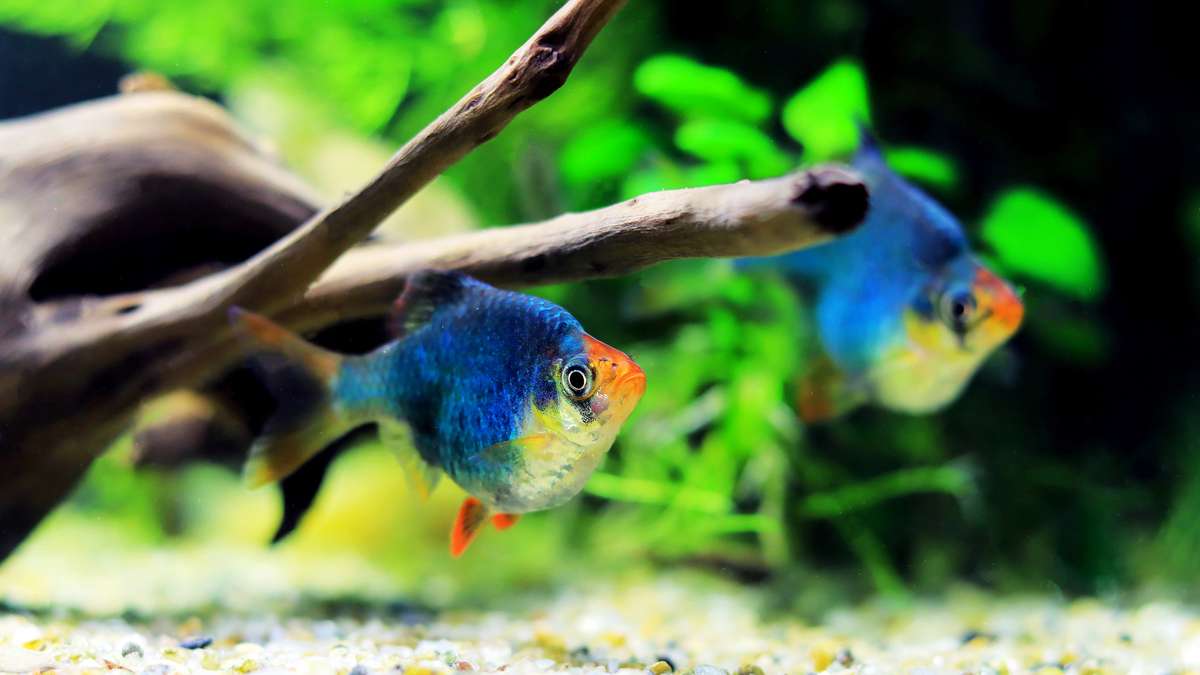
A tight-fitting lid is recommended because tiger barbs are highly active swimmers and may jump from an uncovered aquarium. Filtration should provide adequate water movement, oxygenation, and biological filtration while maintaining suitable water quality.
Sand or fine-grained gravel can be used as a substrate. Tiger barbs are fast, agile swimmers and may dart rapidly around the aquarium while shoaling, feeding, or establishing their social hierarchy. Avoid excessively sharp decorations or substrate that could increase the risk of injury.
Darker substrates can provide a more natural appearance while creating greater contrast with the tiger barb’s coloration, particularly its red, orange, and black markings.
Live aquatic plants or aquarium moss balls can provide additional cover and enrichment throughout the aquarium. When adding plants and decorations, maintain plenty of open swimming space, particularly through the center of the aquarium. Plants, rocks, and other décor can be concentrated along the sides and background or arranged with sufficient spacing to allow the shoal to move freely throughout the tank.
Diet & Feeding
As omnivores, tiger barbs readily accept a wide variety of commercially available foods. In an aquarium, use a high-quality tropical flake, small granule or pellet as their staple food, supplemented with protein-rich foods to provide a varied and nutritionally balanced diet.
Suitable supplemental foods may be offered live, frozen or freeze-dried and include:
- Bloodworms
- Brine shrimp
- Daphnia
- Mysis shrimp
- Small prawns
- Insects
- Insect larvae
Live and frozen foods can encourage natural feeding behavior and may be particularly useful when conditioning tiger barbs for breeding. Protein-rich foods should supplement their staple food rather than form the entirety of their diet.
Tiger barbs may also nibble on algae and aquatic plants, including java moss, java fern and water thyme, which can contribute to their omnivorous diet. Commercial foods containing spirulina or other plant-based ingredients can also help incorporate plant matter into their regular diet, but should only be supplementary rather than serve as their primary source of food.
Feed adult tiger barbs once or twice daily, providing only as much food as they can consume within a few minutes. Distribute food across several areas of the aquarium so that less dominant individuals have an opportunity to feed.
Research highlight: An eight-week controlled feeding study compared diets containing 20%, 33%, and 45% protein to determine the health effects of tiger barbs. The group receiving the 20% protein diet experienced a 32.1% mortality rate, while no mortality was reported in the 45% protein group. Growth was also highest among fish receiving the 45% protein diet.
Budget Staple Food

Premium Staple Food

Supplemental Protein

Green Tiger Barb Tank Mates
Tiger barbs are highly active shoaling fish with a semi-aggressive temperament. They establish a social hierarchy, or pecking order, through frequent chasing and other displays of dominance.
When kept in smaller groups, aggression and fin-nipping may become more frequent and increasingly directed toward other tank mates. Tiger barbs are best kept in groups of at least 6–8, with larger shoals preferred when aquarium size permits. Provide plenty of plants, rocks, and other décor to create visual barriers and retreat areas, which can help reduce stress and give less-dominant fish opportunities to escape persistent chasing.
Compatible Tank Mates
Ideal tiger barb tank mates are fast-swimming species of fish without long, flowing fins. Potential tank mates include appropriately sized barbs, corydoras, dwarf cichlids, danios, rasboras, livebearers, loaches, rainbowfish, tetras, and other active species with compatible water requirements and temperaments.
BOTTOM-DWELLERS
✅ Zebra loach
✅ Yo-Yo loach
✅ Clown loach
✅ Bronze corydoras
✅ Peppered corydoras
FAST-SWIMMING
✅ Zebra danio
✅ Pearl danio
✅ Scissortail rasbora
✅ Brilliant rasbora
HARDY
✅ Black skirt tetra
✅ Buenos aires tetra
✅ Serpae tetra
✅ Boesemani rainbowfish
✅ Dwarf neon rainbowfish
✅ Swordtail/Platy/Molly
SEMI-AGGRESSIVE
✅ Bolivian ram
✅ Kribensis
Note: Individual temperament can vary; species that coexist peacefully in one aquarium may not do so in another. Monitor newly introduced fish for excessive fin-nipping, fin damage, persistent aggression, or signs of stress, and separate incompatible fish when necessary.
Male vs Female Differences
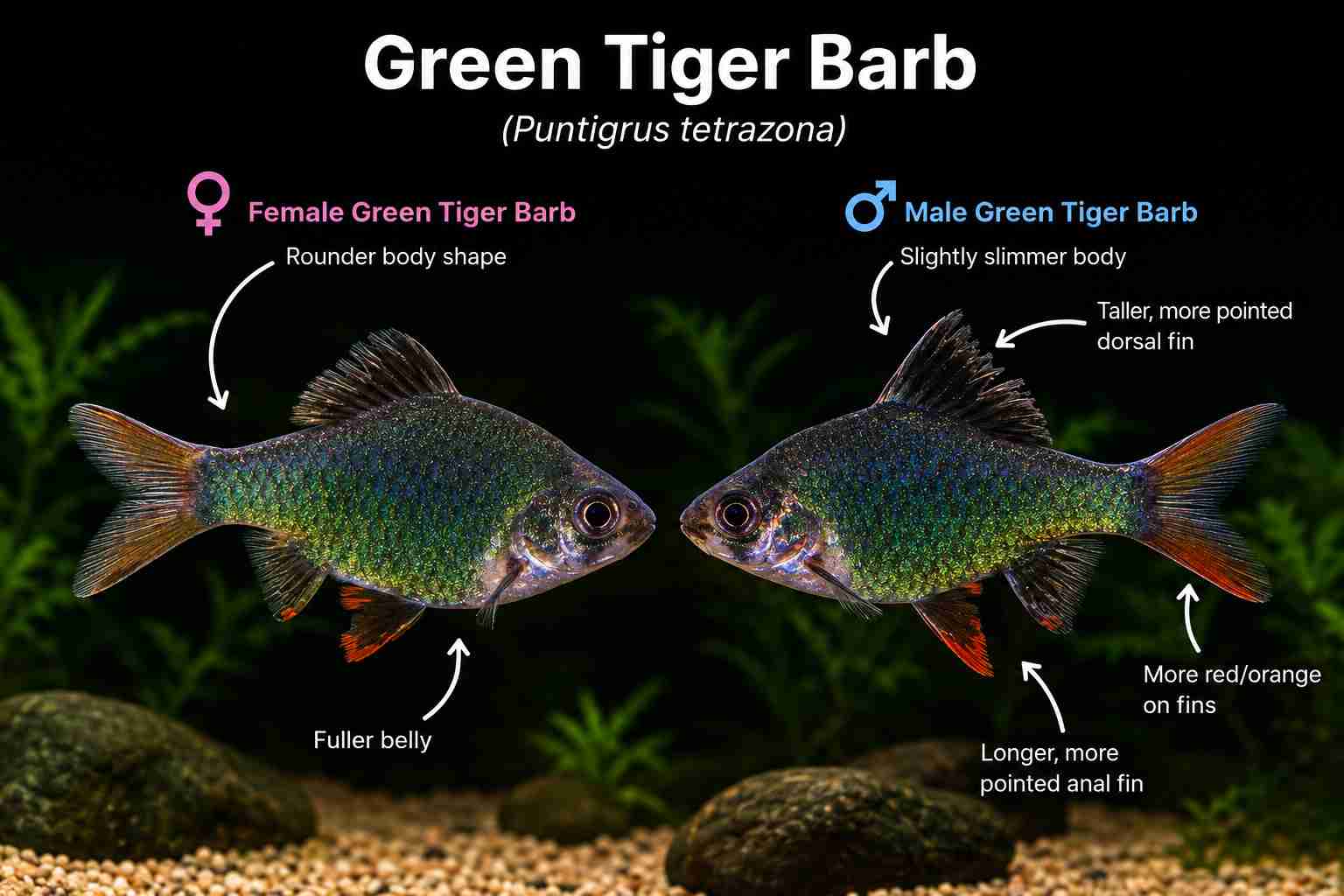
Adult females are typically larger and deeper-bodied than males, often developing a noticeably rounded abdomen. Males tend to be slimmer and generally display more intense coloration. Males also display brighter red coloration on the dorsal, caudal, and anal fins and around the nose. These sexually dimorphic characteristics become more pronounced during breeding, when the males’ red coloration intensifies.
Red coloration is usually less pronounced or absent in females, although they may display faint red markings on their fins and nose.
Green Tiger Barb Breeding Guide
Tiger barbs are egg-scattering fish that exhibit no parental care. Under suitable conditions and with adequate nutrition, spawning may occur without deliberate intervention. Males and females may temporarily pair off during spawning, scattering eggs among fine-leaved aquatic plants.
Conditioning Tiger Barbs for Breeding
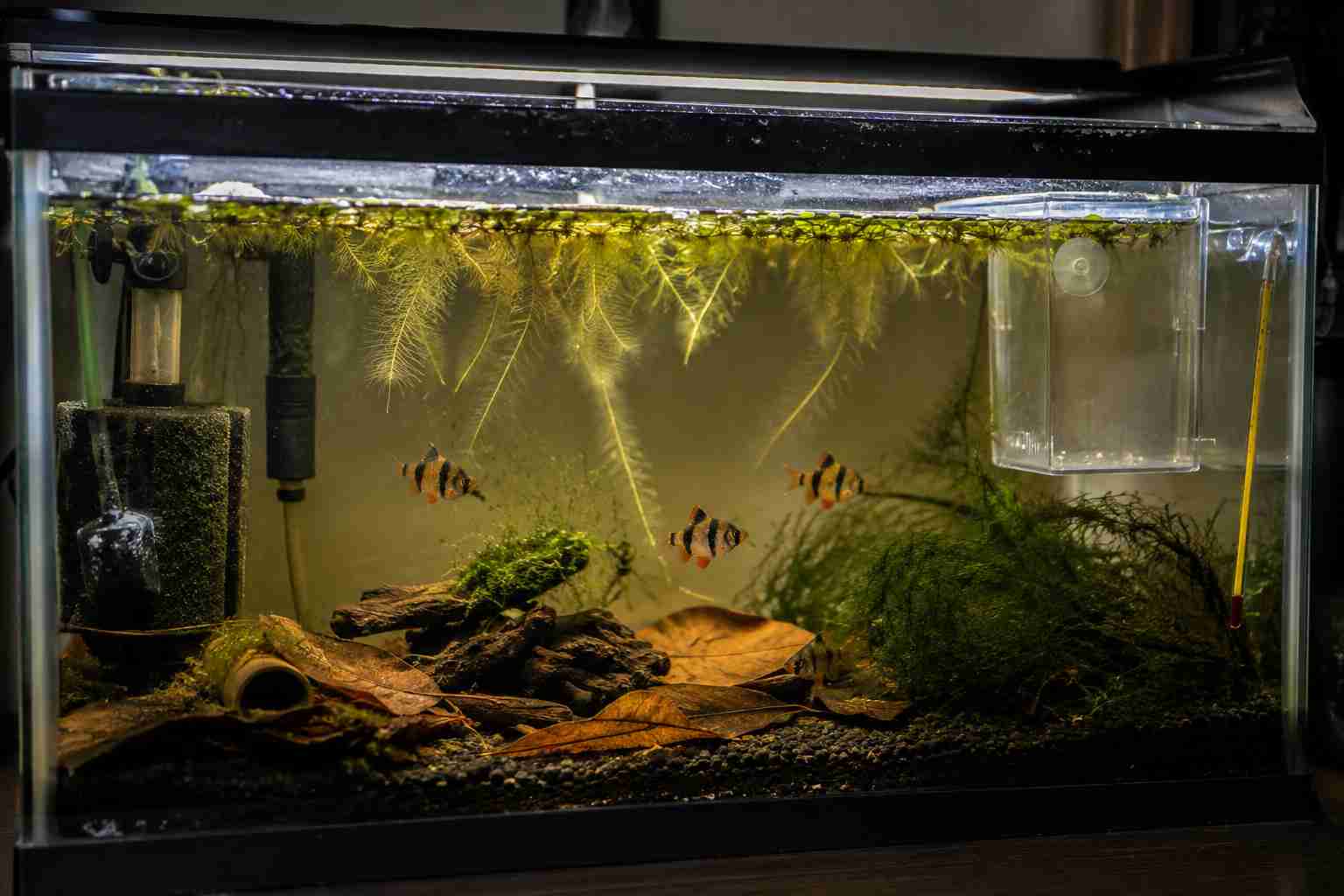
A more controlled approach involves separating the sexes for one to two weeks while conditioning them with nutrient-rich live foods such as cultured daphnia, brine shrimp or mysis shrimp. Feeding frequency can be increased to four to five small meals daily while avoiding excessive waste.
During this time, female tiger barbs typically become noticeably plumper as their abdomens fill with developing eggs, sometimes visible through the abdominal wall. Males generally become more intensely colored during breeding, particularly around the nose and fins, where the red coloration may become brighter.
Spawning & Egg Care
Place one male and one female into a small 5–10 gallon breeding tank with a spawning mop or fine-leaved aquatic plants on which the female can scatter her eggs. Continue feeding them live foods in frequent but small amounts throughout the day.
Maintain the breeding aquarium near the upper end of the tiger barb’s recommended temperature range, with slightly acidic to neutral water and moderately soft hardness:
- Temperature: 77–82°F (25–28°C)
- pH Range: 6.0–7.0
- General Hardness (GH): 5–10 dGH
Tiger barbs can reproduce across a relatively broad range of water hardness, but moderately soft water within this range is suitable for spawning.
Check the aquarium each morning for eggs and remove the adults promptly after spawning to prevent egg predation. Under suitable conditions, the eggs typically hatch within 36–48 hours after fertilization.
Research highlight: Spawning substrate may influence egg production and hatching success in tiger barbs. One study found that water thyme (Hydrilla) produced the highest number of eggs and a hatch rate of up to 88.14%, which the researchers associated with higher dissolved oxygen levels.
Raising Tiger Barb Fry
Tiger barb fry typically become free-swimming approximately three to five days after hatching. During this period, the fry absorb their yolk sacs. Once free-swimming, they can initially be offered cultured infusoria, liquid or powdered fry foods, or other appropriately sized foods as their first food source.
As they grow, larger live foods such as microworms, newly hatched brine shrimp and small daphnia can gradually be introduced. Commercial micropellet fry diets can also be used during early development. Finely crushed flake food can generally be introduced after approximately one week, although the flakes should be ground into particles small enough for the fry to readily consume.
Species Overview

The tiger barb was originally recognized in 1855 and given the scientific name Barbus tetrazona by Dutch ichthyologist Pieter Bleeker. But shortly after, Bleeker referred to an entirely different species using the same scientific name. In his more than 500 publications on ichthyology, Bleeker described more than 500 new genera and about 2,000 new species.
Historically, the genus Puntius served as a broad taxonomic grouping that included more than 100 species of Asian cyprinids. The genus had long been suspected of being polyphyletic, and subsequent taxonomic revisions have since reassigned many of these species to separate genera. Older publications frequently refer to Puntigrus tetrazona by former combinations such as Puntius tetrazona, Systomus tetrazona, or Capoeta tetrazona.
Kottelat established the genus Puntigrus in 2013 to house a collection of species formerly known as the Puntius tetrazona group. In addition to Barbodes, Desmopuntius, Haludaria, Oliotius, Pethia, Puntigrus, Sahyadria, and Systomus, many species that were previously classified under the genus Puntius have been reassigned to different genera.
Puntigrus tetrazona can be identified from close relatives by the combination of the following traits: lateral line incomplete; 12 circumpeduncular scales; 19–21+2 scales in the lateral row; pelvic fins that are predominantly black in the middle but translucent at the base and tip; and reasonably wide dark body bands that can cover up to 2.5 scales.
FAQs
Can different colored tiger barbs school together?
Yes. Different color varieties of tiger barbs, including standard, green, albino, and gold varieties, can school together because they are varieties of the same species (Puntigrus tetrazona). Their coloration does not prevent them from recognizing and interacting with one another, so different varieties can be combined to form an appropriately sized school.
How do you introduce new tiger barbs to an established school?
New tiger barbs should be introduced in groups rather than individually whenever possible, as a lone newcomer may receive excessive attention from established fish. After properly acclimating the new barbs, rearranging some plants, rocks, or décor before introducing them can temporarily disrupt established territories and social relationships, giving the entire group an opportunity to establish a new hierarchy.
Why do tiger barbs lose their color at night?
Tiger barbs may become noticeably paler when resting or after the aquarium lights are turned off. Changes in pigmentation associated with their day-night cycle can cause their normally dark vertical bars and body coloration to temporarily fade. Their usual coloration should return after the lights come on and the fish become active, while persistent or unusual color loss can instead indicate stress or poor health.
Why are my tiger barbs chasing each other?
Chasing is a normal part of tiger barb social behavior and is commonly used to establish and maintain a hierarchy within the school. Males may also chase one another during dominance or reproductive interactions. Occasional chasing is generally normal, but relentless pursuit, injuries, or one fish being continually excluded can indicate excessive aggression, an undersized school, inadequate space, or insufficient cover.
Why is my tiger barb swimming nose down?
Tiger barbs sometimes adopt a nose-down or nearly vertical position while resting, particularly when inactive or sleeping, and this can be normal behavior if the fish otherwise swims, feeds, and behaves normally. However, persistent nose-down swimming accompanied by difficulty maintaining buoyancy, rapid breathing, lethargy, bloating, or loss of appetite may indicate stress, poor water quality, or a health problem and should be investigated.
About Our Species Profiles
ForAquarium species guides combine scientific literature and established taxonomic references with years of aquarium-keeping experience. Information is periodically reviewed and updated as new research becomes available.
Published Literature
Frank Chapman. Evaluation of Commercially-Formulated Diets for Feeding Tiger Barb, Puntius tetrazona (2008)
Rumondang, Suhardi Indra Fansyah, Juliwati Batubara, and Khairani Laila. Tiger Barb (Puntiustetrazona) Spawning Using Different Substrates (2018)
Mohammad Hadi Abolhasani, Seyed Abbas Hosseini, Rasool Ghorbani, Mohammad Sudagar, and Seyyed Morteza Hoseini. Growth, Survival, and Stress Resistance of Tiger Barb (Puntius tetrazona) Larvae Fed Fish Oil-Enriched Artemia franciscana Nauplii (2014)
Mohammad Forouhar Vajargah, and Seyed Aliakbar Hedayati. Study of growth indices and survival rate of un-matured Tiger barb (Barbus tetazone) during exposure to different light colors (2016)
Rohan Pethiyagoda. Haludaria, a replacement generic name for Dravidia (Teleostei: Cyprinidae) (2013)
Maurice Kottelat. The fishes of the inland waters of Southeast Asia: A catalogue and core bibliography of the fishes known to occur in freshwaters, mangroves and estuaries (2013)