
Species Classification
Order: Cypriniformes
Family: Danionidae
Genus: Rasborinae
Species: Trigonostigma heteromorpha
Common Names: Black Harlequin Rasbora, Black Harlequin Fish
Species Data Sheet
Temperature: 72–81°F (22–27°C)
pH Range: 5.0–7.5
General Hardness (GH): 1–12 dGH
Min Tank Size: 20 Gallons
Care Level: Beginner
Max Size: 3.5–5 cm (1.5–2 inches)
Height: 2–2.5 cm (0.8–1 inch)
Swimming Level: Mid to Upper-Level
Lifespan: 5–8 years
Temperament: Peaceful
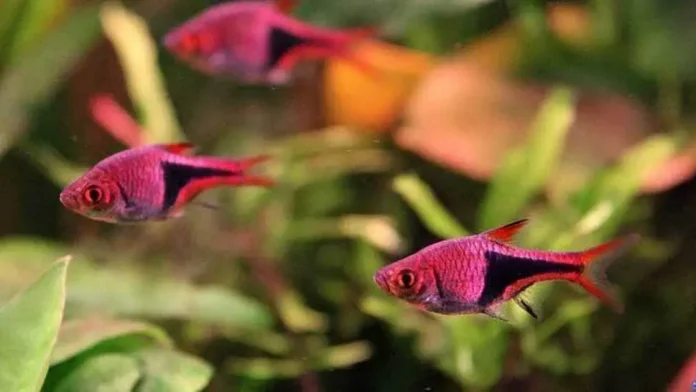
Harlequin rasboras (Trigonostigma heteromorpha) are small, peaceful schooling fish and one of the most recognizable species of rasbora in the aquarium hobby. Their copper-orange coloration is contrasted by a distinctive black triangular marking extending across the rear portion of the body.
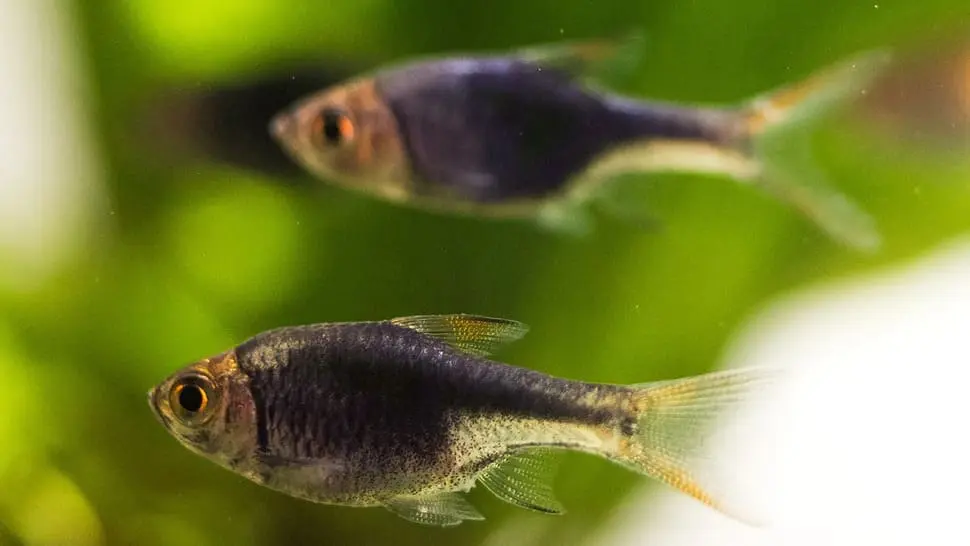
Harlequin rasboras have been kept in aquariums for more than a century and have been selectively bred to produce several ornamental varieties, including black, purple and golden forms.

Origin & Natural Habitat
Harlequin rasboras are freshwater fish native to Southeast Asia, where they occur throughout parts of the Malay Peninsula and Sumatra. Their natural distribution includes Peninsular Malaysia, Singapore and Indonesia.
They inhabit shaded forest streams and peat swamps containing submerged plants, fallen leaves, branches, roots and other organic debris. These habitats generally contain soft, acidic water that may become stained brown from tannins released by decomposing plant material.
Research highlight: Surveys of Singapore’s Nee Soon Swamp Forest found harlequin rasboras throughout much of the freshwater swamp habitat, where they were among the more abundant native fish species. Individuals were commonly observed schooling around the middle and upper portions of shaded forest streams.
Harlequin Rasbora Care
Harlequin rasboras are generally easy to care for and can adapt to a relatively wide range of aquarium conditions. They thrive in mature aquariums with stable water parameters, adequate filtration and a suitable-sized school.
Wild harlequin rasboras naturally inhabit soft, acidic water, although captive-bred fish can adapt to less acidic conditions and moderate levels of water hardness. Sudden changes in temperature or water chemistry should be avoided.
Tank Size
A 20-gallon aquarium is recommended as the minimum size for a small school of harlequin rasboras. Larger aquariums are preferred when maintaining groups of ten or more or when additional tank mates are present.
Aquarium length is generally more important than height because harlequin rasboras are active schooling fish that spend much of their time swimming through the middle and upper portions of the aquarium. A tank measuring at least 60 cm (24 inches) in length provides sufficient room for a small school.
Water Parameters
Harlequin rasboras are adaptable to a relatively broad range of water conditions. Recommended aquarium parameters include:
Temperature: 72–81°F (22–27°C)
pH Range: 5.0–7.5
General Hardness (GH): 1–12 dGH
In the wild, harlequin rasboras inhabit soft, acidic forest streams and peat-swamp environments, with a reported pH range of 5–7. Peat-influenced waters can contain very low concentrations of dissolved minerals and have correspondingly low conductivity.
Stable water conditions are generally more important than maintaining an exact value within these ranges. Ammonia and nitrite should remain at 0 ppm in an established aquarium, while nitrate should be controlled through regular water changes and appropriate stocking levels.
Aquarium Setup
Harlequin rasboras benefit from a planted aquarium containing driftwood, submerged branches and floating vegetation. Plants and other decorations can be concentrated along the sides and background while maintaining plenty of room for the school to swim freely throughout the tank.
A darker substrate, subdued lighting and floating plants can create a more natural appearance while providing greater contrast with their copper-orange coloration and black markings.
Leaf litter and botanicals such as Indian almond leaves can also be added to create a naturalistic blackwater aquarium. These materials gradually release tannins into the water and more closely resemble the forest streams and peat swamps inhabited by wild harlequin rasboras.
Diet & Feeding
Harlequin rasboras are micropredators that feed primarily on small invertebrates in their natural habitat. Wild harlequin rasboras consume insects, insect larvae, worms, crustaceans and other small aquatic organisms.
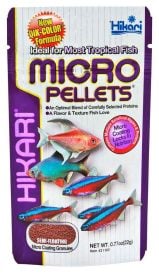
In captivity, harlequin rasboras readily accept a wide variety of commercially available foods. Use a high-quality tropical flake, micro-granule or micro-pellet as their staple food, supplemented with protein-rich foods to provide a varied and nutritionally balanced diet.
Suitable supplemental foods may be offered live, frozen or freeze-dried and include:
- Bloodworms
- Brine shrimp
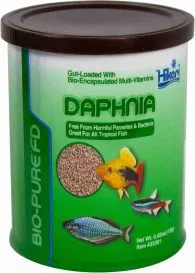
- Daphnia
- Cyclops
- Mosquito larvae
- Microworms
- Other small insect larvae
Foods should be appropriately sized for their relatively small mouths. Larger frozen foods may need to be broken into smaller pieces before feeding. Live and frozen foods can also encourage natural feeding behavior and may be particularly useful when conditioning harlequin rasboras for breeding.
Feed adult harlequin rasboras once or twice daily, providing only as much food as they can consume within a few minutes. Distribute food across several areas of the aquarium so that less dominant individuals have an opportunity to feed, and avoid excessive feeding that can contribute to deteriorating water quality.
Budget Staple Food

Premium Staple Food
Supplemental Protein
Harlequin Rasbora Tank Mates
Harlequin rasboras are peaceful schooling fish that are most active and comfortable when maintained with others of their own species. They should be kept in groups of at least 6–8, with larger schools preferred when aquarium size permits.
Larger schools can create a more natural display and allow the fish to interact regularly with members of their own species. Harlequin rasboras may spread throughout the aquarium when relaxed and school more closely when startled or during periods of increased activity.
Ideal harlequin rasbora tank mates are peaceful species that are unlikely to harass or prey on smaller fish. Potential tank mates include appropriately sized rasboras, tetras, corydoras, loaches, danios, gouramis and other community fish with compatible water requirements and temperaments.
RASBORAS & TETRAS
✅ Lambchop rasbora
✅ Glowlight rasbora
✅ Brilliant rasbora
✅ Neon tetra
✅ Cardinal tetra
✅ Rummy-nose tetra
BOTTOM-DWELLERS
✅ Kuhli loach
✅ Panda corydoras
✅ Sterbai corydoras
✅ Bronze corydoras
✅ Otocinclus
✅ Bristlenose pleco
DWARF CICHLIDS
✅ Bolivian ram
✅ Keyhole cichlid
✅ Apistogramma cacatuoides
✅ Apistogramma borellii
Note: Individual temperament can vary; species that coexist peacefully in one aquarium may not do so in another. Monitor newly introduced fish for excessive fin-nipping, fin damage, persistent aggression, or signs of stress, and separate incompatible fish when necessary.
Male vs Female Differences

Adult female harlequin rasboras are typically larger and deeper-bodied than males, often developing a noticeably rounded abdomen when carrying eggs. Males tend to remain slimmer and may display somewhat more intense coloration.
The shape of the black triangular marking can also provide a secondary indication of sex. Males may develop a sharper and more defined lower edge, while the marking on females may appear broader or more rounded.
Body shape is generally the easiest way to distinguish male and female harlequin rasboras, particularly when mature females develop a noticeably fuller abdomen.
Harlequin Rasbora Breeding Guide
Harlequin rasboras are adhesive egg-laying fish that exhibit no parental care. Unlike many other small cypriniform fishes that scatter their eggs among plants or substrate, female harlequin rasboras attach their eggs to the underside of broad leaves.
Conditioning Harlequin Rasboras for Breeding
Mature males and females can be conditioned before breeding with frequent small feedings of nutrient-rich live or frozen foods such as daphnia, brine shrimp, bloodworms and insect larvae. Females typically become noticeably plumper as their abdomens fill with developing eggs.
A small 5–10 gallon breeding aquarium can be used for a conditioned pair of harlequin rasboras. The aquarium should contain broad-leaved plants such as Cryptocoryne, Anubias or Amazon sword to provide suitable surfaces for egg deposition.
Recommended breeding conditions include:
Temperature: 79–82°F (26–28°C)
pH Range: 5.0–6.5
General Hardness (GH): 1–5 dGH
Gentle sponge filtration and subdued lighting are recommended. Very soft, acidic water generally provides more favorable spawning conditions than hard, alkaline water.
Some breeders perform a partial water change with slightly cooler, very soft water to help encourage spawning. Reverse-osmosis or demineralized water adjusted to the appropriate parameters provides more predictable water chemistry than untreated rainwater.
Spawning & Egg Care
During spawning, the female turns upside down beneath a suitable leaf while the male positions himself alongside her to fertilize the eggs. The pair may repeat this process numerous times until spawning is complete.
Adults may consume exposed eggs and should be removed from the breeding aquarium after spawning.
Under suitable conditions, the eggs generally hatch within approximately 24 hours. The newly hatched larvae remain largely stationary while absorbing their yolk sacs before becoming free-swimming within approximately 3–5 days.
Research highlight: A 2024 captive-breeding study observed Harlequin Rasbora eggs adhering to plant leaves and other surfaces after spawning. Eggs hatched in approximately 24 hours, and larvae absorbed their yolk sacs within about four days before beginning to feed on Artemia nauplii. At one month, surviving fry reached approximately 1.5 cm in length.
Raising Harlequin Rasbora Fry
Newly free-swimming harlequin rasbora fry are extremely small and initially require microscopic or very finely prepared foods. Cultured infusoria or paramecium can be offered as first foods before gradually introducing newly hatched brine shrimp, microworms and finely powdered prepared foods as the fry grow.
Feed several small meals throughout the day while avoiding excessive amounts of uneaten food. Young fry are particularly sensitive to deteriorating water quality, making regular maintenance especially important during early development.
An air-driven sponge filter is ideal for raising harlequin rasbora fry because it provides biological filtration and gentle water movement without creating an intake strong enough to trap small fry.

Species Overview

The harlequin rasbora was first described by German zoologist Georg Duncker in 1904 as Rasbora heteromorpha. In 1999, Maurice Kottelat and Kai-Erik Witte established the genus Trigonostigma, separating the harlequin rasbora and several closely related species from the much larger Rasbora grouping.
The name Trigonostigma is derived from Greek words referring to a triangular marking, describing the prominent dark marking characteristic of the genus. Most species have a reddish, pinkish or orange body with a black lateral marking that broadens toward the front into a triangular or wedge-like shape. Trigonostigma somphongsi is the main exception, with a much narrower stripe that broadens only slightly toward the front.
Members of Trigonostigma also share an unusual reproductive strategy. Rather than scattering their eggs among plants or substrate, females attach adhesive eggs to the underside of broad leaves or similar surfaces.
Additional characteristics used to distinguish the genus include an incomplete lateral line reduced to approximately 6–9 pored scales, absence of barbels, five branched anal-fin rays and a relatively deep body. The original description of the genus also characterized these fish by their small adult size, with wild specimens reaching approximately 32 mm standard length (SL). A later revision described T. heteromorpha as reaching up to approximately 35 mm SL in nature, while aquarium specimens may grow somewhat larger.
Standard length measures the fish from the tip of the snout to the base of the caudal fin and does not include the tail. Total length (TL) includes the caudal fin, which helps explain why aquarium references commonly describe adult harlequin rasboras as reaching approximately 4–5 cm (1.6–2 inches) in total length.
Five species of Trigonostigma are currently recognized:
- Trigonostigma espei — Lambchop Rasbora
- Trigonostigma hengeli — Glowlight Rasbora
- Trigonostigma heteromorpha — Harlequin Rasbora
- Trigonostigma somphongsi
- Trigonostigma truncata
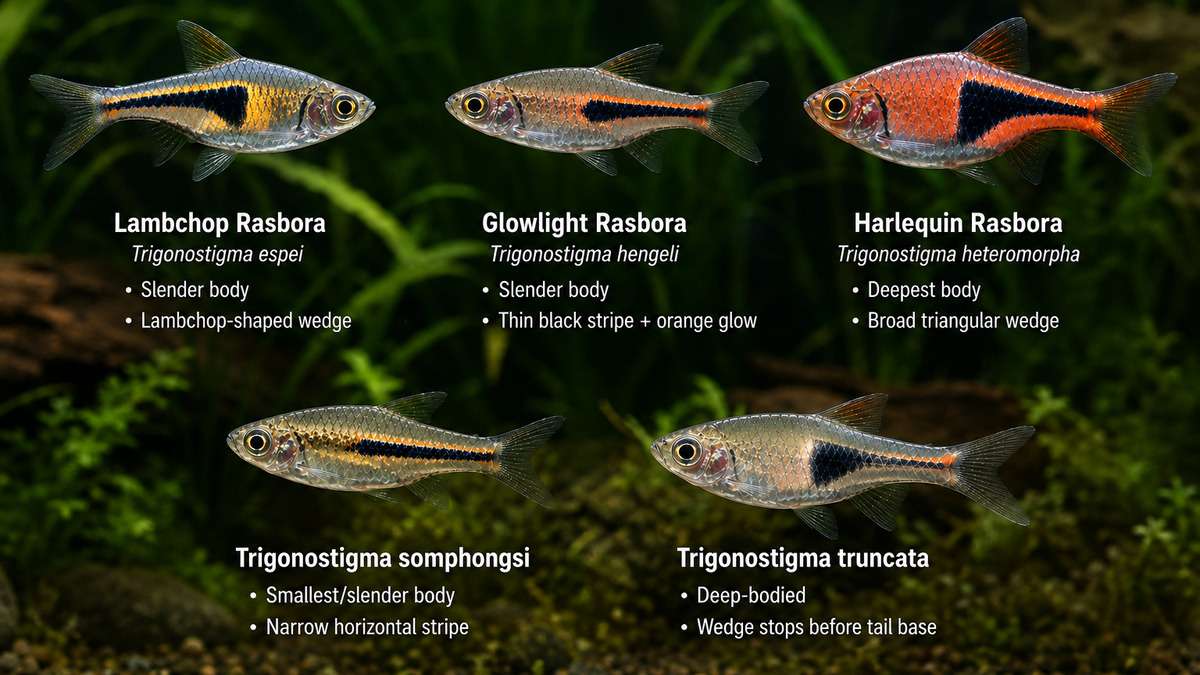
The harlequin rasbora (T. heteromorpha) has the deepest body and one of the largest black triangular markings within the genus. The closely related lambchop rasbora (T. espei) is smaller and more slender, with a narrower black marking resembling the shape of a lamb chop. The glowlight rasbora (T. hengeli) has an even narrower dark marking bordered by a prominent orange stripe.
T. somphongsi is easily distinguished by its narrow horizontal stripe rather than a large triangular marking. T. truncata most closely resembles the harlequin rasbora but has a more gently sloping head profile and a black triangular marking that ends before reaching the base of the tail.
Wild harlequin rasboras generally remain small, reaching approximately 32–35 mm standard length (SL). Aquarium specimens can grow somewhat larger, with a documented maximum of approximately 5 cm (2 inches) total length (TL).
FAQs
Why are my harlequin rasboras not schooling?
Harlequin rasboras do not remain in a tight school continuously. Fish that feel secure often spread throughout the aquarium and regroup during feeding, increased activity or when startled. Constantly tight schooling can sometimes indicate that the fish perceive a potential threat.
Can harlequin rasboras live with shrimp?
Adult harlequin rasboras can generally coexist with larger shrimp such as adult Amano shrimp. Very small shrimp and newly hatched shrimplets may be eaten, so dense plants, moss and other cover are recommended when keeping harlequin rasboras with breeding dwarf shrimp.
Why is my harlequin rasbora losing color?
Harlequin rasboras can temporarily become pale from stress, transportation, intense lighting or shortly after the aquarium lights are switched on. Persistent color loss accompanied by reduced appetite, abnormal swimming or other symptoms can indicate unsuitable water conditions, stress or illness.
Can harlequin rasboras live in a blackwater aquarium?
Yes. Harlequin rasboras naturally occur in acidic forest streams and peat-swamp habitats, making them well suited to blackwater aquariums. Driftwood, leaf litter, subdued lighting and tannin-stained water can recreate elements of their natural habitat while plants and open areas provide cover and swimming space.
Can different rasbora species school together?
Closely related rasboras may swim together, particularly harlequin, lambchop and glowlight rasboras, but mixed groups should not replace an adequate school of each species. Harlequin rasboras should still be maintained with at least 6–8 of their own species, with larger groups preferred when aquarium size permits.
About Our Species Profiles
ForAquarium species guides combine scientific literature and established taxonomic references with years of aquarium-keeping experience. Information is periodically reviewed and updated as new research becomes available.
Published Literature
Maurice Kottelat & Kai-Erik Witte. Two New Species of Microrasbora from Thailand and Myanmar, with Two New Generic Names for Small Southeast Asian Cyprinid Fishes (1999)
Tan Heok Hui. Trigonostigma truncata, a New Species of Harlequin Rasbora from Malay Peninsula (Teleostei: Danionidae) (2020)
Tianjiao Li, Chee Kin Chay, Wei Hao Lim & Yixiong Cai. The Fish Fauna of Nee Soon Swamp Forest, Singapore (2016)
Asep Permana, Agus Priyadi, Ahmad Musa, Bastiar Nur, Sawung Cindelaras, Sulasy Rohmy, Siti Zuhriyyah Musthofa, Rendy Ginanjar & Darmawan Setia Budi. Induced Spawning of Harlequin Rasbora (Trigonostigma heteromorpha) Using Tiger Barb (Puntius tetrazona) Stimuli: Techniques and Outcomes (2024)
Feng Zhou, Yifang Zhao, Zhifeng Gu & Yaohua Shi. Effects of Different Biological Feeds on Growth Performance, Body Color, and Digestive Enzyme Activities of Trigonostigma heteromorpha (2026)
Bayu Bayu & Fajriyani Fajriyani. Analysis of Dissolved Oxygen in Three Domestication Container Models for Harlequin Rasbora (Trigonostigma heteromorpha) (2021)
Asep Permana, Agus Priyadi, Ahmad Musa, Bastiar Nur, Sawung Cindelaras, Sulasy Rohmy, Siti Zuhriyyah Musthofa, Rendy Ginanjar & Darmawan Setia Budi. Induced spawning of harlequin rasbora (Trigonostigma heteromorpha) using tiger barb (Puntius tetrazona) stimuli: Techniques and outcomes (2024)